In a nutshell
- 🧪 Bleach sting explained: sodium hypochlorite’s high pH disrupts the skin barrier, causing sharp irritation; know the signs that suggest a chemical burn and require care.
- 🚿 First aid first: rinse immediately under cool running water for up to 20 minutes, remove contaminated items, and avoid “neutralising” with other chemicals.
- 🧊 Why cold soothes: a gentle cold compress slows nociceptors and reduces inflammation via vasoconstriction; never apply ice directly and keep sessions brief.
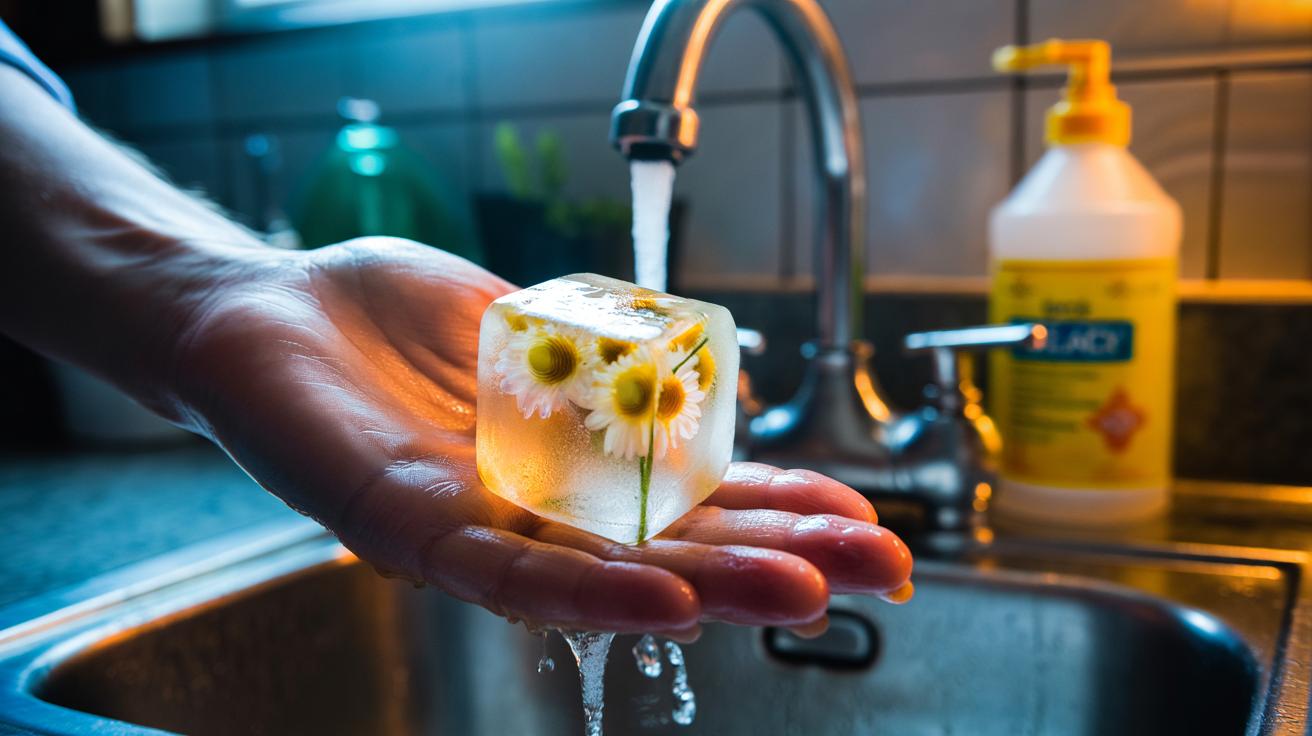
- 🌼 Chamomile cubes: chamomile ice cubes add calming phytochemicals like apigenin and bisabolol; use wrapped, after rinsing, and avoid if you have ragweed allergies.
- ☎️ Red flags: blistering, colour changes, persistent pain, large areas, or eye exposure warrant contacting NHS 111 or urgent care.
British households rely on bleach for bright bathrooms and germ-free kitchens, yet a splash can leave an angry tingle on the hands. The sting isn’t mere fuss: it signals your skin’s protective barrier has been disrupted by a powerful alkali. Some readers swear by chamomile ice cubes as a quick comfort after rinsing. Cold can dial down pain, while chamomile brings soothing plant compounds. Used thoughtfully, this combination offers relief for minor irritation, though it is not a fix for genuine chemical burns. Rinse first, then cool — and know when to call for help. Below, we unpack the science and the safe steps.
Why Bleach Stings: The Chemistry and Your Skin
Household bleach is typically a solution of sodium hypochlorite with a high pH. That alkalinity disrupts the skin’s lipid matrix and denatures proteins, compromising the barrier that keeps irritants out and moisture in. As tight junctions loosen, nerve endings are exposed to chemical stress and shifts in pH. The result is that sharp, immediate stinging. On compromised or eczema-prone skin, the effect can be amplified, because the barrier is already thinned. This is why a short contact can feel worse on knuckles or cuticles, where tiny fissures open a path for irritants.
Bleach also acts as an oxidiser, generating reactive species that signal local inflammation. These cues recruit the body’s defence, but they also raise sensitivity. Here’s the crucial distinction: irritation from a brief splash that’s quickly rinsed is not the same as a chemical burn. If skin blisters, turns white or brownish, or keeps burning despite irrigation, it is an emergency. Keep the product label and seek professional guidance from NHS 111 or urgent care.
How Cold Soothes: From Nerve Fibres to Inflammation
Cooling calms stinging because it slows the electrical chatter of nociceptors, the sensory fibres that broadcast pain. Lowering surface temperature reduces nerve conduction velocity, so the brain receives fewer distress signals. Cold also narrows blood vessels, limiting the early flood of inflammatory mediators that escalate redness and swelling. In essence, a cold compress buys your skin some quiet time while it recovers. That said, the order of operations matters. Immediate, thorough rinsing with cool running water for up to 20 minutes is the first-line response to a bleach splash; cooling comes after decontamination.
There are limits. Direct ice on skin can cause cold injury and paradoxically aggravate pain once rewarming starts. Aim for gentle, clean, and brief. A wrapped compress or a cube in a thin cloth for short intervals suits the physiology without risking frostnip. If discomfort persists, swelling develops, or a large area is affected, skip the home hacks and get clinical advice. Children, facial skin, and eye exposures always warrant extra caution.
Chamomile Ice Cubes: A Calm-Down Trick, Not a Cure
The appeal of chamomile lies in phytochemicals such as apigenin and bisabolol, noted for anti-inflammatory and skin-calming properties in small studies on dermatitis and irritation. Freezing a mild chamomile infusion into cubes adds the analgesic effect of cold to the herb’s gentle soothing. Used after proper rinsing, a cube wrapped in a clean cloth and pressed lightly on the area for a few minutes can reduce sting and redness. Do not apply ice directly, do not massage, and do not use on broken or blistered skin. People allergic to ragweed or related plants should avoid chamomile altogether.
Think of this as supportive care, not a neutraliser or cure. Never mix chemicals on skin; vinegar or “counter-bleaches” can worsen damage. If irritation lingers or the patch is larger than a few centimetres, seek help via NHS 111. The quick-reference guide below keeps the essentials front of mind.
| Step | Why It Helps | Notes |
|---|---|---|
| Rinse under cool running water | Removes sodium hypochlorite and lowers surface pH | Up to 20 minutes; remove contaminated jewellery/gloves |
| Pat dry, assess | Minimises friction; checks for worsening signs | Stop here and seek care if pain is severe or skin changes colour |
| Apply chamomile cube wrapped in cloth | Cools nociceptors; chamomile may calm inflammation | Short intervals only; avoid if pollen/ragweed allergy |
Homemade comforts can soften the edge of a bleach sting, but they sit alongside, not instead of, first-aid fundamentals. Start with water, keep it clean, and be cautious with botanicals. Any blistering, deep pain, spreading redness, eye exposure, or a large affected area means you should seek medical attention. For many, a wrapped chill from chamomile ice offers a brief window of cool relief while the skin barrier resets. As we become more vigilant about hygiene at home, what simple, evidence-aligned remedies would you add to your cupboard for those inevitable, stinging mishaps?
Did you like it?4.5/5 (21)