In a nutshell
- 🧴 Occlusion with Vaseline seals the skin, reduces TEWL, softens the stratum corneum, and can calm heel cracks within 48 hours.
- 🧦 Follow the two-night routine: soak and dry, apply a thin film (pea-sized per heel), wear cotton socks overnight, wipe residue in the morning, and repeat.
- 🧰 Boost results by layering humectants like urea 10–25% or glycerin under the jelly; avoid plastic wraps and wash “treatment socks” at 60°C.
- ⚠️ Do not use on infected, bleeding, or weeping cracks; those with diabetes or poor circulation should seek podiatry advice and watch for athlete’s foot.
- 🔁 Build a maintenance plan: repeat occlusion for stubborn dryness, moisturise daily, exfoliate gently weekly, and see a podiatrist for deep fissures.
Cracked heels can make every step feel like walking on grit, yet the fix sitting in many bathroom cabinets is surprisingly effective. Applying Vaseline to the soles and sealing it with socks creates an occlusive layer that traps moisture, softens callus, and cushions fissures as they mend. The result, reported by countless readers, is a noticeable improvement within 48 hours. This isn’t magic; it’s basic skin physiology done well. Occlusion transforms dry, rigid skin into a pliable surface that is far less likely to split. Here’s how the method works, why it’s safe for most people, and how to get the best results with minimal fuss—and minimal slipperiness.
Why Occlusion Works on Cracked Heels
Cracked heels stem from a stressed stratum corneum—thick, dry skin that loses water faster than the body can replenish it. Petroleum jelly forms a hydrophobic seal over the area, dramatically reducing transepidermal water loss (TEWL). Rather than adding moisture, it halts escape, allowing the skin’s natural water content to equalise through the outer layers. Occlusion does not add water; it stops you losing it. Within hours, hardened keratin softens, microfissures relax, and edges of cracks become less brittle, reducing the risk of further tearing.
Socks enhance the effect by maintaining contact, preventing rub-off on sheets, and creating a gentle warmth that improves ingredient spread. The softened skin regains elasticity, so everyday movements no longer pry fissures wider. Think of it as applying a temporary flexible dressing that lets the skin recalibrate. After 24–48 hours, most people see visibly smoother soles, with shallow splits less angry, less painful, and easier to maintain with routine care.
The 48-Hour Sock-and-Vaseline Protocol
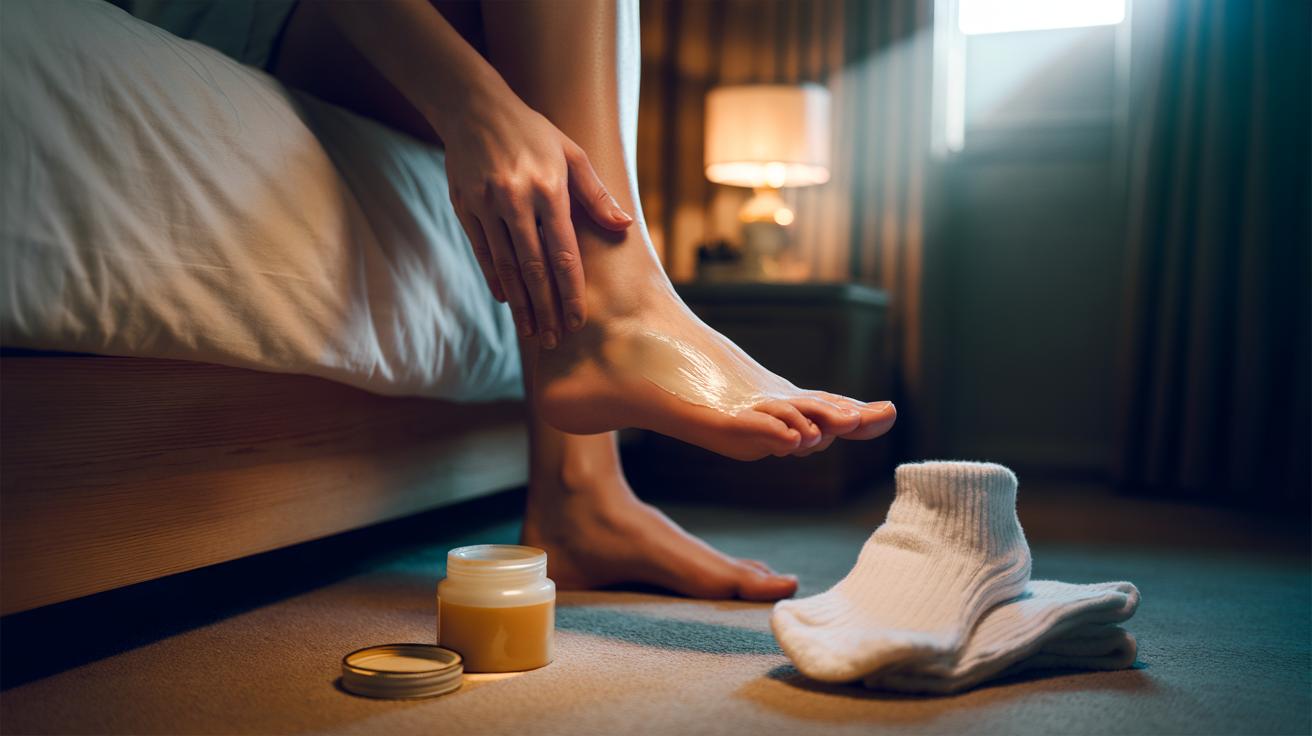
Start in the evening. Wash feet, then soak in warm water for 5–10 minutes to hydrate the outer layers. Pat fully dry, including between toes. If you have thick callus, gently buff with a fine file—never aggressively—and stop if skin reddens. Apply a thin yet glossy layer of Vaseline across the heels and any rough patches; about a pea-sized amount per heel usually suffices. Pull on clean, breathable cotton socks. Thickness of the ointment matters less than consistency—aim for a uniform film, not a slippery slab. Sleep with the socks on to maintain occlusion.
In the morning, wipe off residue with a warm, damp cloth and apply a light moisturiser if you wish. Repeat on the second evening for cumulative effect. By the end of 48 hours, expect softer edges and reduced soreness. Keep floors hazard-free to avoid slips, and reserve a dedicated pair of “treatment socks” for hygiene. If skin is intact, this routine can be your weekend reset before a busy week.
| Phase | What To Do | Why It Helps |
|---|---|---|
| Evening, Day 1 | Soak, dry, apply Vaseline, cotton socks | Hydrates skin and seals in moisture |
| Morning, Day 2 | Wipe residue, light moisturiser | Maintains elasticity without greasiness |
| Evening, Day 2 | Reapply Vaseline, socks on overnight | Compounds occlusive benefits |
| Morning, Day 3 | Clean, assess, switch to daily moisturiser | Consolidates results, prevents relapse |
Choosing the Right Materials and Amounts
Any reputable petroleum jelly works, but many prefer the texture of Vaseline for even spread. Cotton socks are ideal; synthetic blends can trap sweat unhelpfully. If your skin is extremely dry, layer a humectant-based lotion (with glycerin or urea 10–25%) under the jelly—humectant draws water in, occlusive keeps it there. Use a thin film: a pea-sized dab per heel and a half-pea for each forefoot patch. Too much increases slip risk and may make feet overly sweaty. Wash treatment socks at 60°C to freshen and avoid odour build-up.
For thick, stubborn callus, a urea cream under the jelly can speed softening. Lanolin or silicone-based occlusives also work, though petroleum jelly remains the budget-friendly standard. Avoid plastic wraps unless advised by a clinician; they raise heat and humidity too aggressively. If cracks are shallow, two nights suffice; for deeper dryness, repeat twice weekly until supple, then maintain with daily moisturiser and a once-weekly occlusion night.
Safety, Caveats, and When to Seek Help
Do not use this method on infected, weeping, or actively bleeding cracks. If you have diabetes, significant circulatory problems, or neuropathy, seek a podiatrist’s guidance before occluding, as infection can be subtle. Watch for signs of athlete’s foot—itch, peeling between toes—since high humidity can favour fungus; treat first if present. Patch test if you have a history of sensitivity, though petroleum jelly is typically hypoallergenic. Keep feet away from open flames or hot heaters while treated, and take care on hard floors—put socks on before standing.
Persistent deep fissures, discolouration, swelling, or pain warrant assessment by a GP or HCPC-registered podiatrist. For minor, superficial splits, you may use a clean dressing during the day and occlusion at night. If a crack edges towards raw dermis, prioritise protection and professional care over home smoothing. With the right cases and good hygiene, the sock-and-Vaseline method is a safe, low-cost intervention that dovetails neatly with NHS-backed dry skin advice.
The beauty of the “occlusion miracle” is its simplicity: a humble ointment, a clean pair of socks, and forty-eight hours of patience. By cutting water loss and restoring flexibility, Vaseline helps heels transition from rigid and tear-prone to soft and comfortable. Make it sustainable: hydrate nightly with a light cream, exfoliate gently once a week, and save the full occlusion for when your soles feel tight or look chalky. Small, consistent steps keep cracks from returning. Will you try the 48-hour plan this weekend—or adapt it into a weekly ritual to keep your heels ready for whatever your week asks of them?
Did you like it?4.6/5 (24)