In a nutshell
- 💚 Green pool hair is caused by copper deposits, not chlorine; lightened and porous strands show the green cast most clearly.
- 🧪 Mixing shampoo with vitamin C (ascorbic acid) acts as a mild reducing agent, loosening oxidised copper so it rinses away without bleach and restores brightness fast.
- ⏱️ Pro formula: 1 tsp vitamin C powder : 2 tbsp clarifying shampoo, massage for 1–3 minutes, then rinse as soon as the green lifts; follow with a bond-building conditioner.
- ⚠️ Use sparingly and avoid on fresh toners/vivids or very porous hair; it won’t fix semi‑permanent green dye or heavy iron staining—opt for a salon chelating service instead.
- 🛡️ Prevent deposits: pre-wet hair, apply a leave-in, wear a cap, rinse post-swim, and consider a shower filter; note that purple/blue shampoos don’t neutralise green.
Back from a dip and your blonde has a murky, mossy cast? Top salon pros have a fast fix that doesn’t involve bleach: a quick lather of shampoo spiked with vitamin C powder. It’s a backstage favourite because it addresses the real culprit behind “swimmer’s green” and shifts it in minutes, leaving highlights bright and reflective. Where clarifiers can sometimes feel harsh, this targeted tweak is nimble, low-fuss, and surprisingly gentle when used correctly. Here’s why the trick works, how to do it safely at home, and when to call in a deeper chelating service to keep your summer colour crisp rather than khaki.
Why Hair Turns Green After Swimming
That shade of green haunting lightened hair isn’t chlorine; it’s copper. Pools often contain copper from algaecides, old pipes, or source water. When oxidised in treated water, copper forms tiny particles that latch onto the hair’s outer layer. Porous, highlighted strands act like Velcro, gripping those metals tightly. Chlorinated water raises the cuticle, which simply makes it easier for copper to settle in. The green cast is copper, not chlorine—a crucial distinction that points to the right remedy.
Because copper reflects green, blonde and grey tones show it most. A post-swim shampoo alone won’t dislodge bonded metal. Traditional purple or blue toners neutralise yellow or orange, not green. That’s why pros reach for an ingredient that interacts chemically with metal: something that can reduce and loosen copper so it rinses away. Enter ascorbic acid, better known as vitamin C, a compact molecule with a talent for tackling oxidised residues without nuking your colour.
How Vitamin C Powder Works in Shampoo
Vitamin C is a mild acid and a potent reducing agent. When whisked into shampoo, it helps convert and solubilise oxidised copper compounds, easing their grip on the cuticle. In plain terms, it softens the bonds between metal particles and hair so they slide off under the lather. It also helps neutralise chloramines lingering on the surface, improving feel and shine. The slightly lower pH assists in sealing the cuticle once the metals are loosened.
Because it targets deposits rather than your dye molecules, the method is kinder than bleach or strong strippers. Still, very fresh toners or semi-permanent shades can shift a touch. Vitamin C dislodges metal staining without bleach or peroxide, which is why colourists love it for a quick rescue between services. The key is contact time: work fast, watch the tone, and rinse as soon as the green haze breaks to avoid unnecessary dryness.
Pro Method: Ratios, Timing, and Technique
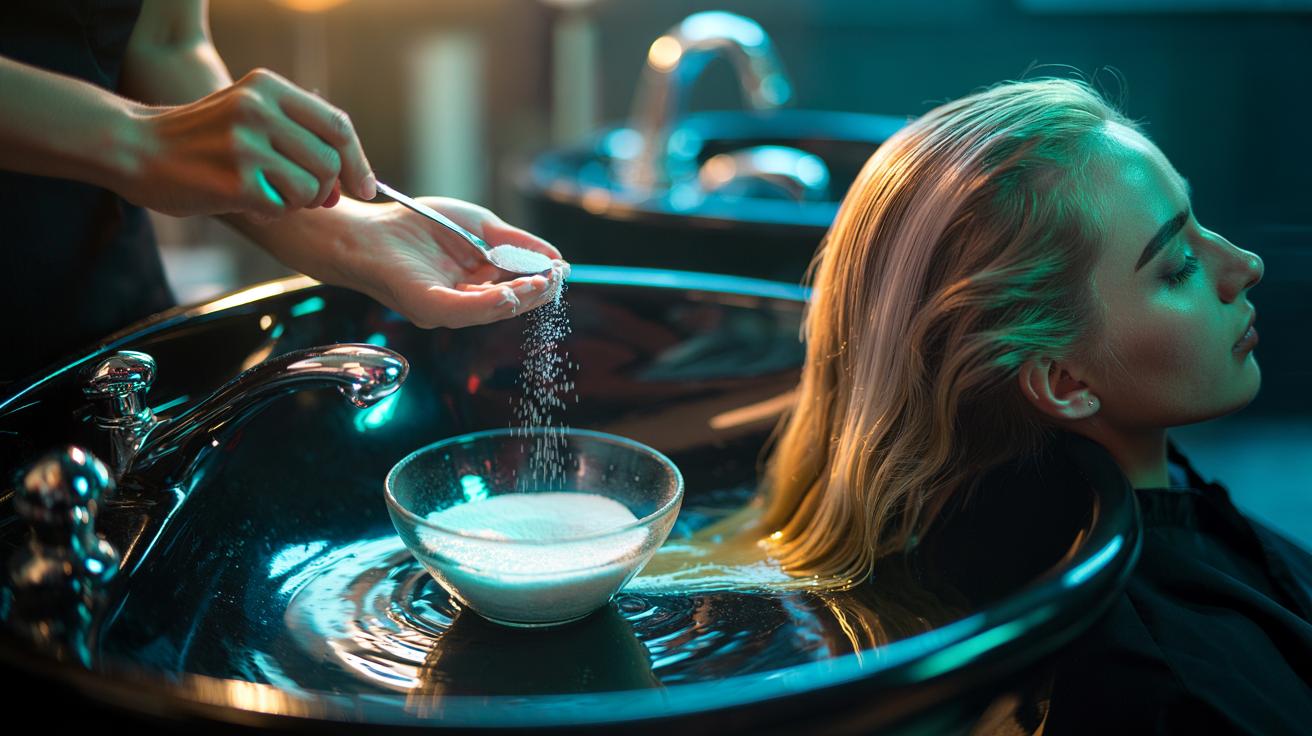
Reach for pure, unflavoured ascorbic acid powder (avoid tablets with binders). Mix roughly 1 teaspoon with 2 tablespoons of a gentle clarifying shampoo in a bowl, then apply to thoroughly wet hair. Emulsify from mids to ends where the green shows most, then sweep remaining foam through the roots. Massage continuously for 60–180 seconds, checking tone in bright light. Rinse thoroughly, then follow with a pH-balancing, bond-building conditioner to restore slip and resilience.
Use sparingly—after a pool day or when green appears—not as a weekly ritual. Leave fresh colour to settle for 72 hours before trying this, and patch test if you have a sensitive scalp. Very porous or compromised hair may need a shorter window and a richer mask afterwards. Keep it moving and rinse at the first sign of clarity to protect your colour. If the cast persists, step up to a professional chelating treatment rather than repeating endlessly at home.
| What | Pro Guidance |
|---|---|
| Mix Ratio | 1 tsp vitamin C powder to 2 tbsp clarifying shampoo |
| Contact Time | 1–3 minutes with constant massage; rinse as soon as green lifts |
| Frequency | Only after exposure; not a daily or weekly routine |
| Who Needs Caution | Freshly toned, vivid, or highly porous hair; sensitive scalps |
| Follow-Up | Bonding conditioner, cool rinse, lightweight leave-in |
| Best Form | Pure, unflavoured ascorbic acid; avoid fizzy or flavoured tablets |
What It Can’t Do and Smart Alternatives
Vitamin C excels at removing copper-induced green, but it’s not a cure-all. If your tones skew brassy orange or rusty, you may be dealing with iron deposits, which often require a salon-grade chelating gel or a metal-detox service with EDTA or similar agents. Staining from semi-permanent green dyes is a different beast. If the green is actually a semi-permanent dye stain, vitamin C will not fix it; ask for a targeted colour correction instead.
Prevention beats repair. Before swimming, saturate hair with clean water, then seal with a silicone-free leave-in; a snug cap helps too. Rinse immediately after a swim and shampoo that evening. At home, a shower filter can reduce metals in hard water. Remember, purple or blue shampoos won’t neutralise green; they handle yellow or orange. When deposits are stubborn or hair is fragile, a single professional chelation and a tailored gloss often delivers a more even, longer-lasting result.
For stylists and swimmers alike, the vitamin C trick is a nimble, science-backed way to whisk away pool-induced green without wrecking tone. By reducing and loosening copper at the surface, it restores brightness quickly and pairs neatly with nourishing aftercare. Keep an eye on timing, use a light hand, and escalate to chelating services when metals run deeper. As summer beckons, will you stash a little ascorbic acid in your kit—or do you have your own go-to ritual for keeping blonde hair crystal clean after a swim?
Did you like it?4.7/5 (24)