In a nutshell
- 🧪 Science: Dissolved CO₂ forms mild carbonic acid (pH 3.5–5) that tightens the cuticle, boosts light reflection, and micro-cleans residue—delivering instant volume and high-impact shine.
- 🎤 On-set method: A final post-shampoo rinse with chilled, plain sparkling water for 30–60 seconds, blot, then cool-to-warm blow-dry; skips heavy stylers while enhancing root lift and camera-ready gloss.
- 🏠 At-home steps: Pour 300–500 ml of carbonated water over lengths then scalp, dilute if sensitive, repeat 1–2 times weekly; add light conditioner and a microfibre towel—curly and fine hair often see the biggest lift.
- ⚠️ Risks and limits: Overuse can cause dryness or irritation, especially on sensitive scalps or bleached, porous hair; stop if issues arise and consider a home carbonation system for sustainability.
- 💧 Practical notes: Great for countering hard water film; use unflavoured water only, avoid sugar/citrus, and clarify heavy silicones first—this is a finisher, not a cure-all.
Behind the high-gloss performances and impossibly bouncy fringes, Korean idols lean on a surprisingly simple backstage hack: rinsing hair with carbonated water. The fizz has become a K-beauty standby because it delivers instant lift at the roots and mirror-like shine without sticky styling aids. The trick lies in the water’s gentle acidity and effervescence, which help smooth the cuticle, sweep away residue, and coax light to bounce off each strand. This is not a gimmick; it’s a fast, clean finish when seconds matter and cameras are unforgiving. If you want that red-carpet gleam minus the heavy product feel, this sparkling shortcut is worth understanding—and trying wisely.
The Science Behind the Fizz
Carbonated water carries dissolved CO2, forming a whisper of carbonic acid with a pH typically between 3.5 and 5. In haircare, that mild acidity helps tighten the cuticle, flattening the tiny shingles that coat each strand. A flatter surface reflects light more evenly, which is why a post-rinse blow-dry can look suddenly glassy. At the scalp, microbubbles nudge away product build-up and mineral film from hard water, leaving follicles less weighed down. The result is that rare combination: more lift at the roots and sleeker lengths, achieved with water—no lacquer, no grit. It’s essentially a quick reset for both shine and movement.
There is also a tactile benefit. When cuticles lie flat, hair-to-hair friction drops, so strands separate more cleanly, creating the illusion of airier volume. Stylists report that heat tools glide more easily, making a smooth bend or wave faster to set. The acidity can also nudge the scalp closer to its preferred pH balance, which may help temper oiliness without stripping. While it’s not a cure-all for frizz or thinning, the sparkle does what many serums promise in theory: quick clarity, lightness, and shine without residue.
How Idols Use It on Set and on Tour
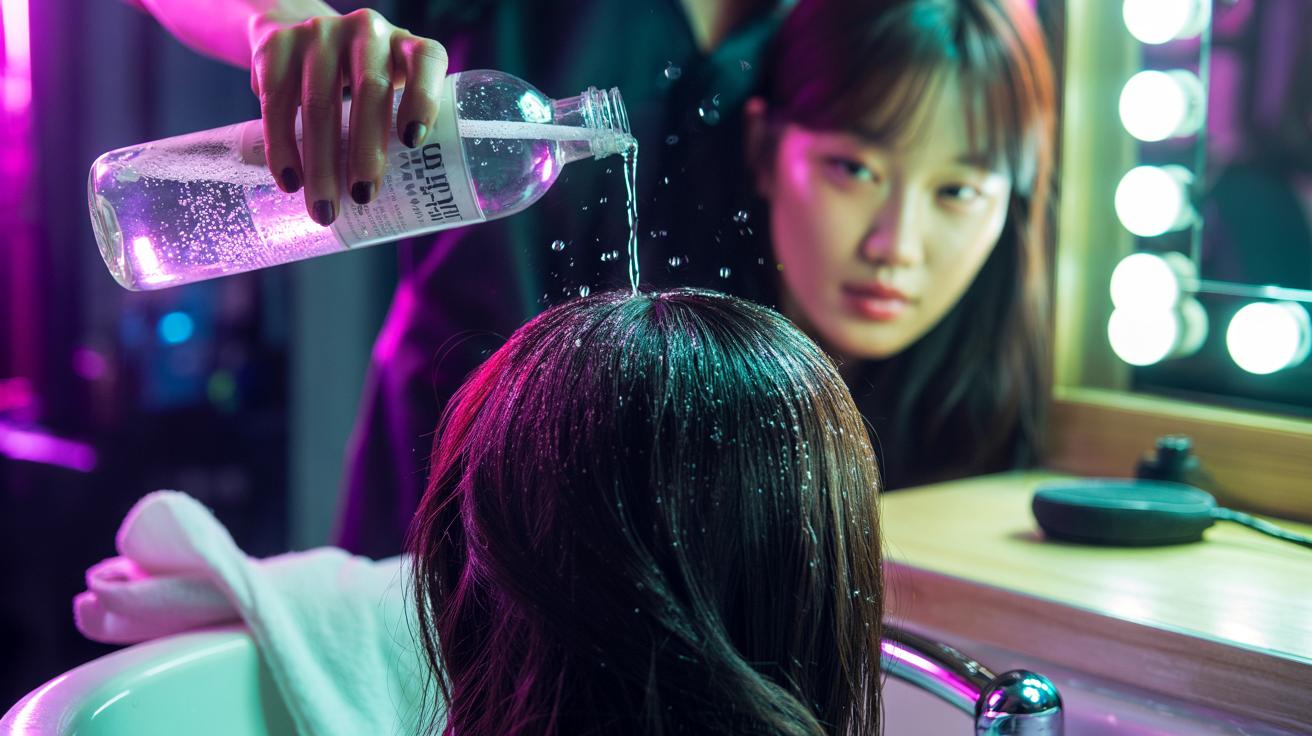
In green rooms from Seoul to Osaka, the rinse is typically a final step after shampoo—not a replacement. Assistants decant chilled, plain sparkling water over mid-lengths and ends, then briefly over the scalp, allowing 30–60 seconds of contact before a gentle squeeze-out. They avoid scrubbing, which can irritate the skin and flatten the fizz. A microfibre towel blot follows, then a cool-to-warm blow-dry for extra reflectivity. The brief acidity seals the cuticle so fast that stylists often need less smoothing cream, which avoids the heavy cast that stage lights and HD cameras amplify.
On tour, portability matters. Artists keep 500 ml bottles in kit bags to refresh hair after rehearsals when sweat and city dust dull the finish. Because there’s no gel or heavy spray, root lift stays brushable throughout costume changes. Colour technicians also like it before tone checks, as the rinse clears surface haze that can skew how a fresh dye reads under LEDs. Crucially, they use unflavoured, unsweetened water—never soda, which leaves stickiness and can damage the scalp.
How to Try a Carbonated Rinse at Home
Shampoo as normal, then pour 300–500 ml of plain sparkling water over the hair, focusing on roots last. Let it sit for up to a minute; avoid vigorous rubbing. Rinse lightly with cool tap water or leave it in for maximum shine if your scalp tolerates acidity. For sensitive skin, dilute 1:1 with still water or use it only on lengths. Follow with a small amount of conditioner from mid-lengths down, blot with a microfibre towel, and blow-dry on low. Do this once or twice a week; daily use is rarely necessary. Curly or fine hair often sees the most dramatic lift.
| Type | Typical pH | Best For | Notes |
|---|---|---|---|
| Seltzer/club soda | ~3.5–5 | Shine, root lift | Neutral taste, consistent bubbles |
| Mineral sparkling | ~5–6 | Gentler scalp feel | Check mineral load if hair feels stiff |
| Home soda maker | Varies | Regular use, low waste | Control fizz; avoid flavour syrups |
If hard water leaves your hair flat, this rinse can reduce the film that smothers bounce. Keep it simple: no citrus, sugar, or flavourings. If you use heavy oils or silicone serums, clarify first; the fizz helps but won’t shift stubborn residues alone.
Risks, Limits, and Who Should Avoid It
Because carbonated water is mildly acidic, overuse may leave some scalps tight or dry, especially if your barrier is compromised by eczema, psoriasis, or a recent chemical service. Patch-test: dab a little on the inner arm or behind the ear before a full rinse. Those with highly porous, bleached hair might notice extra tangling if they skip conditioner; address that with a pea-sized leave-in on the ends. If your water is already soft and your routine light on product, the visual difference may be subtle rather than dramatic.
Think sustainability as well as shine. Single-use bottles add up; a home carbonation system limits waste and costs less over time. Keep expectations grounded: the rinse doesn’t regrow hair or replace a balanced routine. It’s a fast finisher that makes good hair look great and bad hair look better. If irritation, flaking, or excess dryness appears, stop immediately and consult a trichologist or dermatologist. Used thoughtfully, it’s a polished, camera-ready shortcut—on and off stage.
In a beauty landscape crowded with heavy stylers and complex routines, the carbonated rinse stands out for its speed, clarity, and elegant simplicity. It brings instant volume and glassy shine with nothing left behind but buoyant, touchable hair—a logic that explains its grip on K-pop sets and salon basins alike. If you crave lift without stiffness, or sheen without oil, this could be the clean tweak your wash day was missing. Will you try the sparkle rinse for your next big night out—and if you do, which hair type do you think will surprise you most with the results?
Did you like it?4.4/5 (27)