In a nutshell
- 💧 Occlusion from petrolatum (Vaseline) slashes TEWL, swells corneocytes with water, and adds gloss—creating a fuller look that is temporary, not structural.
- 🌙 Overnight slugging boosts “triple volume” optics via long contact time, warmth, mild puffiness, and shine that peak on waking and fade within hours.
- 🧴 For safe use: dampen lips, apply a light humectant, then a thin petrolatum seal; skip strong actives like retinoids/AHAs under occlusion; cleanse in the morning and use an SPF lip balm.
- ⚠️ Watch risks: avoid slugging over broken skin, cold sores, or perioral dermatitis; fragrance/menthol can trigger irritant cheilitis; many do best at 2–3 nights weekly.
- 🕒 Manage expectations: this is water-driven plumpness, not fillers; for lasting volume, consider professional options if desired.
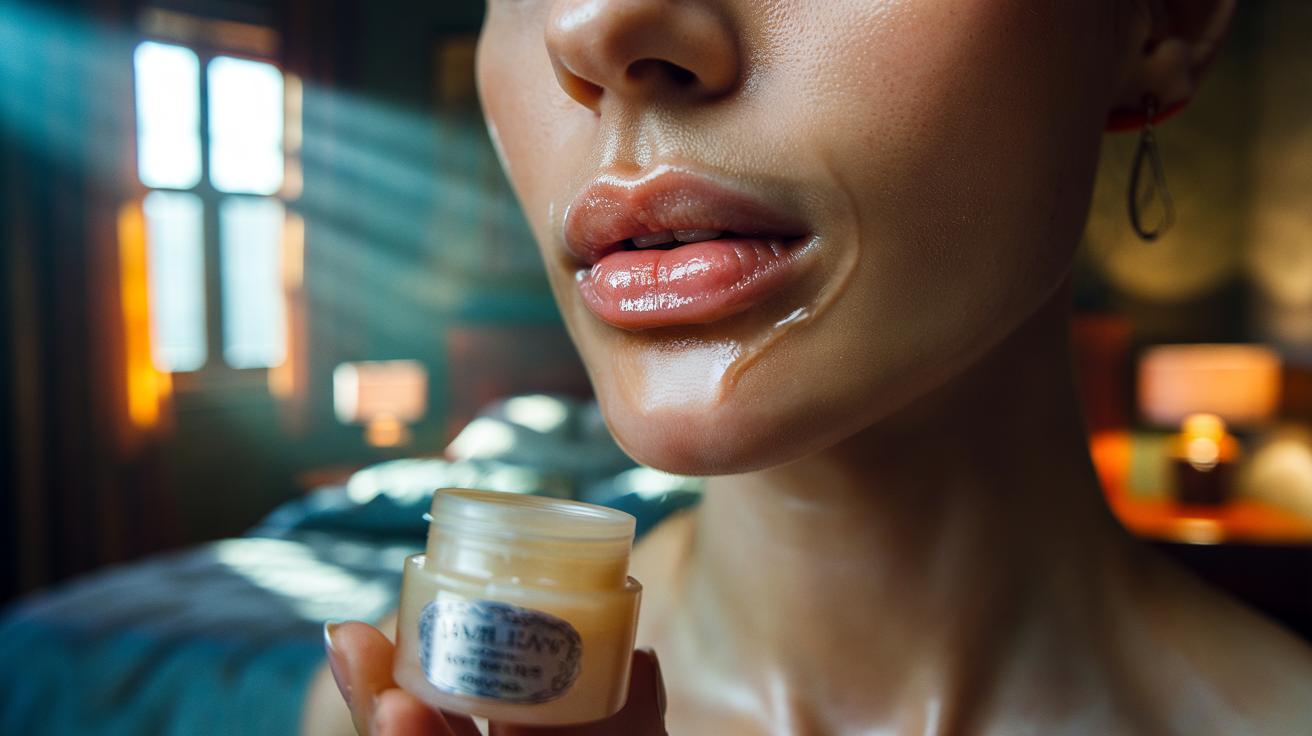
Beauty feeds are buzzing about Vaseline slugging that seems to “triple” lip volume by morning. The before-and-after pictures are striking, but the science is less sensational and far more interesting. Petrolatum’s power lies in occlusion, a barrier that dramatically slows water escaping from skin. On lips—already thin, porous, and short on oil glands—this can create a plush, pillowy look after a night’s sleep. This is a temporary effect driven by water retention, not structural change. Used thoughtfully, the method can soften cracks, smooth flakes, and amplify shine. Misused, it can irritate or accentuate sensitivity. Here’s how overnight occlusion swells, why it sometimes looks dramatic, and what to do if you want the glow without the grumbles.
What Occlusion Really Does to Lips
Petrolatum—famously the backbone of Vaseline—is a classic occlusive. It forms a semi-permeable film that can cut transepidermal water loss (TEWL) to near-negligible levels. On lips, where the stratum corneum is thin and sebaceous support is scarce, sealing in moisture creates a saturated microclimate. Corneocytes swell as they absorb water, smoothing the surface and softening scaling. The visible “plump” is largely corneocyte hydration and surface swelling, not collagen growth or filler-like expansion. That’s why the effect fades hours after you wipe it off.
Occlusion also stabilises the environment: warmth slightly increases microcirculation and softness, lending a rosier tone that reads as fuller. When applied over a water-rich base, such as a mist or a humectant serum, the effect intensifies because there is more water available to trap. The film itself adds glossy reflectance, which optically enhances volume. Taken together—hydration, mild vasodilation, and shine—lips look lush even though the underlying structure hasn’t changed.
Why ‘Triple Volume’ Happens Overnight
Sleep is the perfect window for slugging: you’re not eating, talking, or licking your lips, so the occlusive layer remains undisturbed. Over several hours, water equilibrates across the upper layers, corneocytes fully hydrate, and superficial lines blur. The “tripling” some users report is a mix of water retention, optical gloss, and morning puffiness that naturally peaks after lying down. Gravity, a warm duvet, and a long contact time exaggerate the effect compared with daytime wear. Expect the peak look on first waking, with a gentle dial-down as you sip water and move around.
The mechanism is straightforward but multifactorial: reduce evaporation, raise water content, soften keratin plugs, and allow capillaries to appear slightly more prominent beneath a thinned, hydrated surface. Heavy application can also create mild pressure, which flattens flakes and makes lips appear broader. Importantly, this is reversible within hours and should not be confused with dermal fillers or lasting lip augmentation.
| Mechanism | What You See | When It Peaks | How Long It Lasts | Key Risk |
|---|---|---|---|---|
| TEWL reduction | Softer, smoother surface | 4–8 hours | Hours after removal | Over-softening, maceration |
| Humectant trapping | Extra plumpness | Overnight | Short-term | Sticky residue if overused |
| Optical gloss | Fuller look | Immediate | Until wiped off | Mess transfer to bedding |
| Warmth/vasodilation | Rosier tone | Overnight | Short-term | Redness in sensitive skin |
How to Use Vaseline for Lip Slugging Safely
Start simple: cleanse the mouth area, then dampen lips with water or a light mist. Apply a thin layer of a water-based humectant (glycerin or low-weight hyaluronic acid) and allow it to settle for a minute. Seal with a rice-grain amount of petrolatum; spread it thinly to avoid migration. More product does not equal more volume—too thick a coat can macerate the lip edges and invite irritation. If you sleep on your side, consider a silk or cotton pillowcase you won’t mind spot-cleaning.
Pairing matters. Do not layer occlusion over strong actives around the mouth at night—skip retinoids, AHAs, and spicy plumping balms, which can become more potent under a seal. If you need repair, a bland, fragrance-free balm under petrolatum can help, but keep formulas minimal. In the morning, wipe away residue with lukewarm water or a gentle cleanser and apply an SPF lip balm. Sun protection is essential because newly hydrated lips are more light-sensitive to chapping and burn.
Risks, Red Flags, and Who Should Skip It
While petrolatum is generally well-tolerated, occlusion can amplify problems when the underlying skin is irritated. Those prone to perioral dermatitis, inflamed acne around the mouth, or chronic angular cheilitis may find that a heavy seal worsens the picture by trapping moisture and microbes. Avoid slugging over broken skin, active cold sores, or crusted fissures until fully healed. If you feel burning or see diffuse redness at the lip border, stop and revert to a fragrance-free, non-occlusive balm while the barrier recovers.
Allergy to petrolatum itself is rare, but flavourings, essential oils, and menthol in companion products frequently provoke irritant contact cheilitis. Keep your routine stripped back for a week if sensitivity flares, then reintroduce steps methodically. Nightly slugging every night can be overkill; many people do better with two or three nights a week, adjusting frequency with seasons and central heating. If deeper volume is your aim, understand that occlusion swells by water, not by building tissue; persistent fullness requires in-clinic options discussed with a qualified practitioner.
Occlusion is a clever piece of skin physics: slow the escape of water and lips look lush, glossy, and camera-ready by morning. The “triple volume” effect sits at the crossroads of hydration, shine, and sleep-time puff, then ebbs as the day unfolds. Used thoughtfully—thin layers, gentle pairings, and realistic expectations—Vaseline slugging can rescue winter-worn lips and boost comfort fast. If you’ve tried the trend, what tweak—less product, a humectant pre-layer, or a different schedule—made the biggest difference to your morning results?
Did you like it?4.4/5 (25)