In a nutshell
- 💧 Vaseline is an occlusive petrolatum that reduces TEWL; it doesn’t speed growth but boosts length retention by preventing peeling and breakage, as hydrated keratin bends instead of snapping.
- 🛌 Three-night routine: apply a humectant first, then Vaseline, massage, wear cotton gloves; night two gently push back after a shower; night three seal tips—expect softer cuticles, fewer snags, and longer-looking nails.
- 🔬 Science: combine humectants + emollients + occlusives; protect the cuticle seal over the nail matrix; limit acetone and sanitisers; Vaseline layered after hand cream performs best.
- ⚠️ Risks and myths: petrolatum is safe and inert; avoid sealing over active infection; nails don’t need to “breathe”; skip aggressive cuticle cutting; consider jojoba or squalane under a tiny dab of Vaseline if texture is an issue.
- 🍽️ Lifestyle support: prioritise protein, iron, and zinc; biotin helps mainly in brittle nail syndrome; avoid formaldehyde hardeners; file in one direction; repeat the three-night reset weekly.
Across social feeds, a beauty shortcut keeps resurfacing: apply Vaseline to your cuticles for three nights and watch your nails look longer. It sounds like a miracle, yet the truth is more nuanced—and more interesting. Petrolatum, the base of Vaseline, is an occlusive that traps water in skin and keratin. The result is not faster growth from the nail matrix, but better length retention because nails chip and peel less. Treated cuticles also protect the emerging nail more reliably. Here, I examine how this humble jar helps, the routine that actually works, and the science of moisture, flexibility and breakage that sits behind the three-night claim.
What Really Happens When You Use Vaseline on Cuticles
Vaseline is refined petrolatum, a heavyweight occlusive that slows transepidermal water loss (TEWL). When massaged into the cuticle and sidewalls, it softens the skin seal that guards the nail matrix—the growth engine tucked beneath the proximal fold. Softer cuticles snag less, meaning fewer tears and fewer micro-traumas to the nail plate as it emerges. Hydrated keratin bends; dehydrated keratin snaps. That flexibility is why nails often seem to “grow” in just a few days of consistent use: you’re keeping the length you already produce.
Biologically, most adults grow nails at roughly 2.5–3 mm per month, slower in winter and with age. Vaseline does not accelerate the matrix. What it does is create conditions that reduce peeling (onychoshizia) and tip fractures. The visual win arrives quickly because smoothing the cuticle rim makes nails appear longer, cleaner, and more uniform. Think of petrolatum as a protective raincoat, not a fertiliser.
Three-Night Routine: A Practical Method That Works
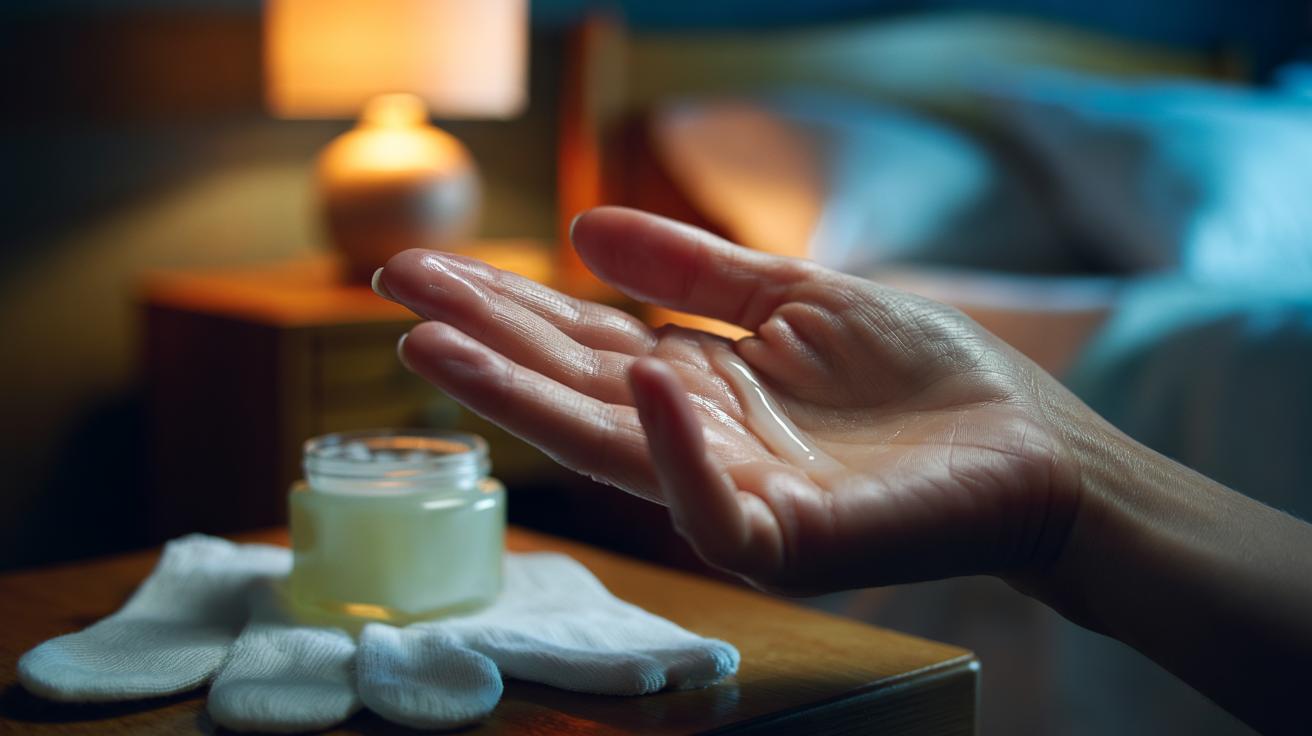
The three-night method works by stacking moisture and sealing it. Night one, wash hands with lukewarm water, pat dry, and apply a humectant layer first—glycerin or urea hand cream—then a rice-sized dab of Vaseline to each nail fold. Massage for 60 seconds per hand to boost microcirculation and soften the cuticle line. Slip on thin cotton gloves to prevent transfer. Night two repeats the process but adds a gentle pushback with a soft cloth after a shower—no scraping, no metal tools. Night three consolidates: focus on any ragged patches and cap the free edge with a smear to reduce tip dehydration overnight.
By morning, cleanse with a non-stripping soap and reapply a light cream. In three consecutive nights, expect softer cuticles, fewer hangnails, and nails that feel less brittle—visible length retention follows. Keep daytime application minimal to avoid greasiness; a tiny dot massaged into the cuticle line works.
| Night | Focus | What You’ll Notice |
|---|---|---|
| 1 | Seal in moisture after humectant | Softer cuticle rim, immediate sheen |
| 2 | Gentle pushback, tidy edges | Fewer snags, cleaner nail outline |
| 3 | Tip protection and consistent sealing | Reduced peeling, nails look longer |
Science Check: Occlusives, Hydration, and Nail Biology
Human nails are compacted keratin layers that behave best at a moderate water content. When too dry, plate layers shear, creating splits that shorten length. When appropriately hydrated, the plate flexes under daily knocks. Occlusives like petrolatum don’t add water; they slow its escape. Pairing them with humectants (glycerin, urea) and emollients (shea, squalane) gives a classic three-part routine: draw in moisture, smooth the surface, then seal. This is why Vaseline after a hand cream outperforms Vaseline alone.
The cuticle itself is not cosmetic fluff; it’s a living seal that blocks pathogens and irritants from reaching the matrix. Trimming can tear that seal. Keeping it supple with an occlusive improves barrier function and reduces inflammation, which protects new keratin as it grows out. Complement the routine by limiting harsh solvents—acetone removers and frequent sanitiser use accelerate water loss and brittleness—then restore with a nightly seal.
Risks, Myths, and Smarter Alternatives
Pure petrolatum is inert and widely considered safe, though fragrance additives in some products may irritate sensitive skin. If you have a nail fold infection, skip occlusives until it clears, as sealing over active inflammation can feel uncomfortable. Despite myths, petrolatum is not “non-breathable” in a harmful sense; nails don’t need to breathe oxygen from the air. The real risk is overzealous cuticle cutting, not the jelly. For those who dislike the texture, lightweight oils—jojoba, squalane, or a dedicated cuticle serum—can be layered beneath a tiny dab of Vaseline to reduce tack.
Longevity also depends on lifestyle and nutrition. A protein-rich diet, adequate iron and zinc, and cautious use of polish removers matter. Biotin may help in documented brittle nail syndrome, though evidence for general use is mixed. Avoid formaldehyde-based hardeners, which can stiffen plates to the point of snapping. File in one direction, wear gloves for chores, and treat three nights as a reset you can repeat weekly.
Three nights of Vaseline on the cuticles won’t change your biology, but it changes the environment your nails live in. By sealing in water, softening the cuticle seal and curbing daily wear, you keep more of the length you already grow—so nails appear longer, faster. Add humectants first, respect the cuticle, and limit harsh removers, and you’ve got a simple, affordable routine that performs like clever skincare for hands. Are you ready to test the three-night reset—and which tweak, from humectant-first to cotton gloves, will you try to make it your own?
Did you like it?4.3/5 (23)