In a nutshell
- 🍅 Tomato juice’s lycopene and mildly acidic pH can temper shine by slowing sebum oxidation, offering up to 48 hours of more balanced scalp appearance.
- 🔬 The science is plausible but limited: no direct clinical trials; benefits hinge on antioxidant action and acid-mantle support, with results varying by hair type and climate.
- 🧴 DIY method: patch test, strain and dilute 1:1, massage into the scalp for 60–90 seconds, leave 3–5 minutes, then rinse; avoid pairing with strong acids or fresh color.
- 🧪 Key components: Lycopene (antioxidant), citric/malic acids (mild exfoliation, pH reset), pectins (light film), and minerals—together refining feel without stripping.
- ✅ Expectation setting: it’s a cosmetic, short-horizon balancer—it won’t reduce oil production but can improve texture, spread, and comfort between washes; track changes over two weeks.
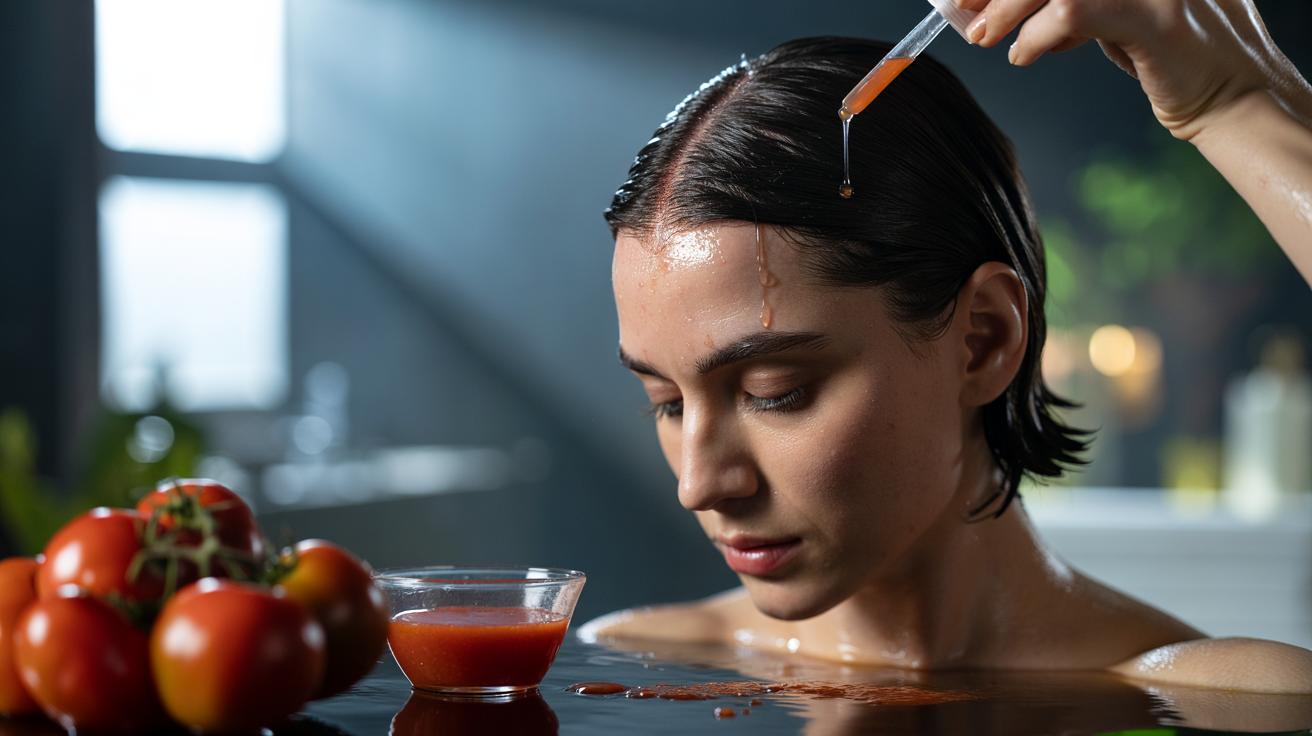
A kitchen-shelf fix is making waves: applying tomato juice to the scalp to keep excess oil at bay for up to 48 hours. The idea hinges on lycopene, the tomato’s star carotenoid, and the juice’s naturally acidic pH, which together may temper shine without aggressive cleansers. As a practical, low-cost experiment, it appeals to anyone who feels greasy by day two after washing. It is not a miracle cure or a substitute for targeted scalp treatments, but a plausible, skin-friendly intervention. Here’s how it might work, what the science actually supports, and how to try it safely at home.
How Lycopene Balances Sebum for 48 Hours
Tomatoes are rich in lycopene, a fat-loving antioxidant that can mingle with scalp oils. When sebum oxidises—especially its squalene fraction—it thickens, smells stronger, and looks glossier. By quenching free radicals, lycopene may slow this oxidation, so the scalp appears less shiny for longer. Tomato juice also sits around a mildly acidic pH (about 4–4.5), helping reset the scalp’s acid mantle after washing, which can reduce that slick, freshly-washed rebound sheen many experience the following day.
Another subtle effect comes from plant pectins and organic acids (citric and malic) that lightly lift residue and refine the scalp’s surface without stripping. This approach does not shut down oil glands or “close pores”—neither is possible. Instead, it influences the state and spread of existing oil, which is why the 24–48-hour window is realistic. Expect improved feel and manageability rather than a matte, product-like finish.
Evidence and Limits: What the Science Says
There are no head-to-head clinical trials comparing tomato juice to standard scalp toners, so any claim of guaranteed 48-hour control deserves healthy scepticism. That said, the pieces align: lab and small cosmetic studies show lycopene reduces lipid peroxidation; dermatology literature links oxidised sebum with shine and irritation; and acidic rinses help normalise surface pH, which can aid comfort and appearance. Together, this supports a plausible benefit, especially for those whose oiliness looks worse due to oxidation rather than sheer volume of secretion.
Individual results vary with hair density, curl pattern, wash frequency, and climate. Fine, straight hair showcases oil faster than coily hair, so visual gains may differ even when chemistry is the same. Consider this a supportive care tactic rather than a treatment for medical scalp conditions. If redness, scaling, or persistent itch is present, seek professional guidance before experimenting in the kitchen.
DIY Application: Safe Methods and Precautions
Start with a patch test: apply a dab of strained tomato juice behind the ear for 24 hours. If clear, blend ripe tomatoes, then strain thoroughly to remove pulp and seeds. Dilute 1:1 with cool water for a gentle tonic. On a clean scalp, section hair, massage the liquid onto the skin for 60–90 seconds, leave for 3–5 minutes, then rinse well. Use once or twice weekly. Stop immediately if stinging persists beyond a mild tingle or if you notice redness.
Tips to improve outcomes: use a mild, sulphate-free shampoo first, and avoid pairing the rinse the same day with strong acids, peels, or retinoids. Be cautious with freshly coloured hair; acidity can nudge vibrancy. Keep it off the eyes and any broken skin. The aim is a pH-balancing, antioxidant top-up that softens shine without dryness. If the scalp feels tight, add a few drops of glycerin to the mix for comfort.
Key Components in Tomato Juice and Their Roles
Tomato juice is a compact cocktail of acids, antioxidants, and polysaccharides that act on oil’s behaviour rather than switching off its production. Understanding these elements helps set realistic expectations: you’re optimising the scalp environment, not rewiring biology. Below is a quick guide to the most relevant constituents and how they may contribute to a calmer-looking scalp between washes.
| Component | Likely Action | What It Means for Oil Control | Evidence Snapshot |
|---|---|---|---|
| Lycopene | Antioxidant, lipophilic | Limits sebum oxidation and gloss | Supported by antioxidant studies; no direct scalp RCTs |
| Citric/Malic acids | Mild exfoliation; acidic pH | Resets acid mantle; refines feel | Well-described cosmetic effects |
| Pectins | Light film-forming | Subtle surface smoothing | Plausible, limited direct data |
| Minerals (e.g., potassium) | Supports osmotic balance | Comfort; not a sebum “off switch” | Indirect relevance |
Think of tomato juice as a cosmetic, short-horizon balancer: the oil glands continue their normal output, but oxidation, texture, and spread are better managed. If your main concern is midday shine rather than scalp discomfort, this gentle intervention can slot neatly between wash days without heavy styling products.
Tomato juice won’t replace a dermatologist, yet its mix of lycopene, organic acids, and a supportive pH profile makes it a sensible, low-cost experiment for taming shine for up to 48 hours. Keep expectations anchored: consistency, patch testing, and a simple routine are your best allies. Track how your scalp looks and feels across two weeks to judge value. If it helps, you’ve found a kitchen classic with modern purpose. Would you try a short trial and note changes in shine, comfort, and wash cadence—and which hair type are you bringing to the test?
Did you like it?4.6/5 (27)