In a nutshell
- 🛡️ Occlusion effect: A pin-thin film of Vaseline (petroleum jelly) inside the nostril slows transepidermal water loss, softens micro-flakes, and smooths texture so foundation glides instead of caking.
- 🧼 Application and hygiene: Use a spatula and cotton bud, apply a pin-head amount just inside the rim, wait 5–10 minutes, and blot shine; keep tools clean and avoid scented or mentholated balms.
- 🎨 Makeup layering that cooperates: Choose sheer-to-medium bases, press with a damp sponge, set lightly with micro-milled powder, and avoid piling heavy silicone primers or very matte, alcohol-rich formulas over the area.
- ⚠️ Safety and skin types: Petrolatum is largely inert, but cleanse thoroughly if prone to blackheads; avoid use with nasal oxygen due to fire risk, and seek medical advice for cracking or persistent soreness.
- 🌿 Alternatives and prevention: Consider lanolin balms (if tolerated), ceramide ointments, or silicone-rich primers, and support the barrier with humectants like glycerin and hyaluronic acid to reduce future flaking.
When your base looks flawless on the cheeks but disintegrates around the nostrils, the culprit is usually micro-flaking skin and makeup dehydration. A tiny film of Vaseline—or plain petroleum jelly—placed just inside the nose can transform that area, stopping foundation from catching on dry edges and settling into lines. The secret is simple: occlusion. By sealing in moisture where tissues, wind, and central heating strip it away, you stabilise the surface so pigment glides rather than clumps. Used sparingly and hygienically, this classic balm acts like an invisible raincoat for the trickiest part of the face. Here is how it works, how to apply it safely, and how to make your makeup cooperate for all-day smoothness.
How Occlusion Stops Caking Around the Nose
The skin hugging the nostrils is thin, frequently rubbed, and prone to transepidermal water loss. Petrolatum forms a semi-occlusive barrier that slows that water escape dramatically, softening the stratum corneum and flattening rough edges that snag product. As the tissue rehydrates from within, the surface becomes more uniform, so foundation and concealer lie evenly rather than balling or turning chalky. Crucially, you don’t need a visible gloss—an ultra-fine film is enough to create the “cushion” that stops pigments from gripping to crusty patches.
Think of it as priming the texture, not adding slip for the sake of it. A whisper of balm inside the rim of the nostril helps the adjacent skin behave better, especially if you’re blowing your nose often. The effect isn’t about shine; it’s about restoring a calm, flexible surface so makeup can bend with facial movement without cracking. That’s why a pin-head amount frequently outperforms multiple layers of primer on this specific area.
Practical Application and Hygiene Tips
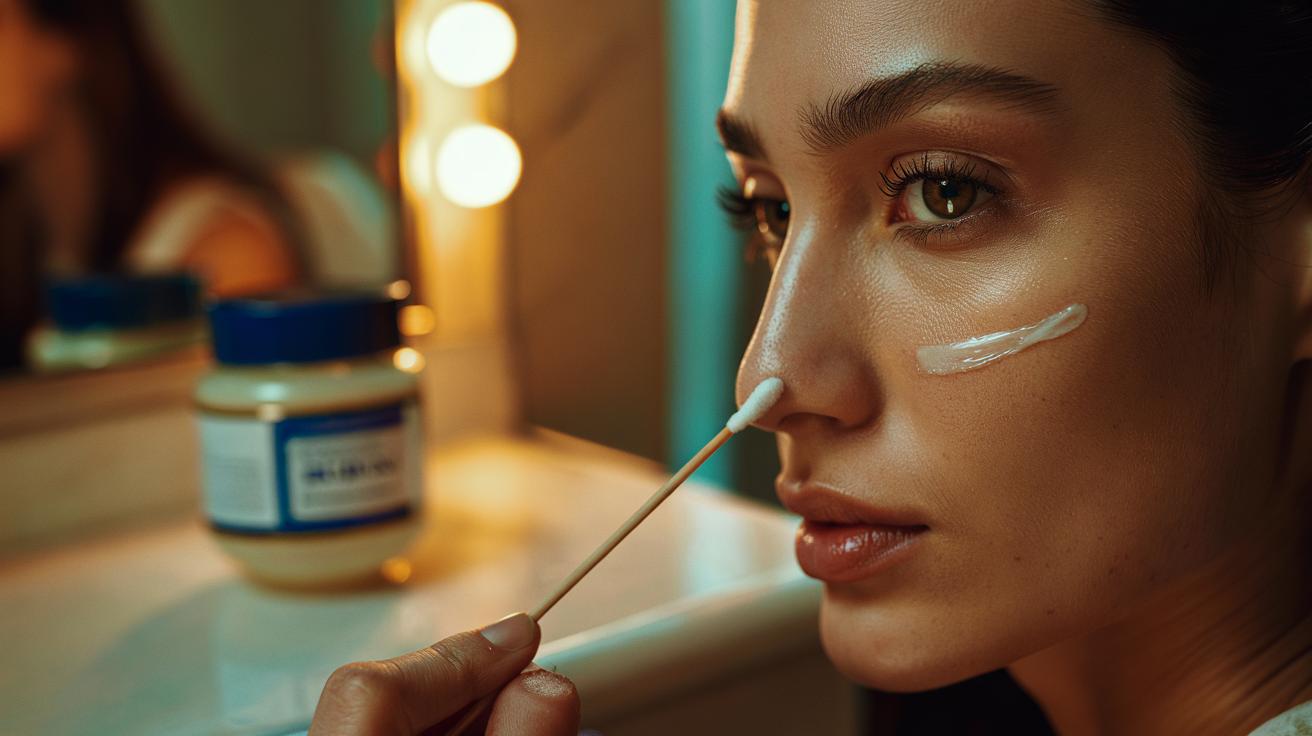
Clean hands first. Scoop a pin-head of fragrance-free petroleum jelly with a spatula, not your finger, to avoid contaminating the pot. Using a cotton bud, trace a thin film just inside the nostril’s inner rim—no need to go deep—and gently massage the product outward so only the immediate perimeter benefits. Wait 5–10 minutes for the balm to meld with body heat, then blot any obvious shine. Apply moisturiser and a light primer around the nose, keeping layers sheer. If you can see the jelly, you’ve likely used too much. The goal is to soften and seal, not to create a greasy slide that dilutes your base.
Keep tools single-use and switch to a new bud for the second nostril. Choose unscented formulas to reduce irritation risk, and skip mentholated balms that can sting compromised skin. If you’re under nasal oxygen, avoid petrolatum due to flammability concerns—ask your clinician for a water-based alternative. For daily wearers, reserve the technique for flare-ups or cold season so you don’t over-occlude the area.
| Step | Amount | Tool | Wait Time | Makeup Outcome |
|---|---|---|---|---|
| Line inner rim | Pin-head | Cotton bud | 5–10 mins | Softer edges, fewer flakes |
| Blot excess | Transparent finish | Tissue | Immediate | Less slip under foundation |
| Apply base | Thin layers | Damp sponge | Press, don’t drag | Even, non-cakey coverage |
Makeup Layering That Plays Nicely With Petrolatum
Petrolatum plays best with sheer to medium coverage products. Choose flexible, hydrating formulas and apply with a damp sponge, pressing rather than sweeping to avoid lifting the occlusive layer. Place your base sparingly around the nose, then build only where redness peeks through. Thin layers beat heavy correction here every time. A micro-milled loose powder tapped on with a puff sets without catching; skip dense baking, which can emphasise texture. Cream blush and highlighters are fine if you keep them off the immediate nostril edge.
For long wear, minimise potential mixing conflicts: heavy silicone primers plus petrolatum can cause pilling on some complexions, while very matte, alcohol-rich foundations may look tight over time. A smart compromise is a serum foundation or tinted moisturiser near the nose with a targeted concealer dabbed only on redness. If shine peeks through midday, press—not rub—a clean tissue, then tap a rice-grain of balm back on before refreshing your base.
Safety, Skin Types, and Alternatives
Despite myths, petrolatum is inert and unlikely to clog pores by itself; its molecules are too large to penetrate. That said, those prone to blackheads around the nose should cleanse thoroughly at day’s end to remove trapped sweat and pollution. Opt for unscented, dye-free jelly to avoid irritation, and stop if stinging or persistent redness occurs. If you experience cracking, bleeding, or recurrent soreness, speak to your GP or pharmacist to rule out dermatitis or infection. People using nasal oxygen should avoid petroleum-based products due to fire risk and should seek water-based gels.
If you’d rather skip petrolatum, try lanolin-based balms (if not wool-sensitive), ceramide ointments, or a silicone-rich primer that smooths texture without heavy occlusion. For prevention, build a routine with humectants (glycerin, hyaluronic acid) under a light moisturiser, then spot-occlude only when flares strike. British dermatology guidance consistently backs regular emollient use for barrier repair; the trick for makeup wearers is targeted, minimal application so the canvas stays calm, pliable, and photo-ready.
A clever smear of Vaseline inside the nostril solves a very specific makeup headache: that flaky, cakey halo where foundation loves to misbehave. By sealing moisture and smoothing texture, it creates a cooperative surface so pigment spreads evenly and stays put. The technique demands restraint, clean tools, and the right formulas layered on top—then it becomes a five-second insurance policy against patchiness. Treat it as a targeted fix rather than an everyday slather. How will you adapt your prep—will you try a pin-head of occlusion, or are you leaning towards a silicone primer or ceramide ointment to master your nose zone?
Did you like it?4.6/5 (26)