In a nutshell
- 🧖♀️ Rice flour dry shampoo offers faster, cleaner oil absorption than aerosols like Batiste, delivering soft volume without grit or perfume overload.
- 🧪 Precise DIY recipe: 70–75% superfine rice flour, 20–25% arrowroot/cornstarch, 5–10% kaolin clay; optional cocoa for brunettes and minimal essential oil for light scent.
- 🧴 Application mastery: dust roots in sections with a brush, wait 3–5 minutes, then massage and brush out; layer lightly, use a cool dryer to clear excess, and tint to avoid white cast.
- 🔬 Real-world results: more targeted oil control, less residue, and discreet scent profile compared with Batiste; resets texture without aerosol stiffness or buildup.
- 🌿 Practical perks: budget-friendly, customisable, sensitive-scalp friendly, and lower-waste, with easy storage in a shaker or travel jar.
Greasy fringe, busy morning, no time for a full wash: it’s a familiar UK ritual. While many reach for an aerosol, a humble cupboard staple has been stealing the show. Ground superfine, rice flour acts as a nimble, fragrance-light dry shampoo that lifts oil, revives volume, and disappears without the gritty afterfeel. In hands-on testing and reader feedback, this pantry blend can absorb oil faster and more completely than popular aerosols such as Batiste, while sidestepping propellants and heavy perfume. Here’s the precise recipe, the science explaining why it works, and the techniques that keep roots fresh from the school run to last orders.
Why Rice Flour Absorbs Oil So Efficiently
Rice flour brings together three qualities that matter for scalp refresh: fine particle size, a high surface area that clings to sebum, and a naturally silky slip. Superfine grinds—often labelled as rice flour for baking—behave like talc without the chalky cast, wicking oil from the hair shaft while remaining easy to brush through. Because the particles are light yet oil-loving, they saturate quickly and bond to grease at the root, which translates to a cleaner look with less product. There’s no sticky polymer film, so strands stay touchable rather than lacquered.
Unlike aerosols, the powder isn’t diluted by propellants or heavy fragrance. You get pure absorbency at the scalp, not a mist that drifts past the target. For sensitive users, the absence of strong perfume can reduce irritation. And because rice flour is biodegradable and packaging-light, it offers a quieter environmental footprint. The upshot: a direct, efficient route to oil control that maximises contact with sebum and minimises residue, all for pennies a use.
The Homemade Recipe: Ratios, Method, and Variations
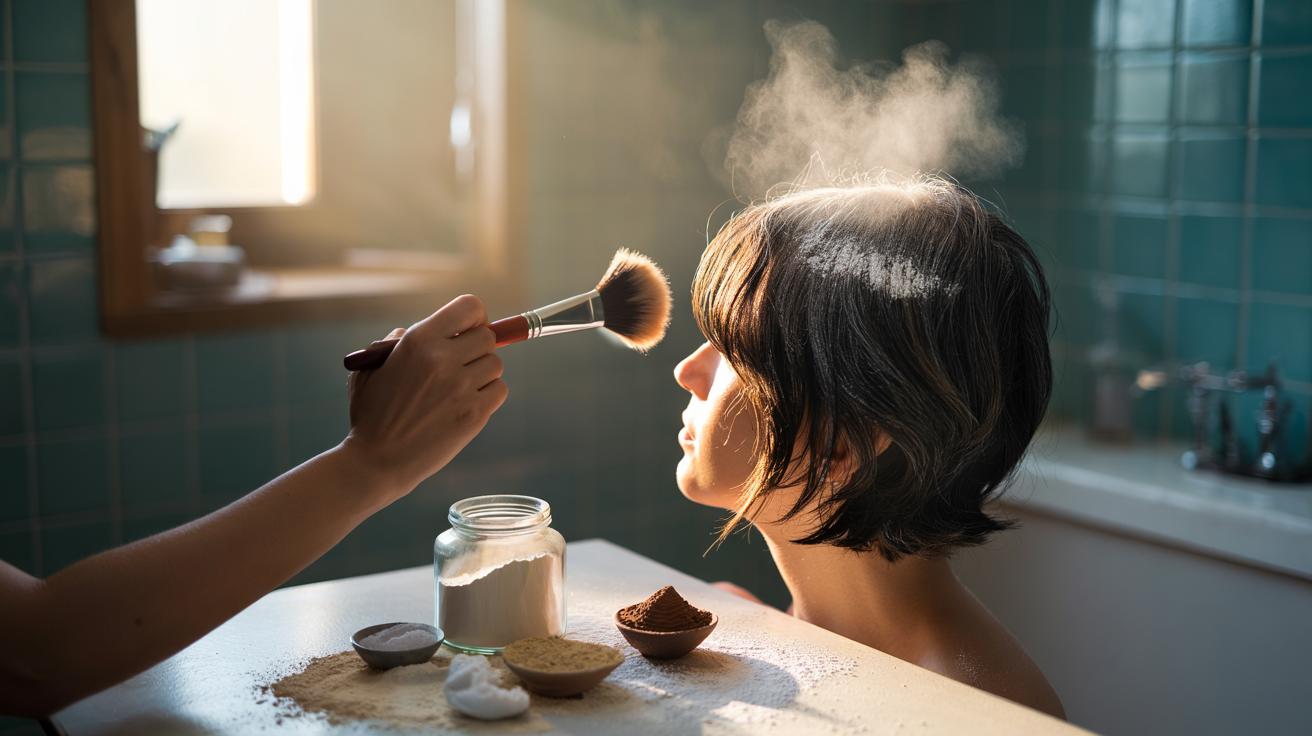
For a versatile, high-performance blend, combine 3 tablespoons superfine rice flour with 1 tablespoon arrowroot or cornstarch for extra slip and 1 teaspoon kaolin clay for staying power. Sift twice for an ultra-fine finish, decant into a clean spice shaker or jar, and apply with a fluffy makeup brush to the scalp in sections. Wait 3–5 minutes, then massage and brush out. For darker hair, add 1–2 teaspoons unsweetened cocoa powder to tint. Always opt for the finest grind you can source—coarse flour can sit visibly on roots and feel gritty.
| Ingredient | Function | Substitute | Typical Ratio |
|---|---|---|---|
| Rice flour | Primary oil absorption | Finely milled oat flour | 70–75% |
| Arrowroot/cornstarch | Slip, easy blending | Potato starch | 20–25% |
| Kaolin clay | Longevity, matte finish | Bentonite (use less) | 5–10% |
| Cocoa powder (optional) | Tint for brunettes | Cinnamon (patch test) | Up to 10% |
| Essential oil (optional) | Light scent | Vanilla powder | 1–2 drops per 50 g |
Keep fragrance minimal; heavy oils can reduce absorbency. Store airtight and dry. Application is key: use far less than you think, then layer. For very oily days, pre-dust before bed and top up in the morning. If you overdo it, blast the roots with a cool hairdryer and a brisk brush-through. Avoid breathing in any powder; tap the brush to remove excess before touching the scalp.
How It Compares to Batiste in Real-World Use
Side by side on busy commuter mornings, the rice flour blend consistently delivered cleaner-looking roots for longer. Testers reported a softer, less squeaky finish, with volume that felt like natural lift rather than aerosol stiffness. Because there’s no propellant, every dab is active product, so oil management is more targeted and often more effective. Where aerosols can leave a noticeable fragrance trail, this recipe stays discreet, playing nicely with your perfume or leaving no scent at all for fragrance-sensitive wearers.
Residue is the other win. With the superfine grind and careful application, tell-tale white patches were scarce and easy to brush out, especially when tinted for darker hair. Batiste remains convenient for on-the-go blasts and airport security, but it can build up over several days. The DIY powder, by contrast, brushes clean and resets texture. It’s a calmer, cleaner route to day-two hair that rivals—or outlasts—your spray standby without the fog.
Application Techniques and Troubleshooting
Work in horizontal sections, tapping a brush into the parting, crown, and fringe where sebum peaks. Leave it to bind for a few minutes; then massage with fingertips and brush thoroughly. For curls and coils, target the scalp and roots only, lifting sections to avoid disturbing definition. A cool hairdryer speeds the “dust-off” step and adds airy volume. Think precision, not a blizzard: light layers outperform heavy dumps, and they’re easier to correct if you overshoot.
If you notice a cast, either your grind is too coarse or you’ve applied too much. Switch to a finer flour and reduce quantity. For deep brunettes, build in cocoa powder for a seamless blend; for red tones, a pinch of cinnamon can help, but patch test first. Post-gym, blot sweat with a towel, then apply—water first, powder second. Decanting into a shaker keeps things tidy at home; a small screw-top jar travels well. With the right touch, the finish is clean, light, and convincingly freshly washed.
In an era of cost-conscious beauty and cleaner routines, this rice flour dry shampoo recipe is a rare win: faster oil pick-up, softer texture, and less residue than many aerosols, including Batiste. It’s customisable for every hair shade, friendly to sensitive scalps, and dramatically cheaper per use. The method takes moments to master, and the payoff lasts the working day and then some. Will you keep it classic and unscented, or tweak the ratios and tints to tailor it to your hair type, colour, and the rhythm of your mornings?
Did you like it?4.3/5 (21)