In a nutshell
- 🔬 Early data: A small trial in alopecia areata found higher regrowth rates with topical onion juice in weeks, but evidence is limited and not generalised to hereditary thinning.
- 🧪 Mechanism: Onion’s sulphur supports keratin bonds, thiosulfinates may curb microbes, and antioxidants like quercetin can ease inflammation—potentially nudging dormant follicles back into growth.
- 🧴 Safe use: Start with a patch test, dilute 1:1, apply 15–30 minutes before rinsing, and monitor for irritation or dermatitis; manage odour and avoid broken skin or harsh actives.
- ⚖️ Comparison: Keep proven options—Minoxidil, topical steroids, PRP—while treating onion juice as a low-cost adjunct, not a replacement.
- 🗓️ Expectations: Look for early “vellus” regrowth within 2–8 weeks; if no change by two months or irritation occurs, reconsider and consult a clinician.
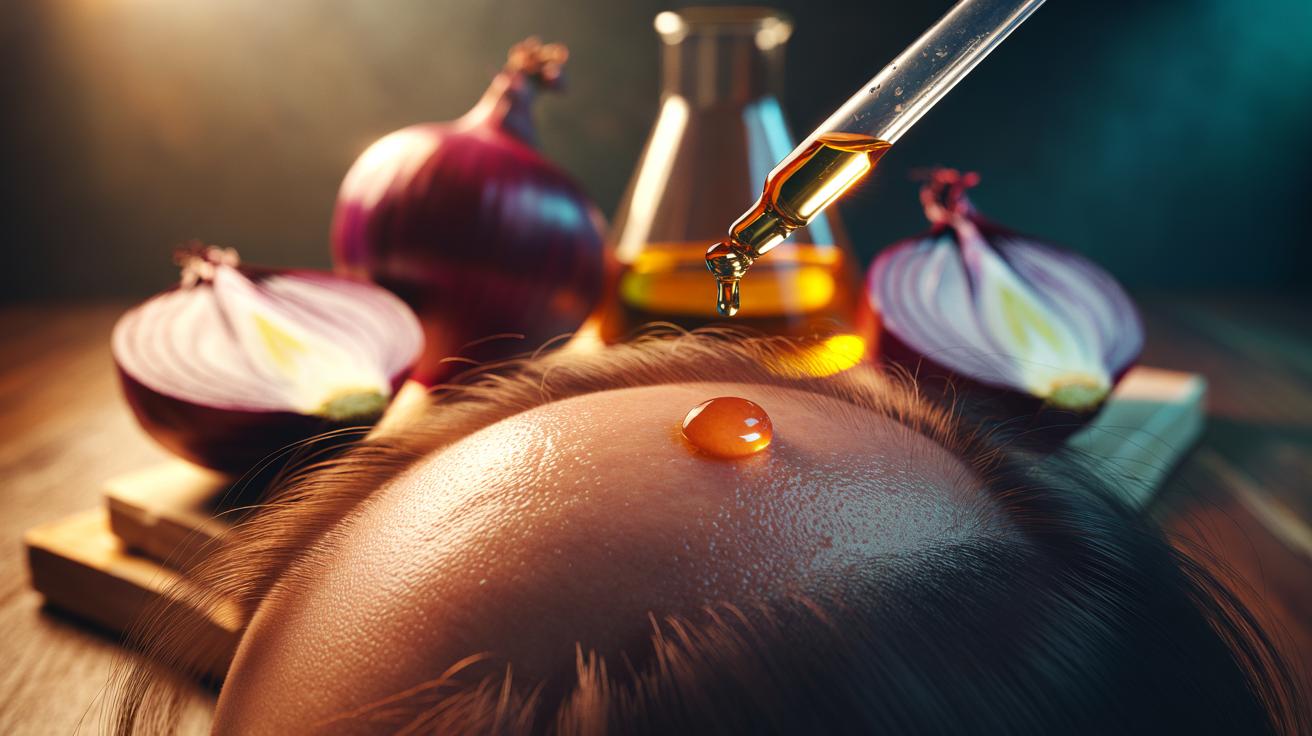
From kitchen hack to headline claim, raw onion juice has re-entered the hair-loss conversation with a bold promise: waking dormant follicles and softening bald patches within weeks. The idea hinges on the bulb’s abundant sulphur compounds and their putative role in scalp health. As clinicians report mixed experiences and social media swells with before-and-after reels, the question for readers is clear: fad or feasible aid? This piece examines what the evidence shows, how sulphur might help, and the practicalities of trying onion topically without aggravating the skin. Hope is welcome; hype is not.
What Science Says About Onion Juice and Bald Patches
The strongest signal for onion’s potential comes from a small, early trial involving people with patchy alopecia areata, an autoimmune form of hair loss. Participants who applied raw onion juice to the scalp saw higher rates of visible regrowth after several weeks compared with a control group using plain water. Follow-up reporting suggested first sprouts often appeared around week two to four, with thicker coverage by week six to eight. That timescale explains the viral claim that onion can “grow bald patches in weeks.” It is an intriguing finding, not a definitive cure.
There are important caveats. The study was small and not rigorously blinded; it focused on autoimmune patches, not male or female pattern thinning. Real-world reports vary: some users note soft peach fuzz, others only scalp irritation and a stubborn odour. Dermatologists warn that contact dermatitis is possible, and results can hinge on diagnosis, severity, and compliance. Outcomes differ widely, and what helps alopecia areata may not shift hereditary hair loss. Still, the evidence is promising enough to justify cautious, well-informed experimentation for select cases.
How Sulphur May ‘Wake’ Dormant Follicles
Onions are rich in organosulphur compounds, including S-alk(en)yl-L-cysteine sulfoxides such as S‑1‑propenyl‑L‑cysteine sulfoxide, plus flavonoids like quercetin. In hair biology, sulphur matters because keratin—the hair’s structural protein—depends on sulphur-based disulphide bonds for strength. Topical sulphur donors may support the protein environment around follicles and improve the condition of emerging shafts. Separately, onion-derived thiosulfinates exhibit antimicrobial activity, which could rebalance a disrupted scalp milieu where micro-inflammation stalls growth. The thesis is not magic but micro-environment management.
Another proposed angle is redox signalling: antioxidants such as quercetin may dampen oxidative stress that can aggravate autoimmune activity in alopecia areata. A calmer inflammatory profile around the bulge region of the follicle could, in theory, nudge dormant follicles back into the anagen (growth) phase. Some researchers also point to vasodilatory effects that might support local microcirculation, though this remains speculative. In essence, onion’s appeal is a multifactorial nudge—keratin support, antimicrobial action, and inflammation control—rather than a single silver bullet.
A Practical, Sensible Approach to Trying Onion Juice
If you choose to test raw onion juice, treat it like a cosmetic trial, not a medical treatment. Begin with a patch test on the inner forearm for 24–48 hours to screen for irritation. For the first week, dilute fresh juice 1:1 with water or aloe gel and apply to clean scalp on affected patches for 15–30 minutes before rinsing. Increase contact time only if skin remains comfortable. Twice-daily use showed the most movement in early research, but many people start with three to four sessions weekly to balance potential gains against sensitivity and smell.
Work cleanly, strain pulp to reduce residue, and avoid broken skin or immediately after harsh exfoliants. If stinging persists, stop. Manage odour by a thorough shampoo afterward; a mild, fragrance-free conditioner can help. Do not mix with aggressive acids or high-strength essential oils. If hair loss is sudden, scarring, or widespread, see your GP or a dermatologist before experimenting. Onion may be a low-cost adjunct—especially for alopecia areata—but it should not delay assessment of underlying causes such as iron deficiency, thyroid disease, or hormonal patterns.
How It Compares With Established Treatments
Against mainstream options, onion sits in the “promising but low-certainty” bracket. Minoxidil has moderate-quality evidence in pattern hair loss, while topical corticosteroids or immunotherapy are staples for alopecia areata under specialist care. Platelet-rich plasma (PRP) is costlier and operator-dependent but has supportive data for density in androgenetic alopecia. Onion’s advantages are price and accessibility; its drawbacks are variable response, smell, and the risk of irritation. Think of it as a complementary trial, not a replacement for proven therapies tailored to diagnosis.
When setting expectations, consider timeframes. Many established treatments suggest reassessment at three to six months; onion enthusiasts often look for early “vellus” regrowth within four to eight weeks, then judge continuation. A sensible strategy is parallelism: maintain your clinician-advised plan and add onion as an adjunct if your scalp tolerates it. If you see no change by two months—or you develop dermatitis—rethink the experiment. Data-driven patience beats impulsive protocol hopping.
| Treatment | Evidence Quality | Typical Timeframe | Common Downsides |
|---|---|---|---|
| Onion juice (topical) | Low (small trials in alopecia areata) | 2–8 weeks for early signs | Odour, irritation, dermatitis |
| Minoxidil | Moderate (pattern hair loss) | 3–6 months | Shedding phase, scalp irritation |
| Topical corticosteroids | Moderate (alopecia areata) | 6–12 weeks | Skin thinning with overuse |
| PRP | Moderate, operator-dependent | 3–6 months | Cost, injections, variability |
Onion’s story is a rare blend of kitchen-table simplicity and plausible biology: abundant sulphur, antimicrobial thiosulfinates, and antioxidants working in concert to coax sleepy follicles. The early data are encouraging for autoimmune patchiness, less convincing for hereditary thinning, and the user experience hinges on careful skin handling. It can be a smart adjunct, not a stand-alone fix. If you could trial a low-cost, low-tech option alongside established treatments—patch-testing first and tracking progress for eight weeks—would you do it, and what evidence would you want to see before making it part of your regular routine?
Did you like it?4.4/5 (26)