In a nutshell
- 🧪 How it works: Coconut oil’s lauric acid penetrates the fibre while cling-film occlusion reduces friction, softens cuticles, and minimises protein loss—cosmetic replenishment, not bond repair.
- 🛠️ What you need: Virgin, cold-pressed coconut oil, wide-tooth comb, clips, shower cap, and cling film; apply lightly from mid-lengths to ends, adjusting amounts by hair length and density.
- 🌙 Step-by-step: Section hair, smooth pea-sized amounts through lengths, cap, then wrap cling film over the cap; sleep 6–8 hours, emulsify with conditioner, gentle shampoo once or twice, cool rinse, and style on low heat.
- ⚠️ Safety and fit: Patch-test, avoid heavy scalp application if sensitive, skip for very low-porosity hair that feels coated; never apply direct heat over cling film and don’t wrap too tightly.
- ✨ Results and frequency: Expect smoother, shinier, less snag-prone hair after one session; benefits build with weekly use alongside heat protection and mild cleansing.
Heat-styling can leave hair fibres depleted, dull, and prone to breakage. A simple home remedy has surged in popularity across the UK: the overnight coconut oil and cling film wrap. By combining penetrating lipids with gentle occlusion, it aims to cushion the cuticle, reduce friction, and reveal a glossier finish by morning. While no oil can rebuild broken bonds, many readers report hair that feels stronger and behaves better after one session. Used correctly, this method can revive the look of stressed strands in a single night, offering a low-cost reset after frequent straightening, curling, or blow-drying.
How the Overnight Wrap Works
Coconut oil is rich in lauric acid, a saturated fatty acid with a low molecular weight and straight chain that can align with the hair’s keratin. Research suggests it can help reduce protein loss during washing, which in turn supports softness and flexibility. When applied to dry hair, it slips between cuticle scales and creates a lightweight, emollient film that minimises friction and snapping.
Wrapping hair in cling film creates mild occlusion, trapping natural heat from the scalp and slightly increasing hair temperature. This environment can help the oil spread more evenly, soften the cuticle, and reduce roughness that accentuates frizz. The wrap also physically keeps strands compact, limiting rolling and tangling against your pillow as you sleep.
Think of the treatment as replenishment rather than repair. The oil doesn’t fuse split ends, but it can smooth their appearance, reduce the feel of brittleness, and tame flyaways. For many, that translates to instant cosmetic improvement—shinier lengths, a silkier glide, and fewer snags when brushing in the morning.
What You Need and How to Prepare
Choose a jar of virgin, cold-pressed coconut oil, which retains a high proportion of medium-chain triglycerides and a faint coconut aroma. You’ll also need a wide-tooth comb, hair clips, a shower cap, and standard cling film. Keep a gentle, sulphate-free shampoo on hand for the morning, plus a light conditioner to finish.
Work with dry or barely damp hair so the oil is not repelled by excess water. Melt a small amount between palms until translucent. Avoid soaking the scalp if you are prone to buildup or dermatitis; focus from mid-length to ends, where heat damage concentrates. Detangle slowly to distribute the oil without causing mechanical stress.
Use the table below as a starting guide. Adjust quantities based on density and porosity; coarse, porous hair typically tolerates a bit more oil, while fine hair prefers less to prevent limpness.
| Hair Length | Oil Amount | Wrap Time | Notes |
|---|---|---|---|
| Short (above chin) | 1/2 tsp | 6–8 hours | Keep oil off roots for volume |
| Medium (chin to shoulder) | 1 tsp | 6–8 hours | Emphasise mid-lengths to ends |
| Long (below shoulder) | 1–2 tsp | 6–8 hours | Section hair for even coverage |
Step-by-Step Overnight Method
Section your hair into two to four parts. Warm a pea-sized amount of coconut oil between hands for each section, smoothing from the ear level down to the tips. Use a wide-tooth comb to distribute. The goal is a light sheen—no visible globs. Less is more; you can always add a touch extra to dry, frayed ends.
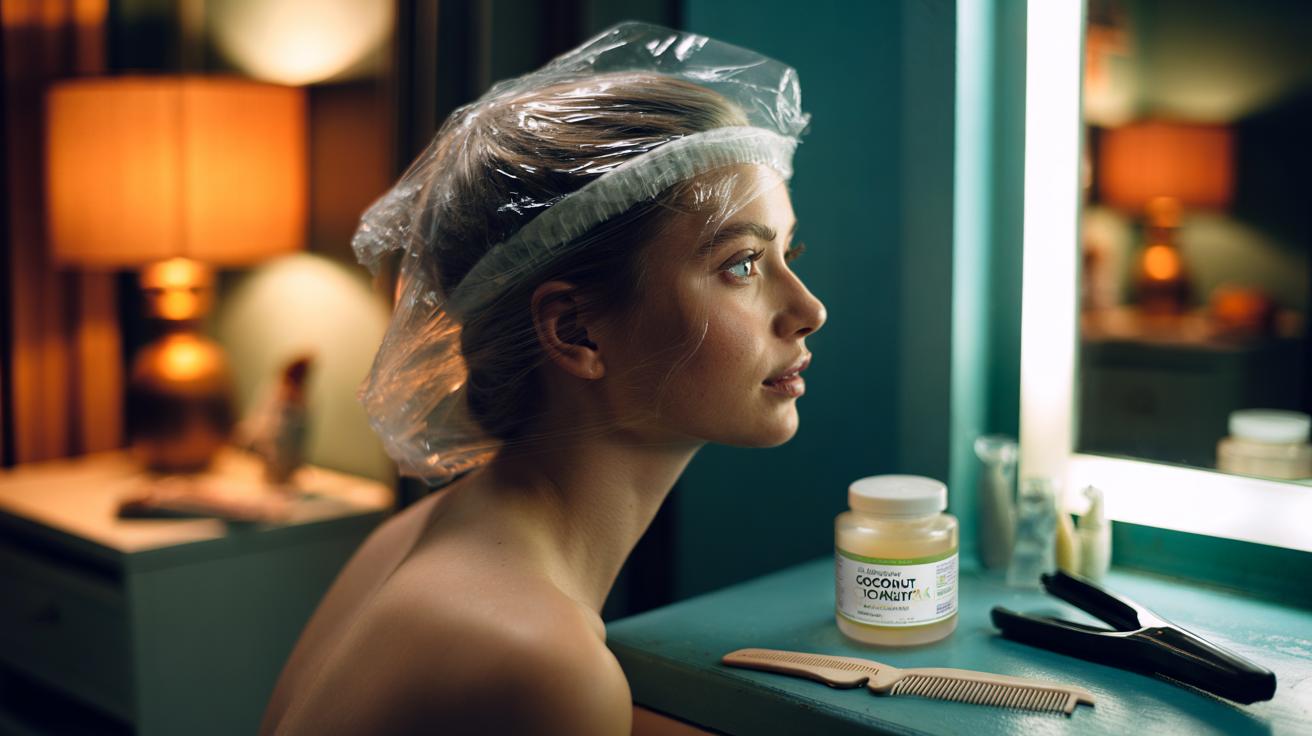
Gather hair loosely at the back and pop on a breathable shower cap. Wrap cling film around the cap—not the bare hair—to avoid tugging and to keep things secure. This creates gentle occlusion while preventing oil transfer to pillows. If you run warm, skip heavy hats to avoid overheating during sleep.
By morning, remove the wrap and cap. Emulsify with a little conditioner before shampooing; this helps lift oil with less detergent. Shampoo once or twice depending on hair type, then use a light conditioner. Rinse cool. Air-dry or style on low heat to preserve your gains. The finish should feel smoother, with reduced roughness and a softer silhouette.
Safety, Expectations, and Who Should Avoid It
This is a cosmetic rescue, not a structural cure. Coconut oil can reduce the appearance of dryness and help defend against future protein loss, but it does not rebuild disulphide bonds severed by extreme heat or bleach. Expect a sleeker look and easier detangling after one session; the effect accumulates with weekly use, especially when paired with gentle washing and heat protection.
Some hair types may not love coconut oil. Very low-porosity hair can feel coated, and some curls may feel stiff if over-applied. If that happens, switch to lighter esters or blend a drop of argan oil for slip. Always patch-test on a small section first, and keep product away from sensitive scalps if you experience itching or flaking.
Practical cautions matter. Keep cling film away from open flames and hot tools. Don’t wrap too tightly; allow airflow around the ears. If you have scalp conditions or recent colour services, check with a professional. Never use direct heat over cling film; the gentle warmth of your head is sufficient for effective occlusion.
The overnight coconut oil and cling film wrap is a humble ritual with a surprisingly polished payoff: softer ends, fewer snags, and a reflective sheen that makes heat-worn hair behave. It works by replenishing surface lipids and reducing friction, creating a smoother cuticle in hours rather than weeks. Keep expectations realistic, use a light hand, and give your shampoo a little help with pre-conditioner emulsification. With mindful application, one session can reset the look and feel of stressed lengths. How will you tailor the method—amount, timing, or oil blend—to suit your hair’s texture, density, and styling habits?
Did you like it?4.7/5 (21)