In a nutshell
- 🧪 A weekly blend of onion juice and castor oil is touted to revive bald spots in about six weeks, offering a low-cost, accessible routine with realistic expectations.
- 🔬 Evidence: a small 2002 study on alopecia areata showed higher regrowth with onion juice; mechanisms include organosulfur compounds and quercetin, while castor oil’s ricinoleic acid soothes and seals—promising but not definitive.
- 🧴 Method: mix at a 2:1 ratio (onion juice:castor oil), apply to patches, massage 3–5 minutes, leave 45–90 minutes, then shampoo twice; repeat once weekly and track with consistent photos.
- ⚠️ Safety: do a 24-hour patch test, avoid eyes, stop if burning or rash; those with scarring alopecia, severe sensitivity, or active scalp conditions should seek GP/dermatology advice.
- 🌱 Results: look for soft vellus hairs by weeks 2–3 and thicker strands by weeks 4–6; some need longer or may not respond—support with gentle scalp care and adequate protein/iron.
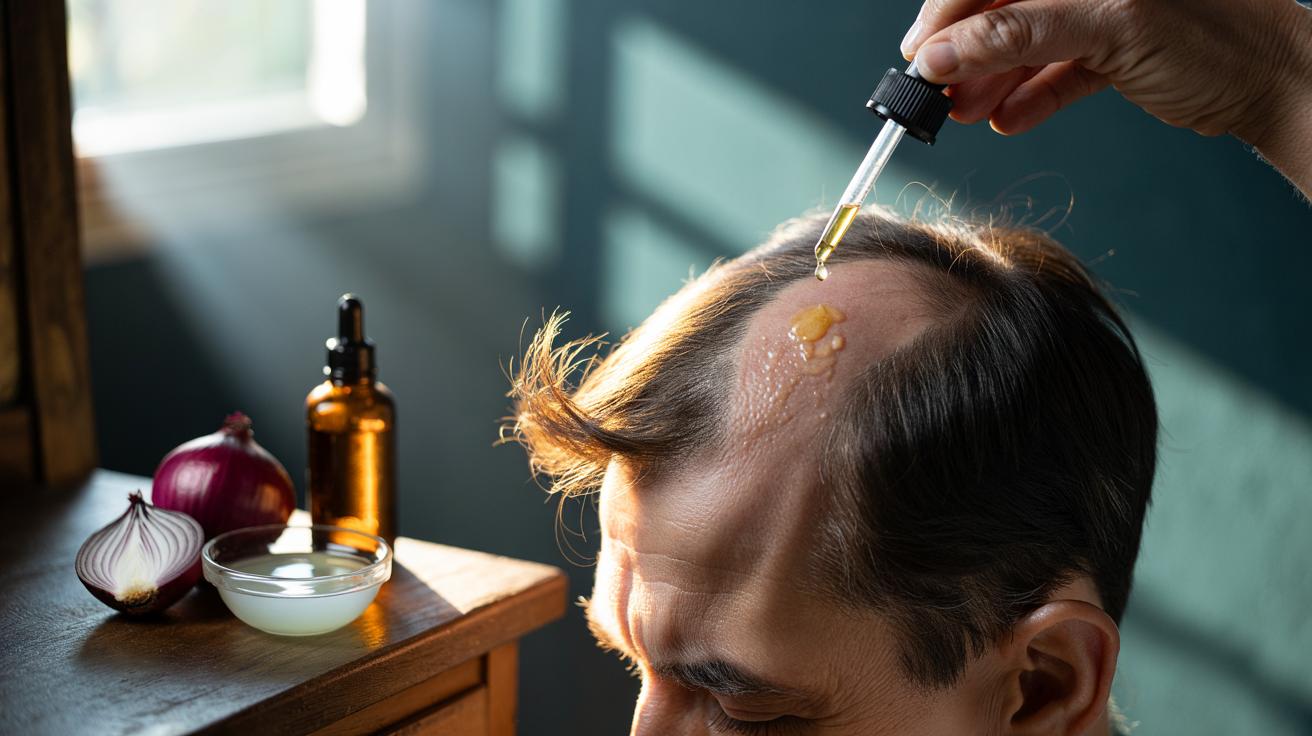
If social media is to be believed, a humble kitchen duo—onion juice and castor oil—can coax life back into stubborn bald spots in just six weeks. The claim sounds bold, yet there is a sliver of science and a wealth of lived experience hinting at potential. Onion’s sulphur-rich compounds appear to invigorate follicles, while the thick, occlusive nature of castor oil helps the scalp stay hydrated and the actives linger. This weekly ritual is inexpensive, low-tech, and easy to slot into a Sunday evening. It is not a miracle cure, but with careful application and realistic expectations, it may be the nudge your hairline has been waiting for.
What the Science Says
Onion juice has more than folklore behind it. A small 2002 trial on patchy alopecia areata reported higher regrowth rates in those applying topical onion juice compared with water, with visible changes for many by week six. The proposed mechanisms are credible: onion’s organosulphur compounds support keratin formation, and its flavonoids—such as quercetin—may calm local inflammation around the follicle. The study was small and not definitive, yet it planted a seed that aligns with countless anecdotal reports from people who have massaged onion extract into sparse patches.
Castor oil’s star compound, ricinoleic acid, exhibits anti-inflammatory properties and creates a semi-occlusive layer that reduces transepidermal water loss. That thickness helps keep onion actives on the scalp for longer, while massage boosts microcirculation. Direct clinical evidence that castor oil alone regrows hair is limited, but as a vehicle and scalp conditioner it shines. This pairing is best suited to recent, non-scarring patches; scarring alopecias require medical management and will not respond to topical home blends.
The Weekly Routine: Mixing, Application, and Aftercare
For a once-weekly mask, use a practical 2:1 ratio of fresh onion juice to castor oil. Cold-press or grate and strain a red or yellow onion for the juice; its sharper sulphur profile is useful. Whisk vigorously until the mixture emulsifies. Optional additions include 1–2 drops of rosemary essential oil for scent and scalp comfort—skip this if you are sensitive. Always conduct a 24-hour patch test behind the ear. Prepare the scalp by cleansing and gently towel-drying; remove styling products that could block contact with the skin.
| Ingredient | Amount | Purpose |
|---|---|---|
| Onion juice | 2 tbsp | Delivers sulphur compounds and flavonoids to the follicle |
| Castor oil | 1 tbsp | Occlusive carrier; prolongs contact and conditions scalp |
| Rosemary essential oil (optional) | 1–2 drops | Masking odour; soothing sensation |
Apply with a nozzle bottle or fingertips directly to bald spots and their margins. Massage with small, firm circles for 3–5 minutes. Cover with a shower cap and leave on for 45–90 minutes. Shampoo twice with a gentle, sulphate-free cleanser; a lemon-juice rinse (diluted) helps with odour. Repeat once a week for six weeks, photographing your scalp under the same light each time. Consistency beats intensity—do not over-apply or sleep in the mask, which can irritate the skin.
Safety First and What to Expect by Week Six
Natural does not equal risk-free. Onion can sting, especially on eczematous skin, and castor oil’s density can trap debris if you do not wash thoroughly. Stop immediately if you feel burning, wheezing, or develop a rash. Keep away from eyes. Those with asthma, severe fragrance sensitivity, or active scalp infections should avoid this blend. If you colour your hair, test on a hidden area; onion’s compounds may subtly shift tone on porous strands. During pregnancy or breastfeeding, skip essential oils and keep contact minimal.
What might you see? Weeks 2–3 can bring vellus hairs—those soft, baby-fine strands—along patch borders. By weeks 4–6, successful responders often report thicker “terminal” hairs pushing through. Some will need 8–12 weeks; some will not respond at all, particularly if a scarring process is present. You can pair this weekly mask with daily gentle scalp brushing and adequate dietary protein and iron. If patches expand, shed is heavy, or there is pain or scale, seek a GP or dermatologist for assessment; conditions like alopecia areata deserve proper care.
For the price of an onion and a small bottle of castor oil, this weekly ritual offers a pragmatic way to nudge sleepy follicles and reclaim confidence. The key lies in patience, photography to track subtle progress, and strict attention to skin comfort. This is a supportive routine, not a substitute for medical diagnosis, yet it may be the catalyst that tips the balance. Will you set aside one evening a week for six weeks to test the onion-and-castor promise—and what will your week-six photos reveal?
Did you like it?4.6/5 (29)