In a nutshell
- 🧪 Cornstarch + cocoa powder work in tandem: starch absorbs sebum while cocoa’s pigment diffuses light to eliminate the white cast on dark hair for invisible oil control.
- 🎯 Smart mixing ratios: start 2:1 (cornstarch:cocoa), shift to 1:1 for near-black hair or 3:1 for chestnut; use unsweetened cocoa, sift well, and store airtight; factor in hair porosity and keep scent additives minimal.
- 🧴 Precise application technique: apply to dry roots in sections with a fluffy brush or shaker, let sit 2–3 minutes, then massage and brush or use a cool dryer; adapt method for curls vs. straight hair and build product sparingly.
- 🩺 Scalp health essentials: avoid buildup by washing within 48 hours, clarify weekly, patch-test if sensitive or with dermatitis, and reduce inhalation risks by applying below eye level.
- 🔁 When to tweak or skip: on sweaty days or very oily scalps, alternate the DIY blend with a tinted aerosol dry shampoo for faster dispersion while maintaining long-term scalp hygiene.
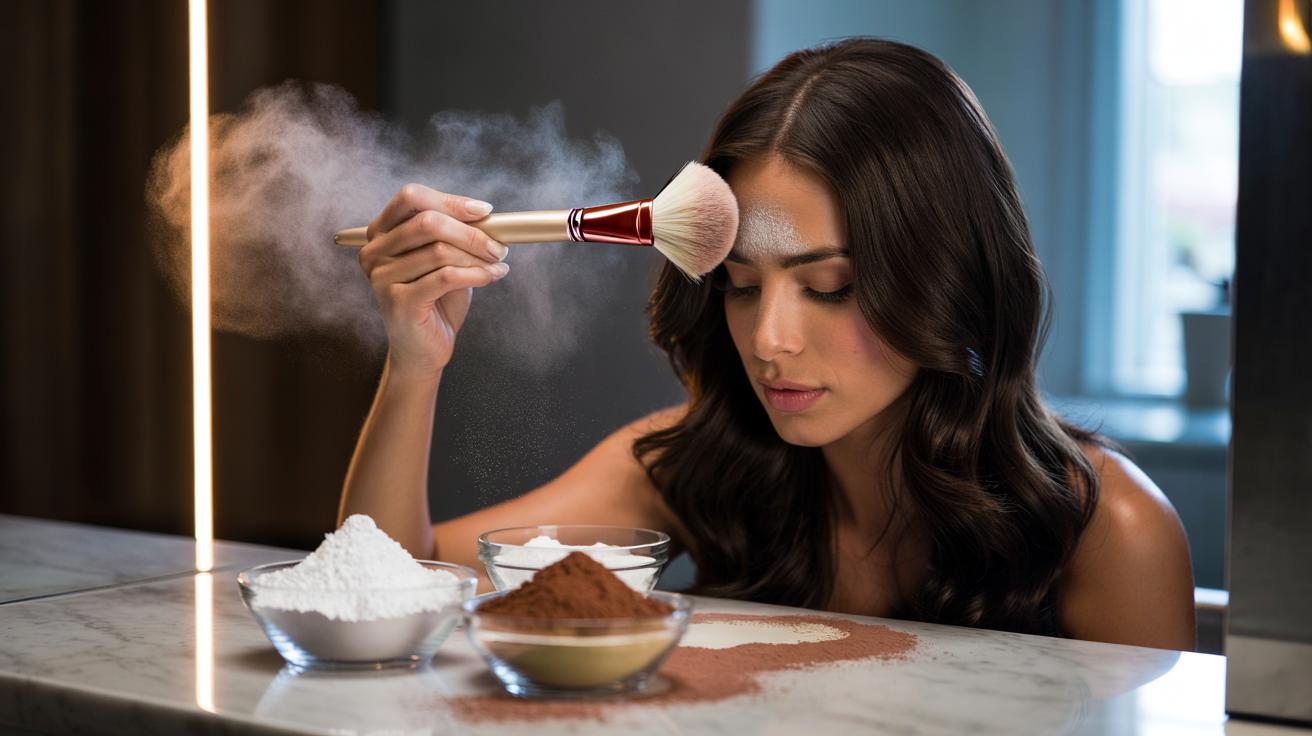
When brunettes reach for a quick refresh, many dry shampoos leave a tell-tale pallor at the roots. A simple kitchen blend of cornstarch and cocoa powder offers an elegant fix. The starch targets excess sebum while the cocoa’s deep hue melts into brown and black hair. Used correctly, the mix absorbs oil invisibly and restores lift without a dusty cast. It’s affordable, customisable, and surprisingly sophisticated in how it manages light, colour, and texture. Below, we explore why the combo works, how to tailor ratios to your shade, the best application techniques, and what to consider for scalp health before making it your weekday standby.
Why Cornstarch and Cocoa Powder Work on Dark Hair
The science starts with particle size and surface chemistry. Cornstarch granules are micro-porous and hydrophilic, so they latch onto lipid-rich sebum and humidity along the hair shaft and at the scalp. This reduces clumping and shine, restoring a matte finish that reads as “clean.” Cocoa powder brings a natural brown pigment and finer particles that nestle between strands, visually cancelling the white cast that lighter powders can leave. The result is oil control paired with shade compatibility, a rare combination in budget-friendly dry shampoos.
Optical behaviour matters, too. Cornstarch reflects light, risking a chalky halo on dark roots; cocoa absorbs and diffuses it, softening contrast. The pair creates a more neutral visual profile under indoor LEDs and daylight alike. With gentle blending, cocoa’s chroma acts like a soft-focus filter, while cornstarch continues to do the heavy lifting on grease. This synergy is why the mix appears “invisible” even as it works hard behind the scenes.
Mixing Ratios, Shades, and Scent: Getting the Blend Right
A practical starting point is two parts cornstarch to one part cocoa powder. For nearly black hair, shift to 1:1 for better camouflage; for dark chestnut, try 3:1 to avoid over-toning. Choose unsweetened, natural cocoa for the cleanest pigment and minimal stickiness. Sift both ingredients to eliminate clumps that can sit on the scalp. Fine, even particles improve adherence and prevent tell-tale specks along the parting. Store the mix in an airtight jar to preserve freshness and prevent ambient moisture from compromising flow.
Shade-matching goes beyond colour: consider porosity. Highly porous hair may “drink” oil faster and benefit from a starch-forward ratio, while low-porosity locks might prefer a deeper cocoa presence for seamless blending. If scent is a concern, a pinch of cinnamon or a drop of vanilla extract (dried thoroughly on the powder) can lend warmth without heavy perfume. Keep additives minimal to avoid build-up and scalp irritation.
| Component | Function | Suggested Ratio | Notes for Dark Hair |
|---|---|---|---|
| Cornstarch | Oil absorption, matte finish | 2–3 parts | Increase for oilier scalps or high humidity |
| Cocoa powder | Pigment, light diffusion | 1–2 parts | Increase for near-black hair to avoid ashiness |
| Optional spice/extract | Scent | Pinch or trace | Use sparingly; test for sensitivity |
How to Apply for Invisible Oil Absorption
Begin with completely dry hair. Section at the oiliest zones—usually the crown, temples, and nape. Using a fluffy makeup brush or a clean salt shaker, tap a whisper of powder along each parting. Less is more; you can always build. Let it sit for two to three minutes to bind with sebum. This “dwell time” is crucial: the starch needs a moment to do its job. Then massage lightly with fingertips to disperse, followed by a quick brush-through or cool setting on a hairdryer to lift residue away from the scalp.
For tight curls or coils, apply along the scalp line and scrunch upward, avoiding vigorous brushing that can frizz. For straight hair, focus on the roots and the underside near the occipital area where oil pools. If a faint cast remains, work in a pea-sized amount of leave-in serum on the mid-lengths only to rebalance sheen without inviting more oil at the roots. Targeted placement is what keeps the finish undetectable in daylight and flash photography.
Safety, Scalp Health, and When to Skip DIY
Used occasionally, the blend is gentle. The caveat is buildup. Overuse can clog follicles and dull the lengths, especially if not washed out within 48 hours. Those with seborrhoeic dermatitis, psoriasis, or very sensitive skin should patch-test first and keep powders off inflamed areas. If you notice itching or tightness, stop and clarify. Choose a silicone-free clarifying shampoo once a week to reset, then recondition mid-lengths to ends. Look for cocoa without added sugars or dairy to reduce the risk of stickiness or microbial growth.
Two more cautions: avoid inhalation by tapping the brush below eye level, and skip on active gym days where sweat can create paste at the roots. If your scalp is extremely oily by midday, a hybrid approach can help—alternate the DIY blend with a tinted aerosol dry shampoo that includes volatile carriers for rapid dispersion. Balance convenience with scalp hygiene for the best long-term results.
This humble pairing of kitchen staples is more than a hack; it’s a clever application of colour theory and absorption chemistry that flatters dark hair without the tell-tale haze. With tuned ratios, careful sectioning, and light-handed blending, cornstarch + cocoa powder can stretch wash days and keep your style buoyant. The key is restraint, patience, and regular cleansing to avoid buildup. Will you keep it minimalist with a 2:1 mix, or customise a deeper blend to match your exact shade—and how will you tweak the method to suit your own scalp and routine?
Did you like it?4.4/5 (29)