In a nutshell
- 🧊 Menthol from mint activates TRPM8, delivering rapid cooling that interrupts the itch–scratch cycle; keep to 0.25–0.5% menthol or 0.5–1% peppermint oil to avoid stinging.
- 🌾 Rice water provides starch and inositol, forming a breathable film that reduces friction and moisture loss; use lightly to prevent residue and keep batches fresh.
- ⚗️ Method: soak ½ cup rice in 2 cups water (30 min or 12–24 h ferment), brew a mint infusion, then mix ~200 ml rice water with 100–150 ml mint; optionally add menthol; apply 5–10 minutes and rinse as needed.
- 🛡️ Safety: patch test first, avoid eyes and broken skin, not for young children; use 1–3 times weekly; refrigerate and discard after 3 days.
- 🏥 Suitability: helpful for heat-triggered itch and post-wash tightness; use shorter contact for oily scalps; stop if irritation and consult a GP for persistent flaking, seborrhoeic dermatitis, or psoriasis signs.
When your scalp is on fire with itch, relief that actually lasts can feel elusive. A simple pairing — fresh mint and leftover rice water — has become a quiet favourite in British bathrooms, not just for comfort but for restoring balance. The science is disarmingly clear: cooling menthol from mint dials down itch signals, while the starch and inositol in rice water lay a light, protective film that helps the scalp settle. Used correctly, this duo soothes quickly and supports the skin’s own repair without heavy oils or harsh medicated shampoos. Here is how the combination works, why it helps sensitive scalps and tangly hair alike, and the safest way to make it at home.
How Menthol Cools and Calms an Itchy Scalp
The cool of menthol is not a parlour trick. It activates the TRPM8 receptor on nerve endings, which the brain reads as cooling, interrupting the itch–scratch loop and easing tenderness. That sensory “reset” can reduce the urge to scratch long enough for micro-irritations to quieten. Menthol also carries mild antimicrobial action, helpful where sweat and styling build-up amplify odour and discomfort. It does not freeze inflammation; it modulates the signals that make itch feel urgent. The result is a fast, clean sensation of relief without the heavy residue common to occlusive balms.
But potency demands respect. In leave-on rinses, aim for 0.25–0.5% menthol or 0.5–1% peppermint essential oil dispersed in a water-based medium; more can sting or trigger redness. Keep menthol away from eyes, avoid on broken skin, and skip for children under six. If your scalp burns rather than cools, rinse immediately and dilute your next batch. Used at the right level, menthol becomes a precise tool rather than a blunt blast of ice.
Why Rice Starch Helps the Scalp Barrier Recover
Rinsed or gently fermented rice water is rich in starch (amylose and amylopectin) and trace inositol. These carbohydrates form a featherlight film over skin and hair, reducing friction from combs, hats, and pillowcases — subtle mechanical triggers of itch. That same film tempers transepidermal water loss, helping the scalp feel less tight and reactive after cleansing. Think of rice water as a breathable bandage that does not smother follicles. Its mild acidity after short fermentation can also nudge scalp pH toward a comfortable range, supporting the micro-ecosystem that keeps flaking in check.
There are caveats. Starch is comforting in a thin layer, yet heavy application can leave residue and make flakes look worse. Keep contact time brief and rinse thoroughly if hair feels tacky. For those prone to seborrhoeic dermatitis, rice water should be used sparingly and followed by regular cleansing. Applied with a light hand, it supports barrier repair without feeding build-up.
| Ingredient | Key Mechanism | Typical Contact Time | Safe Range | Main Cautions |
|---|---|---|---|---|
| Menthol (mint) | TRPM8 activation; antipruritic cooling | 2–5 minutes, then rinse or leave light residue | 0.25–0.5% in rinse | Stinging at high dose; avoid eyes; not for young children |
| Rice water (starch + inositol) | Film-forming; reduces friction; supports barrier | 5–15 minutes before rinsing | Use diluted; avoid thick pastes | Possible residue; keep batches fresh |
Mint–Rice Rinse: Method, Ratios, and Safe Use
Quick soak: Rinse ½ cup plain white rice to remove dust. Cover with 2 cups warm water, swirl 1–2 minutes, then steep 30 minutes. For a gentler acidic profile, ferment covered at room temperature for 12–24 hours until faintly sour, then refrigerate. Make a mint infusion by simmering a packed handful of fresh mint (or 2 peppermint tea bags) in 250 ml water for 5 minutes; cool and strain. Combine 200 ml rice water with 100–150 ml mint infusion. For added cooling, dissolve 0.5–1 g food-grade menthol crystals into the warm infusion before mixing (≈0.25–0.5%).
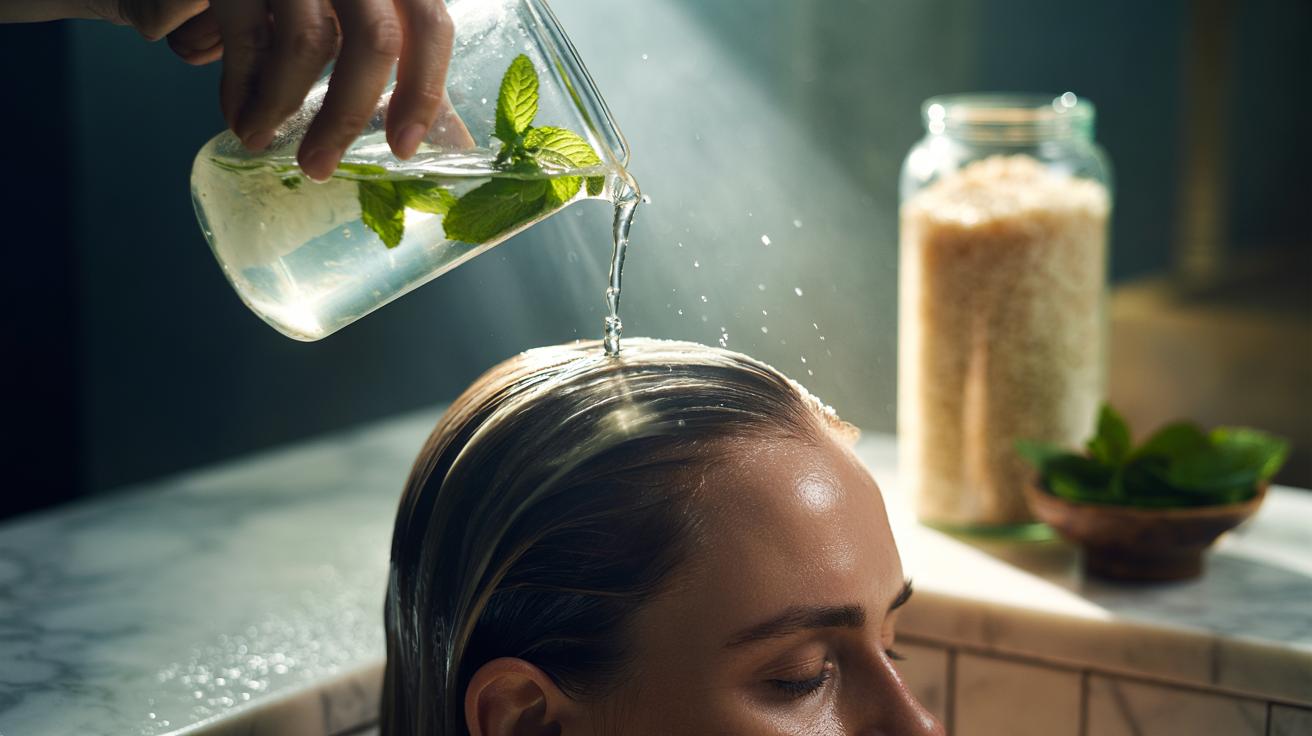
After shampooing, pour the mixture over the scalp, massage gently for one minute, and let sit for up to 10 minutes. Rinse lightly if hair feels coated; leave more in if hair is coarse and dry. Use 1–3 times per week. Always patch test behind the ear for 24 hours before first use. Store any remaining liquid in the fridge and discard after three days. Avoid essential oils during pregnancy unless approved by a clinician.
Who Should Try It, What Results to Expect, and When to Stop
This rinse suits heat-triggered itch, tight-hat irritation, and post-wash dryness. People with textured hair often enjoy the slip from starch, which cuts snagging and reduces breakage when detangling. Expect an immediate cooling sensation and, over several uses, fewer scratch marks and less evening “prickle”. If flakes are mostly from dry skin, comfort can be noticeable within a week. For oilier scalps, keep contact times short and follow with regular cleansing to prevent residue.
Stop and reassess if redness, swelling, or weeping occurs, or if you have a history of contact dermatitis to mint. Persistent, intense itch with thick scaling may signal conditions such as seborrhoeic dermatitis or psoriasis, which merit a GP or trichologist’s review. You can combine this rinse with a gentle, fragrance-free shampoo and periodic targeted treatments prescribed by a clinician. Homemade care should complement, not replace, medical management when symptoms escalate.
Rice water and mint make a clever pairing: menthol calms the nerves that shout “itch”, while starch cushions the scalp and hair so recovery can proceed without constant friction. Kept fresh, lightly dosed, and used with sensible rinsing, the blend offers quick comfort and a neat, weightless finish. For some, it becomes a reliable between-wash reset on hot or stressful days; for others, an occasional rescue when flakes flare. What tweak — a shorter contact time, a touch more mint, or a gentler fermentation — would help this ritual serve your scalp best?
Did you like it?4.6/5 (23)