In a nutshell
- 🌾 Rice water conditions with inositol, amino acids, and starches that smooth the cuticle for slip, shine, and easier detangling; adjust use if you’re protein-sensitive.
- 💜 Lavender adds a clean, lasting fragrance (thanks to linalool and linalyl acetate) and gentle scalp support, enhancing scent longevity on smoother strands.
- 🧪 Make it: soak/simmer rice water, then scent with a lavender infusion or a properly dispersed essential oil (about 3–5 drops per 250 ml for rinse-off); apply after shampoo, leave 5–10 minutes, then rinse lightly.
- ⚠️ Safety first: patch test, keep essential oil dilution ≤1% for rinse-off (≤0.5% leave-on), avoid undiluted oils, and discard any batch that smells sour or appears fizzy.
- 📦 Storage & results: refrigerate and use within 3 days (ferment 24–48 hours then chill); expect smoother detangling, reduced breakage, and shine—not miraculous growth.
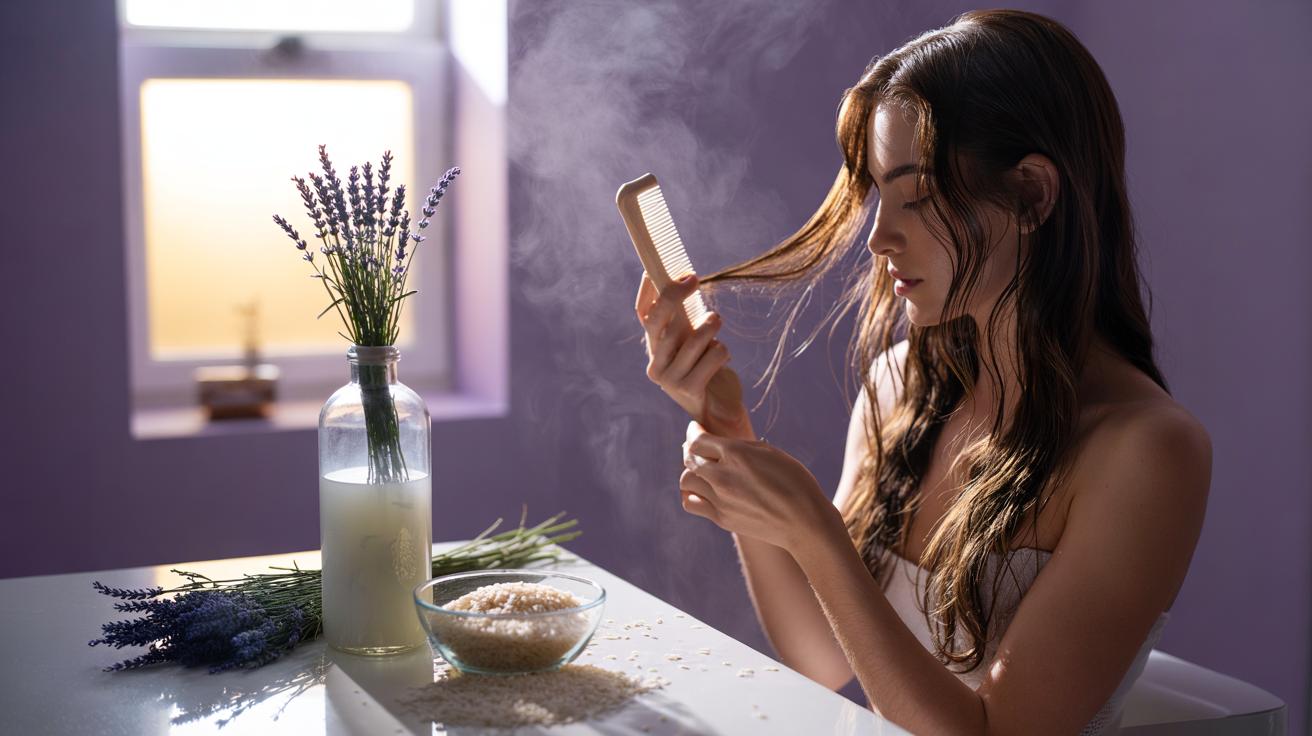
Beauty folklore and lab-savvy pragmatism meet in the simplest of bottles: a blend of rice water and lavender. This unfussy rinse can leave hair silkier, easier to detangle, and divinely scented without heavy perfumes. Rice water’s natural amino acids, starches, and the star compound inositol help smooth the cuticle for shine and improved slip, while lavender adds that airy, clean bloom that lingers between washes. Done well, the duo supports scalp comfort and reduces friction-related breakage. Patch test new mixtures and tailor frequency to your hair’s porosity and protein tolerance. Below, how it works, how to mix it, and how to make the fragrance last.
Why Rice Water Conditions Hair So Well
Rice water is rich in inositol—a carbohydrate shown to adhere to the hair fibre and reduce friction—alongside amino acids and gentle starches that form a lightweight film. This cocktail helps the cuticle lie flatter, cutting back on tangles and enhancing shine without the waxy weight of some masks. Fermented rice water skews slightly acidic, which can nudge the cuticle closed for a sleeker finish. Used after shampoo, it often delivers that prized “slip” that makes comb-through quick and snag-free, especially for mid-lengths and ends where wear and weathering are most obvious.
Some curls and waves are protein-sensitive, and too much rice-water film can make hair feel rigid. Start with a weekly rinse, then adjust. If strands feel stiff, space applications out or dilute more. Less is more for protein-sensitive curls, particularly if your routine already features protein-rich products.
| Component | What It Does | Best For |
|---|---|---|
| Inositol | Reduces friction; helps protect the cuticle | Detangling, reducing breakage |
| Amino acids | Light conditioning; moisture balance | Softness and elasticity |
| Starches | Forms a thin film; enhances shine | Smoother, glossier finish |
| Fermentation acids | Slightly lower pH; cuticle smoothing | Frizz control, reflection |
Lavender’s Aromatic Science and Scalp Benefits
Lavender’s signature bloom comes from linalool and linalyl acetate, compounds that lend a fresh, herbal-floral trail without the cloying edge of heavy perfumes. They also help veil any faintly sour odour that can arise if you choose a fermented rice water. Because scent molecules cling better to conditioned, smoother fibres, a lavender finish on rice-water-treated hair can last longer—particularly if you use a cool final rinse and limit high heat, which blows off volatile aromatics.
Beyond fragrance, lavender offers gentle antimicrobial support and scalp comfort, making it a smart partner for a soothing rinse. Use either a weak lavender tea or a properly diluted essential oil. For rinse-off formulas, keep essential oil at or below ~1%; for leave-on mists, 0.25–0.5% is a prudent ceiling. Never apply undiluted essential oil directly to the scalp, and always perform a patch test. If you’re sensitive, an infusion of dried buds delivers aroma with fewer irritant risks.
How to Make and Use a Rice Water–Lavender Rinse
Quick method: rinse 1/2 cup uncooked rice to remove excess surface starch. Soak in 2 cups warm water for 30 minutes, stirring occasionally, then strain. For more slip, simmer the strained liquid for 5 minutes and cool. Scent options: steep 1 tablespoon dried lavender buds in just-boiled water for 10 minutes and combine 1:1 with rice water, or add 3–5 drops lavender essential oil per 250 ml and disperse with a little glycerin or a cosmetic solubiliser. Aim for a comfortable, soft fragrance rather than a punchy perfume.
After shampoo, saturate hair and massage lightly over the scalp. Leave for 5–10 minutes, then rinse lightly, or leave a small amount in mid-lengths if hair is coarse. Curly and low-porosity hair often prefer a 1:1 or 1:2 dilution with water. Discard any batch that smells oddly sour or appears fizzy, and stop use if your scalp feels irritated. Style as usual, avoiding high heat to preserve the scent.
Safety, Storage, and Realistic Results
Store fresh rice water in a clean, closed bottle in the fridge and use within three days. If you choose to ferment, leave at room temperature for 24–48 hours until mildly tangy, then refrigerate immediately. Decant into ice-cube trays to portion and reduce waste; thaw one cube per use. Keep tools and containers scrupulously clean to limit microbial growth, and label the date. The fragrance will be brightest the day it’s made, so plan your hair-wash schedule around special occasions.
Expect smoother detangling, less mechanical breakage, and enhanced shine rather than miraculous growth. Pair this rinse with balanced moisture, gentle cleansing, and protective styling. If hair starts to feel brittle or squeaky, lengthen the interval between uses or dilute further. Stop immediately if hair feels stiff, straw-like, or your scalp becomes tender. Most people thrive on a weekly application; fine or protein-sensitive hair may prefer fortnightly use.
Simple, inexpensive, and delightfully aromatic, a rice water–lavender rinse offers tactile conditioning alongside a clean, elegant scent that flatters nearly every hair type. With thoughtful dilution, good hygiene, and realistic expectations, it can become a reliable mainstay—especially when you want salon-level slip on a home-kitchen budget. Ready to try it your way: will you infuse with dried buds for a softer trail, or blend a precise drop of essential oil for a bolder signature—and how will you tailor the strength to your hair’s porosity and routine?
Did you like it?4.5/5 (26)