In a nutshell
- 🧪 How it works: olive oil acts as an emollient and light occlusive while sugar provides gentle exfoliation, softening callus (hyperkeratosis) and loosening dead skin after a warm water soak.
- 🧦 Overnight protocol: Massage a 2 tbsp olive oil + 2 tbsp sugar paste for 2–3 minutes, rinse, then apply a thin oil layer and wear cotton socks overnight; in the morning wash and lightly file; repeat 2–3 times weekly.
- 🍯 Enhancers: Add honey or finely ground oatmeal for comfort; use a drop of tea tree or lavender if desired; prefer sugar over salt; pair with 10–20% urea cream for extra softening and maintain with a gentle foot file.
- ⚠️ Safety first: Avoid on open cracks or infected skin; people with diabetes, neuropathy, or poor circulation should consult a GP/podiatrist; watch for athlete’s foot signs and red flags like increasing pain, redness, or discharge.
- 👟 Lasting results: Consistency plus prevention—better-fitting shoes, moisture control, and clean, dry footwear—helps keep heels smooth, reduces friction, and prevents callus from returning.
From TikTok tips to family remedies, few routines are as simple—and surprisingly effective—as mixing olive oil and sugar to tackle rough, scratchy heels. This humble duo promises to soften hardened skin and ease callus build-up while you sleep. The secret lies in pairing a natural emollient with a gentle exfoliant to loosen dead skin, seal in moisture, and restore suppleness. Used correctly, it can become a reliable part of your weekly foot care, especially after long days on your feet or winter’s drying chill. Done safely, it’s a low-cost, low-fuss way to coax tired soles back to comfort overnight.
Why Calluses Form and How This Duo Works
Calluses are your skin’s protective response to friction and pressure. Repeated rubbing—tight shoes, hard floors, long runs—signals the outer layer of the skin to thicken, leading to that yellowish, rough hyperkeratosis. The olive oil and sugar approach addresses both sides of the problem. Olive oil is rich in oleic acid and squalene, acting as an emollient to soften compacted cells and as a light occlusive to reduce water loss. Sugar provides controlled, mechanical exfoliation, and as a humectant it helps attract moisture during treatment. The combination loosens dead skin while improving the skin barrier, making callused areas more flexible and less likely to crack.
Here’s a quick guide to the roles each ingredient plays:
| Component | Primary Action | Why It Helps Callus |
|---|---|---|
| Olive oil (extra virgin) | Emollient + light occlusive | Softens keratin, seals hydration, supports barrier with antioxidants |
| Sugar (fine granules) | Gentle physical exfoliant + humectant | Buffs rough build-up without tearing, attracts moisture to skin |
| Warm water soak | Hydration + softening | Prepares callus so exfoliation is more effective and comfortable |
Consistency is key: small, regular softening and exfoliation beats aggressive single sessions that can irritate skin.
Step-By-Step: The Overnight Olive Oil and Sugar Protocol
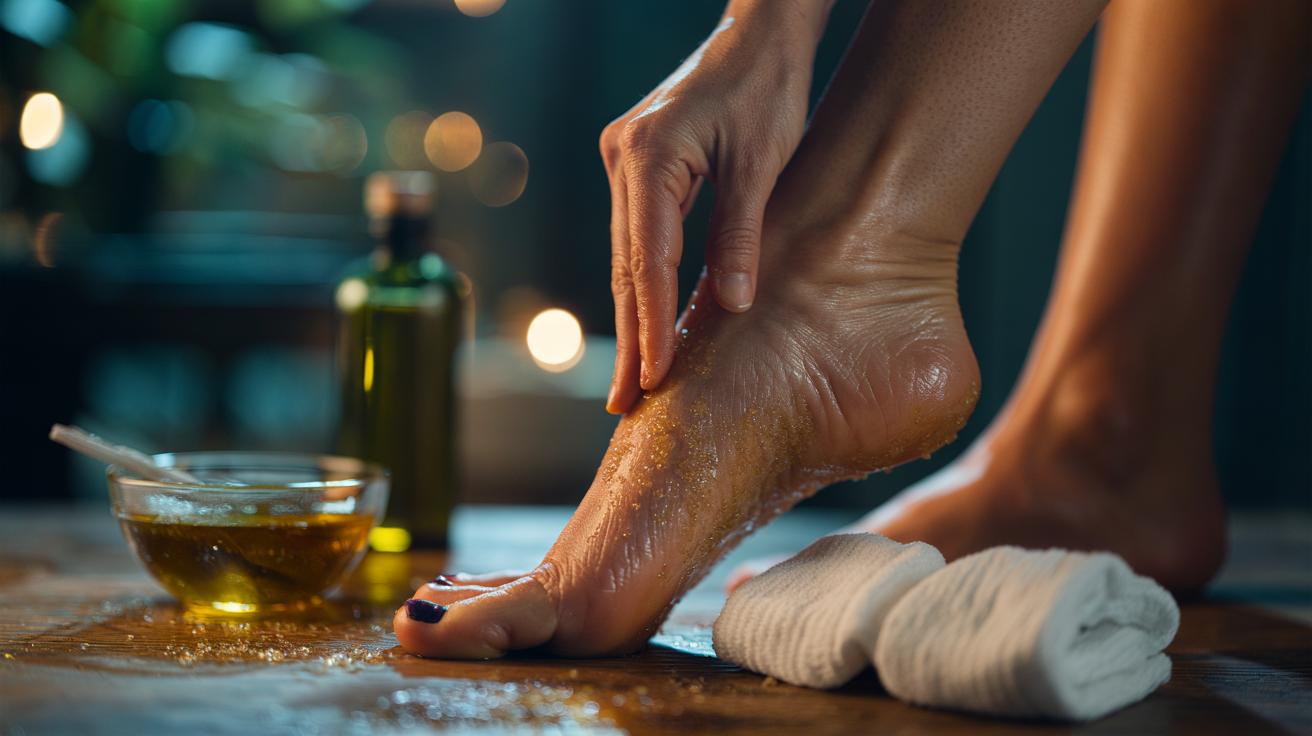
Start with clean feet. Soak in warm (not hot) water for 10–15 minutes to hydrate the thickened skin. Pat dry. Mix 2 tablespoons of extra virgin olive oil with 2 tablespoons of fine sugar (caster or light brown; avoid sharp, coarse crystals). Massage the paste onto heels and callused spots for 2–3 minutes per foot in small circles, applying light to moderate pressure. Rinse with lukewarm water and gently pat dry. If you see redness or feel stinging, stop—irritation can worsen fissures.
For the overnight phase, smooth a thin layer—about 1 teaspoon—of olive oil over the treated areas. Slip on breathable cotton socks to trap moisture without overheating. Leave on overnight. In the morning, wash with mild soap, dry thoroughly, and, if needed, lightly use a pumice or foot file on softened areas—never dig or shave. Repeat 2–3 times weekly until skin feels supple, then maintain weekly. Keep toenails trimmed and shoes well-fitted to reduce friction so results last longer.
Enhancers, Variations, and What to Avoid
You can tailor the base recipe for specific needs. For extra glide, add 1 teaspoon of honey, a natural humectant that boosts moisture retention. A pinch of finely ground oatmeal can cushion the scrub for sensitive skin. For odour-prone feet, one drop of tea tree or lavender essential oil is plenty—avoid more, as essential oils can irritate. Prefer sugar over salt: salt scrubs can sting micro-cracks and pull moisture from skin. Skip lemon juice or vinegar on fissured heels; acids can burn and delay healing.
To supercharge hydration on non-broken skin, layer a urea-based heel cream (10–20% urea) in the morning; urea softens keratin and attracts water without abrasion. Rotate tools: a gentle weekly foot file can help maintain smoothness between scrubs, but never use razor blades or “cheese-grater” devices. Wash socks at high temperatures to keep bacteria and fungi at bay, and let shoes dry fully between wears to reduce friction and moisture build-up.
Safety Notes and When to See a Professional
Though the olive oil–sugar routine is generally safe, some situations warrant caution. Do not perform home callus removal on open cuts, bleeding cracks, or infected skin. If you have diabetes, peripheral neuropathy, or poor circulation, consult a GP or podiatrist before trying any exfoliation; sensation changes raise the risk of unnoticed injury. Persistent scaling between toes, itch, or odour may indicate athlete’s foot—treat the infection first and avoid overnight occlusion until cleared. Wart-like lesions or sudden painful lumps require professional assessment.
Watch for warning signs: increasing pain, redness, warmth, discharge, or fever warrant medical advice. If home care stalls after two weeks, a podiatrist can debride callus safely and recommend orthotics to reduce pressure points—the true driver of hyperkeratosis. Lastly, remember the slip hazard: oil can transfer to floors, so wipe surfaces and wash hands thoroughly. Gentle, consistent care, paired with better footwear and moisture control, maintains softer heels without drama.
Used thoughtfully, the olive oil and sugar method blends science with simplicity: soften, buff, seal—then let time and socks do their quiet work overnight. As friction falls and hydration rises, callused heels give way to skin that’s supple, comfortable, and less prone to cracking. Keep the focus on prevention by minding shoe fit, rotating pairs, and moisturising regularly. With just a cupboard staple and a minute of mixing, smooth feet are well within reach. How will you adapt this routine to suit your lifestyle and the demands you place on your feet each week?
Did you like it?4.4/5 (27)