In a nutshell
- 🔎 Underboob darkness stems from friction, moisture, occlusion, and intertrigo, driving inflammation and post-inflammatory hyperpigmentation—especially in reactive skin tones.
- 🔬 Lemon peel’s citric acid (AHA) can exfoliate by loosening dead cells, but raw lemon’s very low pH (~2) and sensitising oils under heat and pressure raise irritation risk.
- ⚠️ The “bra hack” creates prolonged, occluded contact that can cause irritant dermatitis, rebound hyperpigmentation, and photosensitivity; limit contact, patch test, and avoid broken skin.
- 🧴 Safer brightening options: buffered AHAs (lactic/mandelic 5–10%), niacinamide (2–5%), and azelaic acid (10–15%), paired with fragrance-free moisturisers and diligent drying of the fold.
- 👙 Practical fixes matter: choose moisture-wicking, breathable bras, reduce friction, pace results over weeks, and see a GP for persistent or changing patches to rule out underlying conditions.
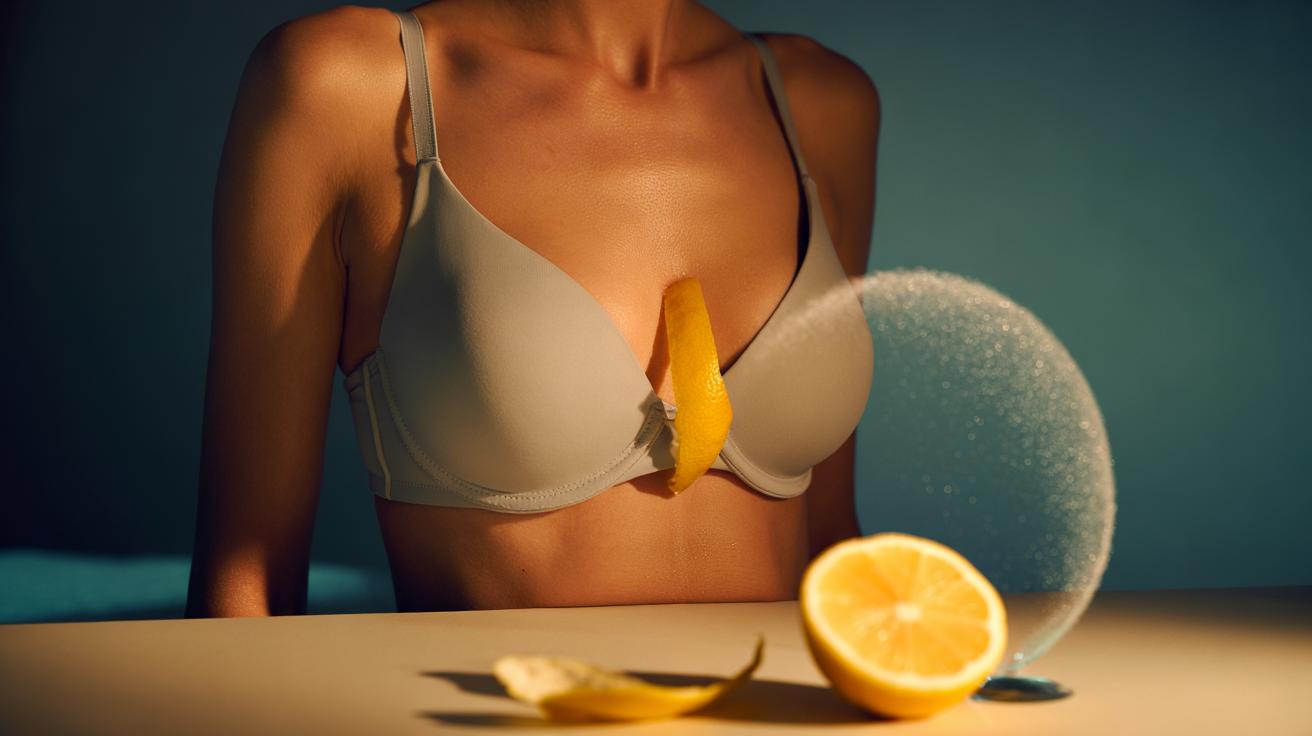
It sounds like a cheeky hack: tuck a lemon peel inside your bra and watch underboob darkness fade. The idea taps into a well-known truth about citrus—its citric acid can exfoliate and brighten. Yet breast folds are delicate terrain, prone to sweat, friction, and irritation. The chemistry matters, as does anatomy. In this explainer, we examine how acid works, why the under-breast area darkens, and whether a lemon peel in your bra is a clever shortcut or a recipe for soreness. Skin safety should always outrank speed, so consider this a clear-eyed look at science, not a dare. Here’s what’s actually happening beneath the lace.
Why Under-Breast Skin Darkens in the First Place
Under-breast skin often appears darker due to a cluster of causes: friction from fabric and movement, occlusion from tight bands and moisture, and episodes of intertrigo (rash in skin folds) that trigger post-inflammatory hyperpigmentation. Hormones, especially in pregnancy or perimenopause, can amplify melanin responses. The area is warm and humid, a perfect microclimate for yeast overgrowth, which fuels irritation. Inflammation is the engine that drives much of the lingering colour change, so anything that stings, rubs, or overheats the fold can deepen the shade over time.
Texture matters too. When sweat and dead cells accumulate, the surface looks duller. Some fabrics trap moisture; others wick it away. A snug, non-breathable bra band can raise the local pH, encouraging microbes that aggravate the skin. For darker skin tones, melanocytes are more reactive to irritation, producing robust pigment as a defence. That’s why a solution that tackles both irritation and cell turnover—gently—is more effective than a harsh blast of acid, however tempting the shortcut may sound.
How Citric Acid From Lemon Peel Interacts With Skin
Lemon peel contains citric acid, an alpha-hydroxy acid (AHA) that loosens bonds between dead skin cells, making exfoliation easier. It also houses fragrant oils like limonene, plus flavonoids. In controlled formulas, AHAs accelerate cell turnover, can brighten dark spots, and smooth texture. The “lightening” effect isn’t bleach; it’s the visual clarity that comes from shedding pigmented surface cells and interrupting the cascade of inflammation that leads to new pigment. Acids can help—when dose, pH, and contact time are controlled.
The problem is that raw lemon has a pH around 2, far more acidic than healthy skin (pH ~5). Essential oils in the peel can be sensitising, particularly on thin or chafed tissue. Applied beneath a bra, pressure and heat increase penetration and magnify stinging. That can backfire by causing irritation and subsequent hyperpigmentation. In other words, the same acid that exfoliates can deepen darkness if it inflames the fold. It’s a tightrope: technique and moderation are everything.
The Bra Trick: Practicalities, Risks, and What Science Suggests
Placing a lemon peel inside a bra creates prolonged, occluded contact—akin to a mini chemical peel under compression. Theoretically, mild exfoliation may occur. Practically, the risks loom larger: irritant dermatitis, stinging, and photosensitivity if skin meets sunlight soon after. Prolonged occlusion plus raw acid is a high-risk combination in a sensitive fold. If someone insists on experimenting, scientists would urge boundaries: limit contact minutes (not hours), avoid broken skin, rinse thoroughly, and moisturise with a bland, fragrance-free emollient. Even then, the result may be unpredictable.
To visualise the balance of benefit and risk, consider these simple parameters—note how extremes tilt towards harm:
| Factor | Raw Lemon | Skin-Friendly Target | Risk Signal |
|---|---|---|---|
| pH | ~2 | ~3.5–4.5 (buffered AHA) | Too acidic |
| Contact Time | Hours (in-bra) | Minutes, then rinse | Overexposure |
| Environment | Occluded, sweaty | Clean, dry, unoccluded | Irritation risk |
| Additives | Essential oils | Fragrance-free | Sensitising |
Do not place raw lemon peel in your bra for extended periods; any gains in brightness may be offset by rebound darkness from irritation. A patch test on the inner arm for 10 minutes, followed by 48 hours of observation, is a safer litmus than trialling in a skin fold.
Safer Routes to Brightening: Evidence-Based Options
If brightness is the goal, copy the mechanism, not the fruit. Opt for buffered AHA lotions (lactic or mandelic acid 5–10%) applied sparingly at night, one to three times weekly, and keep the fold dry by day. Lactic acid is humectant as well as exfoliant, kinder to sensitive zones. Pair with a fragrance-free moisturiser to support the barrier, and a bra that wicks moisture to reduce friction. Reducing irritation is as crucial as gentle exfoliation. For those prone to rashes, consider occasional antifungal powder as advised by a pharmacist.
Target pigment with niacinamide (2–5%) or azelaic acid (10–15%), both melanin-modulating and generally well tolerated. Stick to short contact and observe for stinging. If darkness follows recurrent chafing, adjust fit: a well-structured, breathable bra can be transformative. Persistent or rapidly changing patches warrant a GP or dermatologist’s review to rule out eczema, infection, or acanthosis nigricans. The smartest path blends chemistry with clothing choices and consistent care—results arrive in weeks, not hours.
Lemon’s legend isn’t pure fiction: citric acid can lift dullness by loosening dead cells. But the under-breast fold is a sensitive, occluded area where raw fruit and friction can ignite inflammation and deepen pigment. Controlled acids, barrier care, and better bra design outpace risky hacks, and they safeguard skin for the long term. If you’re weighing speed against safety, let science set the pace: go gentle, go buffered, and keep the fold cool and dry. What small, sustainable change—product, fabric, or routine—could you start this week to brighten the area without inviting irritation?
Did you like it?4.4/5 (24)