In a nutshell
- 💆♀️ Pros advocate a pre-workout caffeine serum scalp massage to leverage heat and movement for better absorption, helping blunt DHT impact and promoting thicker-looking strands.
- 🧭 Technique matters: create partings, apply 1–2 ml, use fingertip circles for 60–90 seconds per quadrant, and allow dwell time post-training; stagger with minoxidil to simplify routines.
- 🧪 Evidence indicates caffeine modulates androgen signalling and supports the anagen phase; synergists like niacinamide, peptides, and saw palmetto can enhance outcomes with consistent use over 8–12 weeks.
- 👥 Best for early thinning and density dips; patch test if sensitive, avoid heavy oils and fragrance pre-gym, and seek advice if the scalp is inflamed or postpartum without clinician clearance; compatible with LLLT when staggered.
- 📈 Expect grippier roots, less brush fallout, and improved part density over months; track with monthly photos under consistent lighting—consistency is key for visible results.
Ask any backstage stylist or trichology-focused colourist and you’ll hear the same tip: massage a caffeine serum into the scalp before your workout. The logic is simple and very British-practical. Exercise raises blood flow and scalp temperature, giving active ingredients a head start while you sweat. Pros say this routine can help blunt the effects of DHT—the hormone linked with thinning—while encouraging thicker-looking strands. Apply before you train so movement and warmth act like a natural booster. While it isn’t a cure for pattern hair loss, the approach is a low-lift addition that fits neatly between your gym bag and your wash day.
Why Caffeine Before a Workout Makes Sense
Topical caffeine is prized for its ability to wake up follicles, supporting the anagen (growth) phase and countering androgen-related miniaturisation. Stylists often frame it as a way to “block” DHT at the follicle. Dermatologists nuance the claim: caffeine doesn’t switch off hormones, but research suggests it can reduce DHT’s impact on follicle signalling and energy metabolism. That distinction matters—yet the practical outcome is similar. Before exercise, your heart rate climbs and vessels dilate; the scalp warms, sebum softens, and microcirculation lifts. This is an opportune window for a light serum to sink in without slickening hair shafts.
Movement also helps distribute formula across the scalp’s contours. Think of it as a dynamic leave-in treatment activated by heat and motion. A pre-gym application avoids the post-workout rush, when sweat, salt, and shampoo can dilute actives. Less dilution, more dwell time. The result many pros report: denser-feeling coverage at the roots and a more resilient-looking fibre over several weeks.
How to Massage a Serum for Maximum Absorption
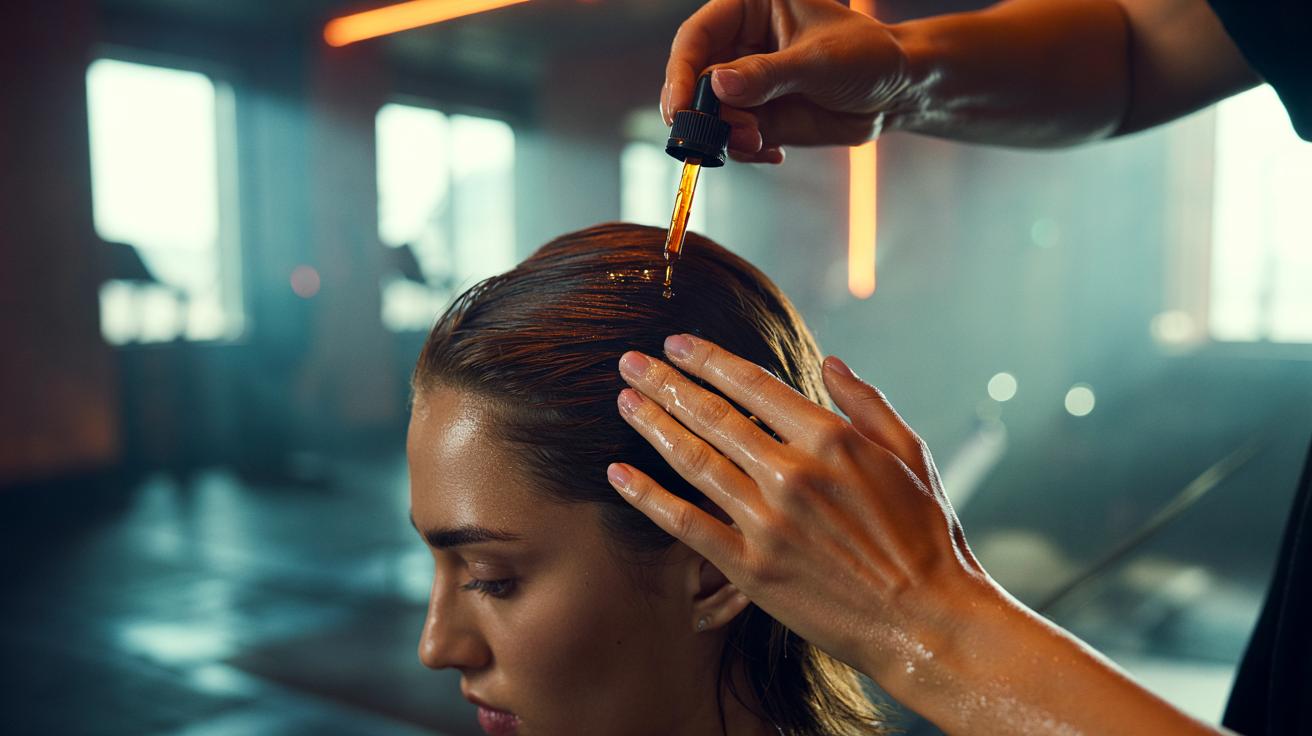
Start on a dry or lightly damp scalp. Create three to four clean partings from front to crown and dispense 1–2 ml of caffeine serum (look for 1–3% caffeine). Using the pads of your fingers—not nails—press along each parting, then work in small circular motions. Aim for 60–90 seconds per quadrant. Pressure should be firm enough to mobilise the scalp, not slide over it. Focus on recession areas and crown, where DHT sensitivity is often highest. If hair is long, clip sections to avoid product sitting on mid-lengths.
Finish with gentle “piano” tapping across the scalp to stimulate blood flow without friction. Leave hair loose or in a breathable headband; avoid tight ponytails that stress follicles. If you also use minoxidil, many clinicians advise separating applications (e.g., caffeine pre-workout, minoxidil at night) to keep routines simple. Do not rinse immediately after training—give the serum a few hours’ contact before shampoo. On non-gym days, apply before a brisk walk or morning chores to mimic the same warmth and movement benefits.
Evidence, Ingredients, and Expected Results
Laboratory studies show caffeine can penetrate follicles and may counter testosterone-induced suppression of hair growth. Small clinical trials and user reports suggest improvements in shedding and fibre feel over 8–12 weeks with regular use. While “blocks DHT” is a catchy shorthand, it’s more accurate to say caffeine modulates androgen signalling and energy pathways, supporting thicker-looking strands. You’ll often see synergists such as niacinamide (barrier support) and peptides (follicle signalling), plus botanical 5α-reductase modulators like saw palmetto. Consistency wins—daily or near-daily use aligns with hair’s long growth cycles.
What to expect: within weeks, roots may feel grippier when styled; brush fallout can appear reduced; over months, density at the parting can look improved. No topical suits everyone, and advanced genetic hair loss still benefits from medical routes. Still, as a low-commitment add-on, a pre-workout caffeine habit earns its place.
| Ingredient | Role | Notes |
|---|---|---|
| Caffeine (1–3%) | Counteracts androgen effects; supports anagen | Best with heat and massage |
| Niacinamide | Scalp barrier, sebum balance | Pairs well for daily use |
| Saw Palmetto | 5α-reductase modulation | Herbal adjunct; check sensitivities |
Who It Helps, Who Should Skip, and How to Pair It
This routine suits early thinning, postpartum shifts once cleared by a clinician, and those noticing widening parts or weaker ponytails. It’s compatible with minoxidil and in-clinic therapies like low-level laser, provided you stagger timings. Curly and coily hair types can benefit by applying directly to the scalp with nozzle tips, then scrunching any residue through roots to avoid cast. If your scalp is inflamed, flaking severely, or tender, pause and seek a diagnosis before layering actives.
Patch test first if you’re sensitive to botanicals or caffeine. Avoid high-fragrance formulas and heavy oils pre-gym, which can trap sweat. Those pregnant, breastfeeding, or on hormone therapy should consult a GP or dermatologist about DHT-targeting blends. Remember: hair growth is slow biology. Track progress with monthly parting photos under the same light, and adjust only after 12 weeks. If shedding escalates or you see rapid miniaturisation, professional assessment is the fastest route to a plan.
The appeal of a pre-workout caffeine serum is its elegant simplicity: it leverages heat, motion, and time you already spend to give follicles a targeted nudge. While it won’t replace medical treatments for significant pattern loss, it can lift density optics, improve scalp feel, and make styling less of a daily negotiation. Low effort, potentially high reward is a rare combination in haircare. Will you trial a four-week routine—photos, consistent application, and gentle massage—to see whether your roots look stronger under real-life conditions?
Did you like it?4.4/5 (22)