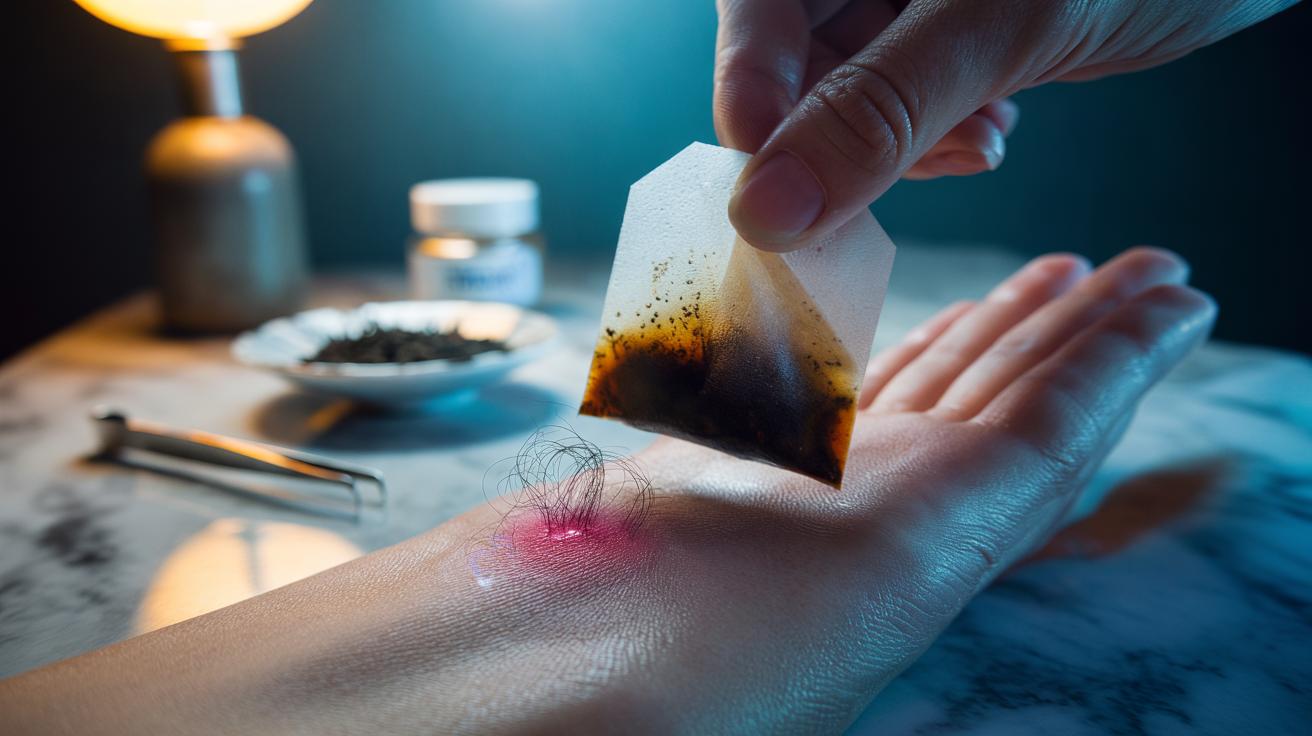
In a nutshell
- 🍵 A cold teabag compress tackles ingrown-hair redness by combining tannins (astringency) with cooling-induced vasoconstriction to visibly reduce heat, swelling, and colour.
- ❄️ Step-by-step: steep a plain black or green teabag briefly, cool it in the fridge, cleanse skin, then apply for 3–5 minutes; keep it clean and avoid scented blends or broken skin.
- 🫖 Best choices: black tea for strong astringency, green tea for EGCG-led anti-inflammatory support, white tea for gentle calming; chamomile soothes but lacks tannins.
- ⚠️ Safety first: patch test if sensitive, skip if signs of infection (spreading warmth, pus), and follow with a light, non-comedogenic moisturiser to prevent over-drying.
- 🪒 Long-term wins: pair the teabag tactic with prevention—gentle exfoliation, sharp razors, shaving with the grain, and breathable fabrics—to reduce recurring ingrowns.
When an ingrown hair flares up, the angry flush can feel wildly disproportionate to the tiny culprit. A simple, decidedly low-tech fix has been hiding in the kitchen: a cold teabag. Chilled tea acts as a targeted compress, and its naturally occurring tannins do the heavy lifting. These plant polyphenols have an astringent character that tightens tissue and helps reduce surface redness. Combined with the numbing calm of cold, the effect is surprisingly swift. Used correctly, a cold teabag can dial down redness without harsh acids or heavy concealers, making it a handy first-aid step before your usual skincare routine.
Why a Cold Teabag Quiets Inflamed Follicles
Ingrown hairs trigger local inflammation as the strand curls back into the skin. The area swells, capillaries dilate and the site looks hot and crimson. Tea’s tannins create a gentle astringent effect, encouraging mild protein precipitation in the superficial skin layer. This tightens the look of pores and counteracts dilation, while the chill narrows vessels via vasoconstriction. The result is a visible reduction in colour and puffiness. Cold plus tannins is a one-two punch: constrict, then calm. If your skin runs reactive, this low-irritation approach often beats piling on fragranced creams that can sting compromised skin.
Several teas add supportive benefits. Black tea contains robust tannins and a touch of caffeine, which also promotes temporary vasoconstriction. Green tea brings EGCG and other polyphenols associated with anti-inflammatory activity. Together with the cooling compress, these compounds help interrupt the redness loop: heat, dilation, more heat. Crucially, a teabag targets just the hotspot, sparing the surrounding skin. Think of it as a precision cold compress enriched with plant chemistry, rather than a blanket treatment that risks drying out healthy areas.
How to Use a Teabag Safely and Effectively
Start with a plain, unflavoured black or green teabag. Wet it in freshly boiled water for 20–30 seconds to release tannins, then remove, squeeze gently, and let it cool on a clean plate. Pop it in the fridge for 10–15 minutes (or five minutes in the freezer if you’re rushed). Cleanse the area with a mild, fragrance-free wash and pat dry. Always work with clean hands and tools to avoid introducing bacteria. Apply the cold teabag to the ingrown bump for 3–5 minutes, lifting briefly every minute to assess sensitivity.
Repeat once or twice daily until redness eases. If skin is very dry, follow with a thin layer of a simple, non-comedogenic moisturiser. Avoid scrubbing, strong acids, or retinoids on the exact spot immediately after the compress, as permeability may be increased. Do not use on broken skin or a pustule that looks infected; seek advice if you notice spreading warmth, severe pain, or pus. Patch test first if you have a history of contact dermatitis or tea allergies, and skip scented blends or essential-oil–infused sachets that can irritate compromised skin.
Best Tea Choices and What They Offer
For sheer astringency, black tea is a reliable choice thanks to high tannin content. It’s inexpensive, widely available, and effective as a quick redness reset. Green tea contains a lighter tannin profile but compensates with antioxidant polyphenols such as EGCG that support the skin’s recovery from irritation. White tea sits between the two: delicate, lower in caffeine, still helpful for gentle calming. Herbal options like chamomile lack tannins but deliver apigenin, which many find soothing; just beware of ragweed sensitivity. The simpler the blend, the safer it tends to be on sensitised skin.
Decaffeinated versions can work if caffeine makes you jittery, though some astringency may be lost in processing. Organic versus conventional matters less than freshness and the absence of perfumes or added oils. Tea bags are convenient, but loose-leaf wrapped in sterile gauze achieves the same compress effect. Focus on contact time and temperature: cool enough to constrict, not so icy it burns. Three to five minutes usually suffices to take the heat and colour down without over-drying the surface.
| Tea Type | Key Compounds | Primary Benefit | Notes |
|---|---|---|---|
| Black | Tannins, caffeine | Strong astringency, vasoconstriction | Great for rapid redness reduction |
| Green | EGCG, tannins | Anti-inflammatory support | Milder, suitable for sensitive skin |
| White | Polyphenols, low caffeine | Gentle calming | Good for frequent use |
| Chamomile (herbal) | Apigenin | Soothing without tannins | Avoid if ragweed-allergic |
What Science Says About Tannins and Redness
The redness you see around an ingrown hair stems from vasodilation and immune signalling. Plant tannins are known for their protein-binding, astringent action, which can visibly tighten the epidermis and reduce superficial fluid. Caffeine, common in black and green tea, contributes a transient vasoconstrictive effect. Polyphenols including EGCG have been associated with dampening inflammatory mediators, supporting recovery without the sting linked to some acids. This triad—tannin astringency, caffeine constriction, polyphenol calm—maps neatly to what your eye reads as “less red”.
That said, a teabag is a supportive measure, not a cure-all. If ingrowns recur, consider prevention: gentle exfoliation, sharp razors, shaving in hair direction, and breathable fabrics. Switch to fragrance-free formulas around the affected area during flare-ups. See a professional if you suspect infection or stubborn cysts; procedures like sterile extraction may be warranted. Use the teabag as your first line for redness, then address the habits that invited the hair to turn inward. Documenting triggers—new gym kit, a different razor—can help you break the cycle.
A cold teabag will not rewrite your skincare routine, but it can buy immediate calm when an ingrown hair threatens to upstage your day. By harnessing tannins for astringency and the cooling power of a compress, you quickly reduce the look of heat and swelling with minimal risk. Keep it simple: plain tea, clean skin, short contact time, and a light moisturiser afterwards. When the redness ebbs, prevention keeps it that way. What blend will you keep in your bathroom cabinet for the next flare—classic black for punchy astringency, or green for a softer, antioxidant-led soothe?
Did you like it?4.6/5 (30)