In a nutshell
- ❄️ A chilled spoon triggers vasoconstriction and reduces puffiness, delivering a quick, visibly more sculpted cheek—an effect that’s temporary but striking.
- 🥄 Safe method: use fridge-cool (not frozen) spoons, add a light moisturiser, glide along the cheekbone toward the ear 3–5 times, apply gentle pressure, and avoid numbness/whitening, especially with reactive skin.
- 🧠 Beneath the skin, outward strokes encourage lymphatic drainage toward parotid/submandibular nodes; reduced fluid and eased jaw tension mimic a “lift,” typically lasting a couple of hours.
- 🧊 Tool check: spoons for fast de-puffing; jade rollers for gentle daily flow; ice globes for redness control; gua sha for tension and long-term tone—each with specific cautions.
- 🗓️ Routine tips: use in the morning or pre-event, keep tools clean, match cold intensity to tolerance, and pair brief cooling with gua sha for sustained contouring habits.
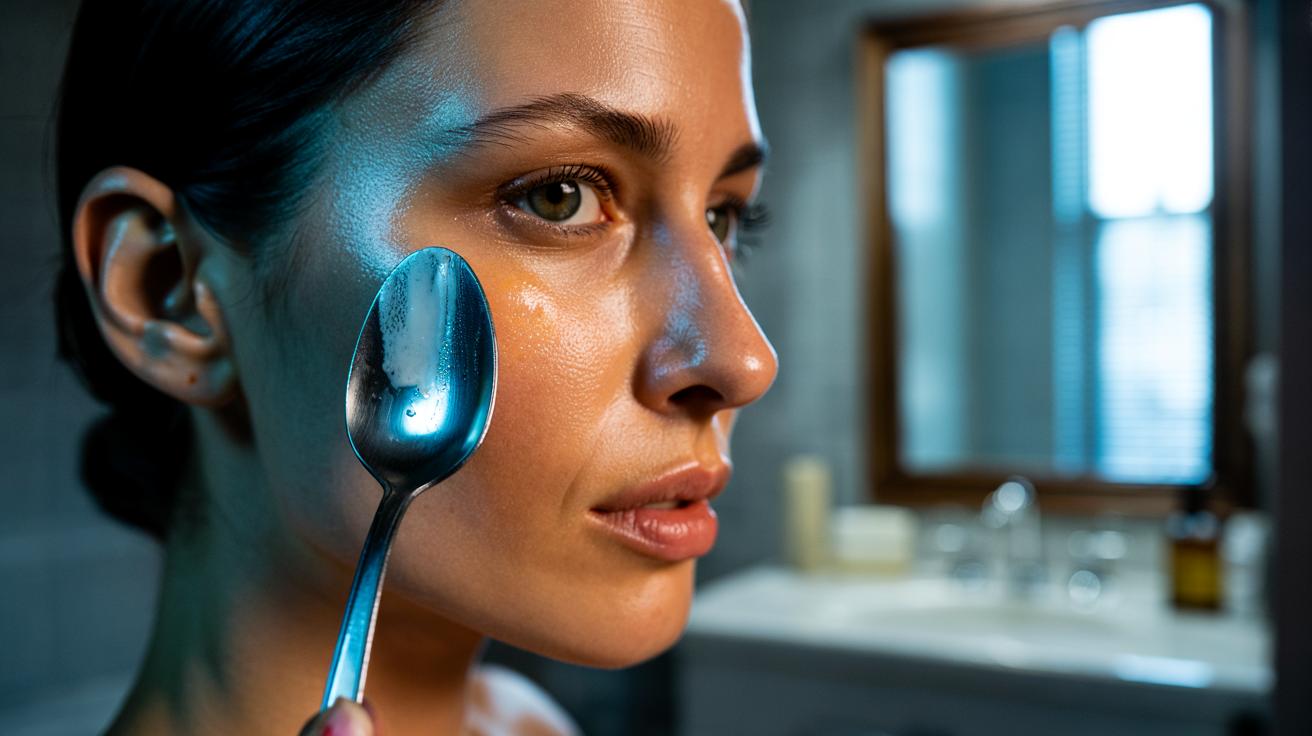
Across Britain’s bathrooms, the humblest of tools is having a beauty moment: the chilled teaspoon. Devotees swear that a cold spoon on the cheeks can carve definition and calm morning puffiness within minutes. The appeal is obvious—no batteries, no serums, just physics and a bit of patience. This quick chill promises a temporary lift, a brighter tone, and a more sculpted cheekbone without a makeup brush in sight. Here’s how the “chill lift” works, the safest way to try it, and how it stacks against other cool-to-the-touch tools that promise a similar sculpting effect.
Why Cold Metal Changes Your Face in Minutes
Cold is a master of micro-choreography. Pressing a chilled spoon to the cheeks triggers vasoconstriction, which narrows surface blood vessels and limits fluid pooling. Less fluid means less puffiness, so cheekbones appear cleaner and edges look sharper. As the spoon glides outward, it nudges lymphatic drainage toward the nodes near the ears, helping to move stagnant fluid that makes the mid-face look heavy first thing.
There is also a nervous-system piece. Cool metal briefly dampens nerve firing, easing tenderness around the sinus area and the jaw. That soothing effect eases micro-tension in expression muscles, subtly smoothing the surface. The result isn’t a true “lift” of tissue, but a temporary de-swelling that reads as lifted and sculpted under normal light. Add the spoon’s firm pressure, and you coax the skin to lie flatter against the cheekbone, enhancing structure without makeup or contouring sticks.
How to Use a Cold Spoon for a Safe, Quick Lift
Chill two clean, dry teaspoons in the fridge for 10–20 minutes. Avoid the freezer; metal can over-cool and stick to damp skin. Apply a thin film of light moisturiser or facial oil to reduce drag. Place the back of each spoon at the side of your nose, then glide along the zygomatic (cheekbone) line toward the ear. Hold for 5–10 seconds at the hairline. Repeat 3–5 passes per side, then sweep down in gentle arcs toward the jaw to encourage lymph flow.
Use a soft touch—pressure should feel soothing, not sore. Never press hard or linger so long that the skin turns numb or blotchy white. If you have active rosacea, broken capillaries, or very reactive skin, keep sessions brief and the spoons only mildly chilled. Work in the morning to calm overnight puffiness, or pre-evening to reset after heat and screen time. Clean the spoons with warm soapy water and dry thoroughly before the next round.
What Happens Beneath the Skin: Science and Sensation
The change you see comes from fluid dynamics. Overnight, fluid can pool in the malar region (upper cheek). Cold creates a temporary squeeze on superficial vessels, while the outward glide channels that fluid toward parotid and submandibular nodes. That translates into a lighter, less swollen look around the mid-face and under-eye area, even though the spoon never touches the eyes directly.
There’s also a sensory trick. Cool temperature heightens contrast, making the cheekbone feel more defined to your fingertips, which may influence how you read your reflection. Pairing cold with rhythmic strokes taps into the body’s relaxation response, softening clenched jaws that can blur the lower face. Think of the effect as deflating a cushion rather than lifting a shelf—the shape looks higher because the surrounding area sits flatter. The result usually lasts a couple of hours, long enough for a commute, a meeting, or dinner plans.
Cold Tools Compared: What Works Best When
Chilled spoons are not the only option. Jade rollers, ice globes, and sculpting stones each deliver their own texture and temperature profile. The best tool depends on sensitivity, time, and the area you want to refine. Use this quick guide to match your aim—rapid de-puffing before makeup, deeper muscle release after the gym, or a steady routine to curb morning swelling.
| Tool | Typical Temperature | Main Effect | Time Needed | Best For | Cautions |
|---|---|---|---|---|---|
| Chilled Spoon | Fridge-cool, not frozen | Fast de-puffing, crisp edges | 3–5 minutes | Cheeks, jawline reset | Don’t use from freezer; avoid hard pressure |
| Jade Roller | Cool room temp or chilled | Gentle lymph flow, relaxation | 5–10 minutes | Reactive skin, daily upkeep | Sanitise to prevent breakouts |
| Ice Globes | Colder than spoons | Intense cooling, redness control | 3–8 minutes | Post-workout flush, hot days | Limit contact to avoid numb spots |
| Gua Sha | Room temp or lightly chilled | Fascial glide, contour training | 8–12 minutes | Jaw tension, long-term tone | Use oil; avoid active acne |
Match cold intensity to your skin’s tolerance and your timetable, not the latest social clip. If you only have two minutes, spoons deliver a reliable, frugal fix. For sustained sculpting habits, a gentle gua sha routine pairs well with brief cooling to tame morning swelling before deeper work on muscle and fascia.
Used thoughtfully, the cold-spoon trick is a smart shortcut: quick vasoconstriction, a nudge to lymphatic pathways, and a calmer jaw add up to a cleaner, more lifted look—no contour palette required. Its power is in precision and restraint, not bravado. Keep it cold, clean, and controlled, and the results feel refreshingly modern despite the old-school method. Will you reach for the teaspoon tomorrow—perhaps as a pre-meeting perk-up, or as part of a slower evening ritual—and what tweaks will you test to tailor the chill to your face?
Did you like it?4.5/5 (24)