In a nutshell
- 🧪 Cold milk melts stage makeup via fats that dissolve oils, casein that emulsifies residue, and a whisper of lactic acid for gentle exfoliation, while the chill calms redness.
- 🧴 Method: use cold, full-fat milk, press—don’t scrub—for 20–30 seconds, wipe outward, rinse, follow with a second cleanser, moisturize, and discard leftovers for hygiene.
- 🛡️ Barrier care: hydrates and offers a light occlusive feel that’s skin-barrier friendly; cautions include dairy allergy, acne-prone skin—patch-test, keep milk fresh, and always rinse thoroughly.
- 🎭 Use cases: ideal for cream foundations, body paint, and long-wear base; choose pro removers for waterproof mascara, alcohol-activated pigments, and prosthetic adhesives.
- 🎒 Practicality: affordable, accessible backstage, and soothing; on tour, shelf-stable removers travel better—treat milk as a first pass, not a full replacement.
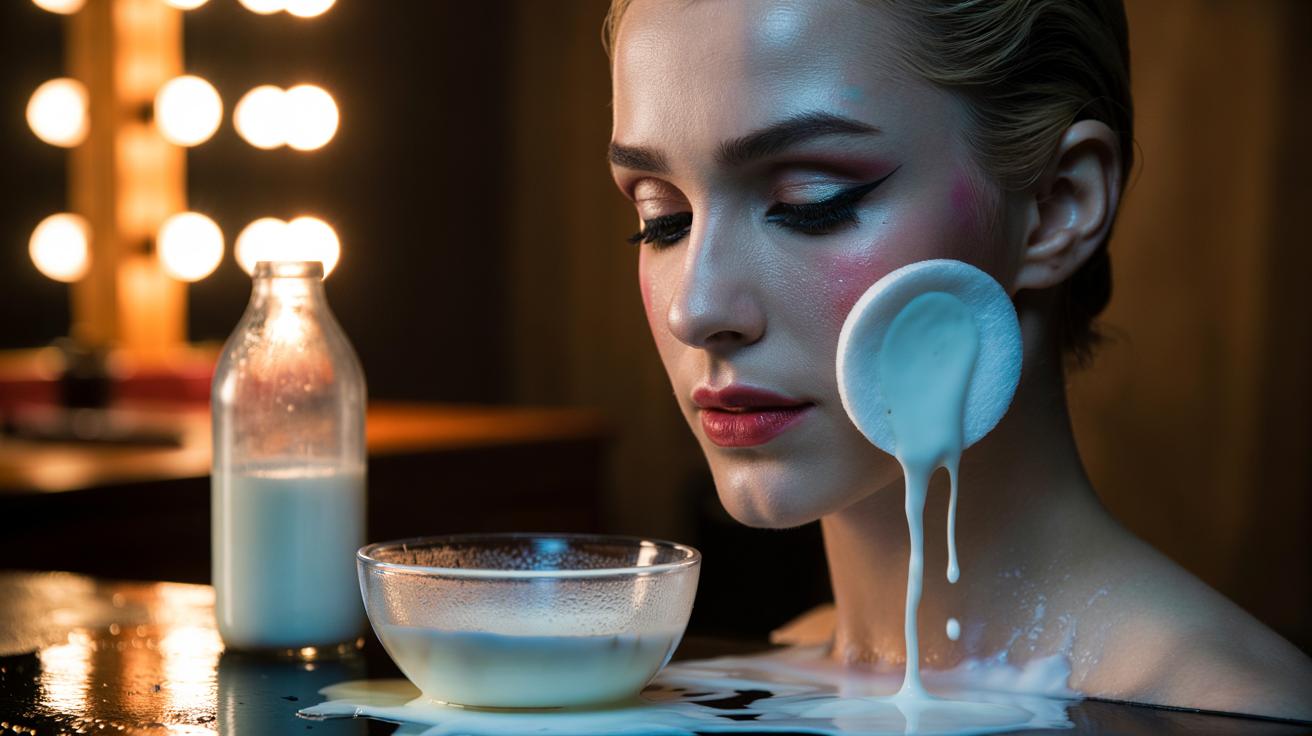
It sounds like a kitchen myth, yet backstage veterans swear by it: a quick splash of cold milk can melt away stage makeup without the sting or tug. Thick creams, waxes, and long-wear pigments cling to skin through oils and resins, but milk’s own fats and proteins act like gentle solvents and soft surfactants. When chilled, milk calms hot, overworked skin and coaxes stubborn cosmetics to release. Done properly, it’s a soft-focus reset that dodges redness, rough scrubbing, and fragrance-heavy removers. What looks like homespun wisdom is rooted in chemistry—and for many performers, it’s a pragmatic, low-cost fallback when the call sheet runs late and the sink is far away.
Why Cold Milk Dissolves Tenacious Makeup
Heavy theatre formulas rely on waxes, silicones, and oils to withstand heat, sweat, and lights. Milk brings a matching toolkit. Its lipids—mostly triglycerides—are lipophilic, meaning they mingle with oil-loving pigments and soften them. Meanwhile, casein proteins behave like mild, natural emulsifiers. They help suspend dislodged makeup in a milky fluid that can be whisked off with a cloth. Milk’s fats bond with oil-based pigments, lifting them without abrasion.
Temperature matters. Chilled milk soothes vasodilated skin after a show, shrinking the urge to rub. The coolness also firms waxy film-formers just enough that they release in flexible sheets instead of smeary streaks. A hint of lactic acid—a naturally occurring alpha-hydroxy acid in milk—adds mild exfoliation, loosening dead cells that trap pigment. The result is a gentle, cumulative cleanse that preserves the skin barrier while disarming stubborn cosmetics.
There’s another backstage bonus: milk’s water phase hydrates while fats seal micro-cracks, reducing that tight, post-cleanse feel. When time is tight, this dual action can replace a first cleanse and a softening pre-cleanse step in one pass.
Step-By-Step: The Milk Splash Method
Start with cold, full-fat milk in a clean bowl. Tie hair back and remove contact lenses. Saturate cotton pads or a soft washcloth, and press over painted areas for 20–30 seconds. Let the fats do the work; don’t scrub. Sweep outward in gentle arcs, replacing pads as they cloud with pigment. For thick liner and lip stains, hold a fresh soaked pad against the area and roll it away from the lash line or lip edge.
Re-wet the cloth with fresh cold milk and massage in tiny circles along the jaw and hairline, where products accumulate. Rinse skin with cool water. Follow with a mild second cleanser—a non-stripping gel or cream—to remove residual dairy and fragrance. Pat dry and finish with a simple, fragrance-free moisturizer. If you’re milk-allergic or acne-prone, patch-test on the inner arm and choose an alternative oil or a professional remover. Discard leftover milk; hygiene matters.
For waterproof mascara or prosthetic adhesive, use dedicated removers on those precise zones first, then employ milk for the full-face melt. This dairy hack isn’t a substitute for medical-grade adhesive solvents.
Skin Science: Fats, Surfactants, and Barrier Care
Think of skin cleansing as chemistry, not force. Oil-heavy pigments dissolve best in compatible media. Milk’s triglycerides mingle with cosmetic oils, while casein micelles encapsulate fragments so they can be wiped away. That’s a DIY echo of how commercial cleansers use surfactants. The difference is intensity: milk is gentle, which is why it’s kind to post-performance complexions that are already sensitised by sweat, occlusion, and repeated application.
Lactic acid adds a whisper of exfoliation—enough to loosen flaky cells, not enough to strip. Because makeup artists layer primers, setting sprays, and powders, the barrier can feel parched by curtain call. Milk’s fats offer a temporary occlusive effect that softens without a greasy film. Preserving the barrier reduces downtime and keeps subsequent makeup sitting smoothly.
Caveats apply. Those with dairy allergy should avoid topical milk; opt for oat or squalane-based cleansing oils. Keep milk cold and fresh to limit bacterial growth, and always rinse it off fully. If breakouts are a concern, follow with a pH-balanced cleanser and avoid leaving milk on the skin.
When to Use Milk Versus Commercial Removers
Both have a place in a backstage kit. Milk excels on full-face cream foundations, body paint tints, and long-wear blush or contour, especially when skin is irritated. It’s cheap, available in green rooms and hotel mini-fridges, and acts as a calming compress. Professional removers still shine for waterproof mascara, alcohol-activated paints, spirit gum, and silicone-based prosthetic bonds, where precise solvents prevent residue and lash damage. Think of milk as your broad-strokes first pass, not your only tool.
Hygiene is the deciding factor during long runs. Single-use pads soaked in fresh milk maintain cleanliness; decanting and re-dipping raises contamination risk. Shelf-stable removers travel better and last months, a priority on tour. Budget and skin type weigh in too: milk is forgiving on reactive skin; some solvent removers, while effective, may need a barrier cream pre- and post-care to prevent dryness.
| Scenario | Milk Works Well | Use Pro Remover |
|---|---|---|
| Full-face cream foundation | Yes — melts base evenly, calms redness | Optional |
| Waterproof mascara/liner | Partial — gentle pre-soften | Yes — targeted oil or biphasic remover |
| Body paint and powders | Yes — quick all-over reset | Optional |
| Prosthetic adhesive (spirit gum, silicone) | No | Yes — specific solvent required |
| On-tour hygiene and storage | Use fresh, discard remainder | Prefer shelf-stable bottles |
This unassuming trick captures the heart of backstage problem-solving: use the chemistry you have, treat the skin you’re in, and keep the show on time. A cold milk splash coaxes heavy pigments to surrender while offering a cool sigh of relief after hot lights and tight schedules. It’s not a cure-all, but it’s a clever, skin-kind first act before the main cleanse. With the right follow-up and hygiene, it’s a reliable addition to any kit. Will you keep a small bottle in the fridge for your next performance night, or do you swear by a different gentle melt-away ritual?
Did you like it?4.6/5 (27)