In a nutshell
- 🧊 The duo of cold milk and fine salt targets underarm darkness by lifting residue and smoothing texture via mild lactic acid and gentle physical exfoliation, addressing visible stains rather than deeply rooted pigment.
- 🧴 Routine: apply a cold milk compress (2–3 min), then massage with a milk‑soaked pad plus a pinch of salt for 30–60 seconds; rinse and moisturise. Start weekly, increase to twice if tolerated, and patch test first.
- ⚠️ Safety: avoid immediately after shaving or waxing (wait 24–48 hours), skip on broken or irritated skin, and stop if burning or persistent dryness occurs—overdoing it can worsen hyperpigmentation.
- ⏳ Expectations: look for a “cleaner, more even” appearance within 2–4 weeks; realistic results mean subtle brightening, not dramatic “whitening.”
- 🧠 Support: pair with a fragrance‑free moisturiser, low‑residue deodorant, sharp razors, and breathable fabrics; consider alternating with niacinamide or a gentle lactic acid lotion for steady progress.
From locker-room whispers to viral reels, few beauty fixes spread as fast as the idea that cold milk and salt can “whiten” dark underarms. While “whitening” is a loaded term, many people are really seeking a cleaner, brighter look by lifting deodorant residue, sweat build-up, and shave-related discolouration. Dermatology texts suggest that gentle exfoliation and barrier care help uneven tone appear lighter. Milk brings a whisper of lactic acid and soothing fats; salt offers controlled exfoliation. Evidence is limited, but there is a plausible, skin-science logic to the pairing. Used carefully, the duo can nudge away surface staining while calming the area, though it will not rival prescription actives.
Why Underarms Darken and What Ingredients Target
Underarm skin is thin, frequently shaved, and often rubbed by clothing seams. That cocktail fuels post-inflammatory hyperpigmentation, plus visible “stains” from trapped sweat, dead skin, and deodorant residues. Fragrance and alcohols may irritate, prompting melanin to concentrate as a defensive response. The result is a patchy, shadowed look that can linger even when you scrub. The aim is not to strip the skin, but to loosen build-up gently and reduce irritation triggers.
Milk contains small amounts of lactic acid that support mild exfoliation, alongside proteins and fats that help soften the stratum corneum. Its cool temperature can calm redness. Meanwhile, fine salt works as a controllable physical exfoliant to dislodge residue. It also has a drying, osmotic effect that can reduce excess surface moisture where odour-causing bacteria thrive. Matched well, the pair can leave skin clearer and smoother, helping darkness appear less pronounced. Expect brightening of surface staining rather than dramatic pigment removal.
Cold Milk and Salt: How the Duo Works
Chilled milk acts as a gentle compress. The coolness constricts capillaries and eases itch, while milk’s lactose and proteins help the salt glide without scratching. The lactic component is modest in fresh milk, yet still contributes to micro-exfoliation. Fine, non-iodised salt provides low-grade abrasion; used with a light touch, it lifts dead cells and deodorant film that often make underarms look darker. Heavy-handed scrubbing breaks the barrier and can worsen pigmentation.
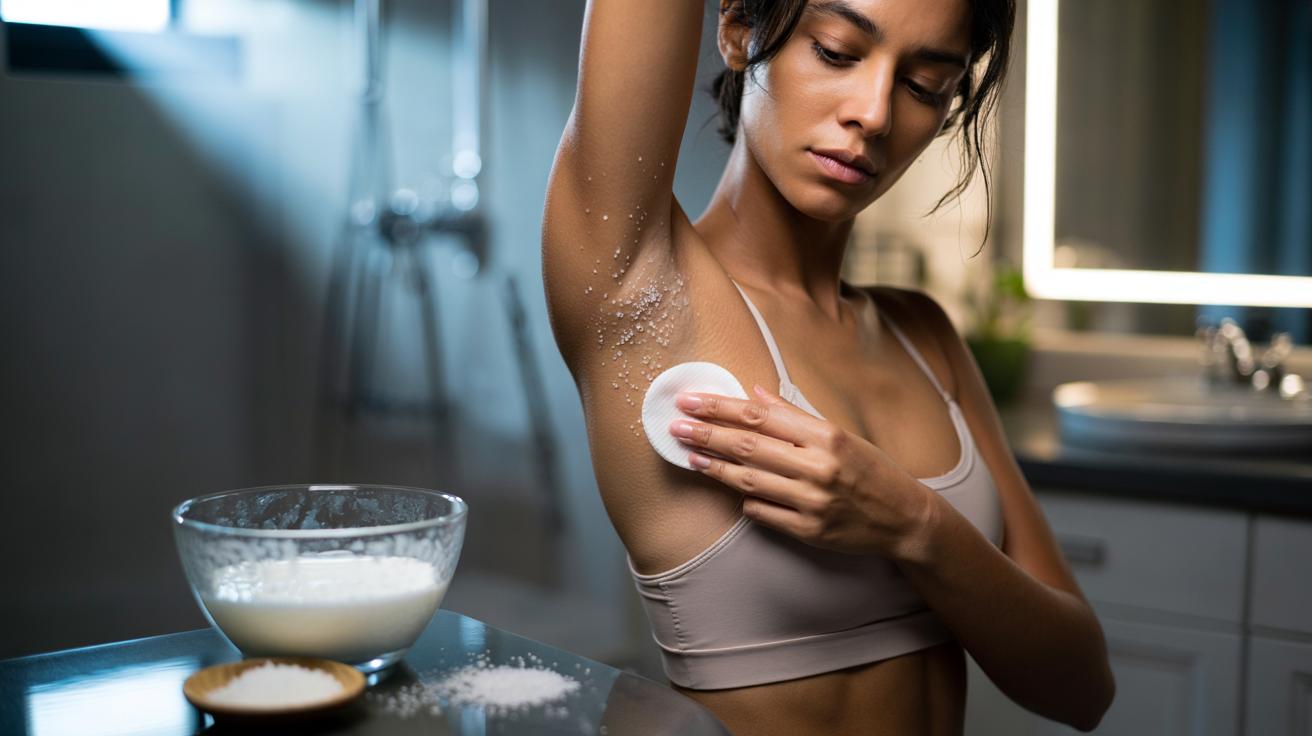
Try this balanced approach: soak cotton pads in cold milk and compress the underarm for two to three minutes. Then sprinkle a small pinch of fine salt onto a fresh milk-soaked pad and massage in feather-light circles for 30–60 seconds. Rinse with cool water and pat dry. Follow with a fragrance-free moisturiser. Use once weekly to start; increase to twice if skin tolerates it. A patch test on the inner arm 24 hours before first use is sensible.
| Component | Main Action | Key Benefit | Watch-outs |
|---|---|---|---|
| Cold Milk | Mild chemical exfoliation + soothing | Softens buildup; calms redness | Low lactic strength; dairy sensitivity |
| Fine Salt | Gentle physical exfoliation | Dislodges residue and flakes | Irritation if overused; microtears if rubbed hard |
Step-By-Step Routine and Aftercare
Preparation matters. Cleanse the area with lukewarm water and a mild, unscented wash. Pat dry. Apply the cold milk compress as noted, then the light salt massage. Rinse thoroughly and apply a thin layer of a ceramide or glycerin-rich moisturiser. Do not perform this routine immediately after shaving or waxing; wait at least 24–48 hours to avoid stinging and potential pigmentation rebound.
Spacing and synergy count. Limit exfoliation to one or two sessions a week. On non-exfoliation days, keep the routine simple: cleanse, hydrate, and use a low-residue deodorant. If you prefer actives, consider alternating the milk-and-salt method with over-the-counter options like niacinamide or a low-strength lactic acid lotion for the body. Always moisturise afterwards to maintain barrier resilience. If redness, burning, or persistent dryness occurs, stop and switch to barrier repair only until calm.
What to Expect: Timelines, Limits, and Safety
For most, visible brightening relates to reduced residue and smoother texture, not a transformation of your natural pigment. Early results often show within two to four weeks with consistent, gentle use. Think “cleaner and more even” rather than “two shades lighter”. If you shave, adopt a sharp blade and light pressure to cut microtrauma that deepens shadows. Fabric choice matters too: breathable, non-abrasive materials reduce friction.
There are caveats. Over-exfoliation can trigger inflammation and deeper hyperpigmentation. Skip the routine on broken skin, rashes, eczema flares, or post-epilation. Persistent, velvety darkening can reflect an underlying issue; if changes are sudden, itchy, or accompanied by skin tags or texture changes, consider a chat with your GP or a dermatologist. Sun exposure rarely hits the underarm, but if you’re beach-bound, rinse off salt and protect adjacent areas. Gentleness and consistency beat force every time.
Used with care, a cold milk and salt routine can lift superficial “stains”, smooth texture, and subtly brighten the look of underarms without harsh peels. It is not a clinical depigmenter, yet it can complement a sensible regimen that reduces friction and respects the skin barrier. The smartest strategy is always the kinder one: light touch, measured frequency, reliable moisturising, and attention to triggers. If you try this pantry pairing, how will you tailor the pressure, frequency, and aftercare to suit your skin’s response over the next month?
Did you like it?4.4/5 (24)