In a nutshell
- 🍓 Defines strawberry skin as follicular dots often linked to keratosis pilaris (KP), post-shave debris, and dryness; the aim is to gently loosen keratin plugs while hydrating.
- 🔬 Explains how cold milk supplies mild lactic acid/lactate (keratolytic + humectant) and oats/colloidal oatmeal add beta‑glucan and avenanthramides; cooling reduces redness for smoother texture.
- 🥛 Provides a simple method: chill milk, mix with finely ground oats, soak a cloth, apply 5–10 minutes, then rinse and follow with ceramide or urea (5–10%) moisturiser; patch test and refrigerate leftovers ≤24 hours.
- 🧴 Suggests routine pairings: alternate the compress with body lotions containing lactic acid 5–12% or salicylic acid 2%, use a sharp blade and gentle shave gel, and apply sunscreen on exposed areas.
- ⚠️ Notes precautions: skip if you have dairy/oat allergies, active eczema flare, or suspected infection; avoid stacking with retinoids, strong peels, or harsh scrubs the same day—consistency over intensity.
Cold milk and oats sound like breakfast, yet in the bathroom they become a quiet remedy for the dotted, rough look often called “strawberry skin”. That speckled texture usually reflects tiny keratin plugs in hair follicles, common on arms, thighs, and after shaving. A chilled compress made with milk and ground oats offers gentle exfoliation, moisture, and anti-redness support. Used consistently, it can soften bumps without the sting associated with stronger peels. The secret lies in trace lactic acid/lactate from milk and the calming sugars and antioxidants in colloidal oatmeal. Here’s how the chemistry works, why the temperature matters, and a practical method that bridges folk wisdom with skin science.
What Dermatologists Mean by Strawberry Skin
“Strawberry skin” is a catch-all for follicular dots that look darker than the surrounding skin. In many cases, it’s keratosis pilaris (KP): excess keratin builds up and blocks the follicle, creating rough, seed-like bumps. Shaving can also leave open follicles that trap oxidised oil or debris, making dots appear more prominent. Dryness compounds the issue; when the skin barrier lacks lipids and natural moisturising factors, plugs feel rougher and look redder.
The goal is not to “scrub it away” but to loosen plugs while hydrating and calming the surrounding skin. That’s why formulas with alpha-hydroxy acids (especially lactic acid), urea, or salicylic acid often help. Gentle approaches reduce the risk of microtears and post-shave irritation. Cold milk plus oats fits this gentle brief: it cools redness, adds slip and moisture, and offers mild chemical and physical smoothing that’s friendly to sensitive arms and legs.
The Science: Lactic Acid Meets Colloidal Oat
Milk naturally contains lactose, proteins, fats, minerals, and small amounts of lactate/lactic acid—not a peel-strength dose, but enough, alongside cooling, to nudge skin toward smoother texture. Lactic acid acts as a keratolytic, loosening bonds between dead cells; its salt, lactate, is also a humectant, helping skin hold water. Oats provide beta-glucan for hydration and a light film, plus avenanthramides that soothe itch and visible redness. Cold temperatures briefly narrow superficial vessels and quiet prickly inflammation, amplifying the calming effect. Together, the blend softens plugs, reduces flushing, and leaves skin more pliable.
For people who want a measurable active, pair the compress with a leave-on body lotion containing 5–12% lactic acid a few nights per week. The DIY mix calms; the lotion does the heavy lifting on persistent bumps.
| Ingredient | Key Compounds | Main Effects | How It Helps Bumps | Caution |
|---|---|---|---|---|
| Cold Milk | Lactate, fats, proteins | Cooling, light exfoliation, emollience | Softens plugs, eases redness | Dairy allergy or lactose intolerance on broken skin |
| Oats (finely ground) | Beta-glucan, avenanthramides | Soothing, humectant, protective film | Calms itch, smooths texture | Oat allergy; ensure fine grind to avoid abrasion |
How to Make a Cold Milk and Oat Compress
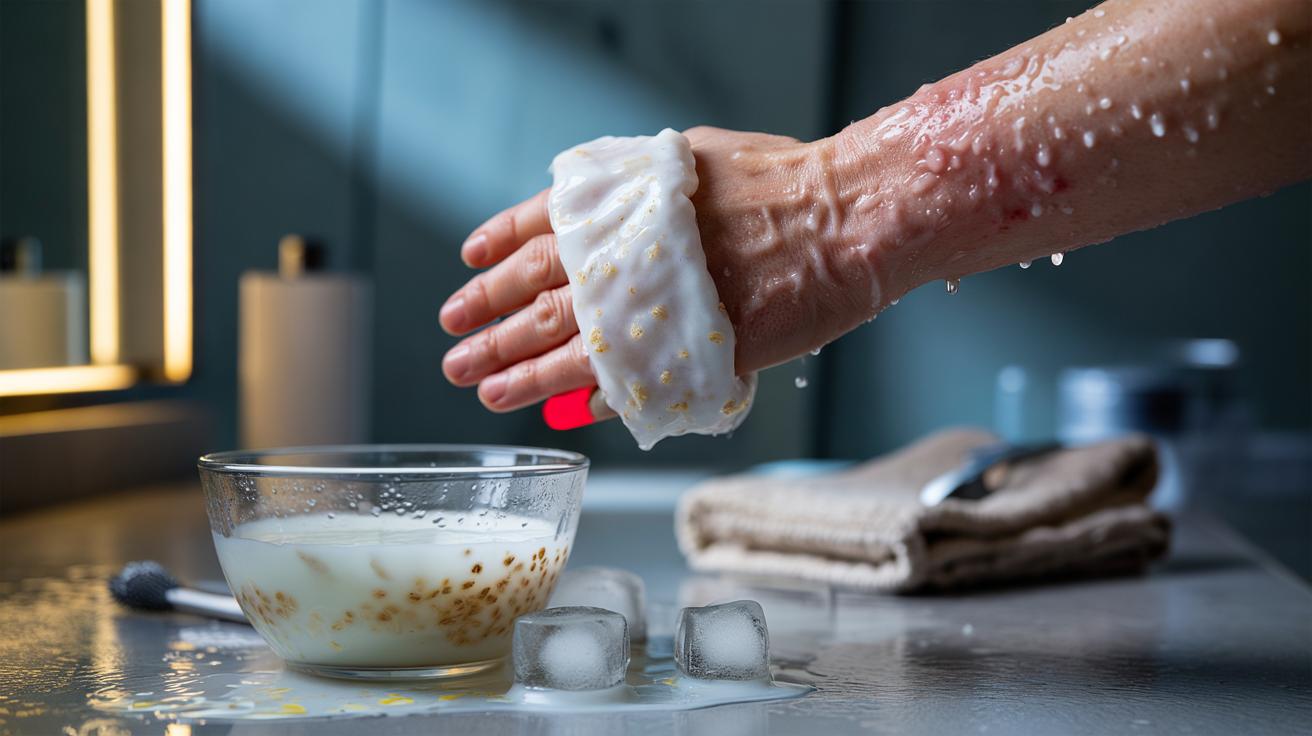
Chill a cup of semi-skimmed or full-fat milk in the fridge for at least 30 minutes. Blitz plain oats to a fine powder—true colloidal oatmeal texture prevents scratching. Stir 1–2 tablespoons of oat powder into the cold milk until slightly thick. Soak a clean cloth or cotton pads, wring lightly, and apply to clean, damp skin for 5–10 minutes. If you’ve just shaved, wait a few hours to minimise sting and ensure the skin is intact. Rinse with cool water and pat dry.
Finish with a fragrance-free moisturiser rich in ceramides or urea (5–10%) to lock in hydration. Repeat three to five times weekly. Keep leftovers no longer than 24 hours refrigerated; remake as needed to avoid bacterial growth. Always patch test on the inner arm first. If you notice increased redness or stinging, shorten contact time or dilute the mix with more milk.
Routine Pairings and What to Avoid
For stubborn KP, layer strategically. On alternate nights, use a body lotion with lactic acid 5–12% or salicylic acid 2%, then moisturiser. Reserve the milk-and-oat compress for non-acid nights to maintain comfort. Shave with a sharp, clean blade and a cushiony gel; shave in the direction of hair growth to reduce follicular trauma. Consistency—light, regular exfoliation plus daily moisture—does more than an occasional harsh scrub.
Avoid pairing the compress immediately with retinoids, strong peels, or mechanical scrubs on the same area. Skip the DIY if you have a dairy or oat allergy, active eczema flare on the site, or folliculitis that looks infected. For brown or ingrown-prone skin, consider adding a targeted salicylic acid product two to three times weekly to keep follicles clear. Sunscreen on exposed areas protects freshly exfoliated skin and limits post-inflammatory marks.
A chilled milk-and-oat mix won’t replace a clinic-grade peel, yet its blend of lactate, beta-glucan, and cold therapy can smooth texture and quiet the red freckling that defines strawberry skin. Think of it as a comfort-first prelude to your leave-on actives. The result is less scratchy roughness, calmer tone, and skin that tolerates proven treatments better. Whether you prefer kitchen simplicity or bottle precision, the principle is the same: gentle exfoliation plus hydration wins. How will you build this into your routine—soothing compress before bed, or alternating with a lactic acid body lotion to keep bumps in check?
Did you like it?4.5/5 (30)