In a nutshell
- 🧊 Cold milk calms flare-ups fast by vasoconstricting vessels, numbing sting, and laying a soothing protein–lipid film; choose full‑fat for dry skin, skim for oily, and always patch test.
- 🍯 Honey acts as a humectant with antibacterial activity (notably Manuka), helping reduce Cutibacterium acnes and swelling—rinse thoroughly and avoid if allergic to bee products.
- 🧴 Fast compress method: chill pasteurised milk, whisk with 1–2 tsp honey, soak pads, press 5–10 minutes, then rinse cool and moisturise; keep tools clean and stagger with strong actives.
- ⚠️ Safety and skin types: keep contact brief on very oily or yeast-prone skin, be cautious with rosacea thresholds, and skip if you have milk/bee allergies, broken skin, or are on aggressive treatments.
- 🔬 Science snapshot: medical-grade honey has evidence; whole milk’s lactic acid is minimal—this duo offers short-term soothing, not a cure; maintain proven acne care (benzoyl peroxide, salicylic acid, azelaic acid, retinoids) and consult a clinician for persistent cases.
When a breakout flares hot and red, the quickest wins often come from the quietest tools. Pairing cold milk with honey offers a grounded, kitchen‑cupboard response that dials down heat, sting, and surface bacteria without the drama of a harsh strip. The chill constricts vessels and numbs discomfort, while a light veil of milk proteins and honey’s humectant sugars steadies the skin’s water balance. It will not replace medical acne care, but it can buy you calm in minutes and help makeup sit more evenly afterward. Here’s how this unlikely duo works, how to apply it fast, and when to choose a different route.
Why Cold Milk and Honey Soothe Inflamed Skin
Cold acts first: it reduces superficial blood flow and slows nerve signaling, softening the throb and flush that make an angry breakout look worse than it is. Milk adds a second layer of comfort. Its proteins and lipids form a micro-occlusive film that eases tightness, while trace lactic acid in dairy can gently nudge desquamation without the bite of a peel. Think of it as a short, soft press that persuades irritated pores to stand down rather than a deep clean that risks backlash.
Honey brings a different skill set. It’s a powerful humectant that attracts water into the stratum corneum, helping restore a disrupted barrier. Its natural acidity and enzymes generate small amounts of hydrogen peroxide, and certain varieties such as Manuka add methylglyoxal—compounds linked with antibacterial activity against Cutibacterium acnes. Flavonoids and phenolic acids contribute to an anti-inflammatory effect. Used briefly and rinsed well, honey can lower surface bacterial load and swelling, setting up skin to tolerate your next, evidence-based step.
How to Make a Fast-Acting Compress at Home
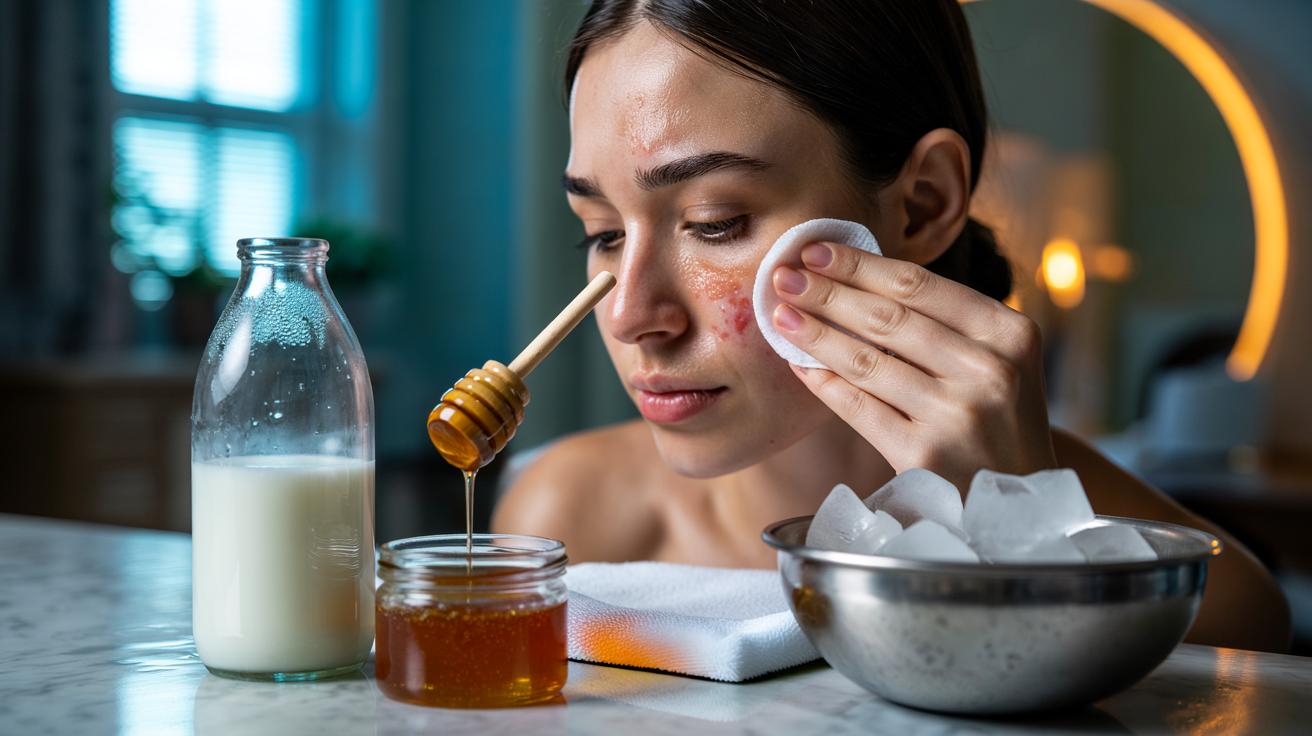
Start clean. Chill pasteurised milk—full-fat if you’re dry, skim for oilier skin—for 15–20 minutes. Don’t freeze; extreme cold can irritate. In a disinfected bowl, whisk 2 tablespoons of cold milk with 1–2 teaspoons of honey until fluid. Soak cotton pads or a soft gauze, squeeze lightly, and press over the flushed area for 5–10 minutes. Avoid scrubbing. Rinse with cool water and pat dry. Follow with a non-comedogenic moisturiser, or layer your regular acne treatment once the skin feels calm.
For a targeted option, dot a thin smear of honey on isolated bumps, then hold a milk-chilled pad around—not on—the lesion to reduce surrounding heat. Keep utensils and hands clean to prevent contamination. If you’re mid‑retinoid or benzoyl peroxide routine, schedule this compress on off nights to minimise variable overlap. Patch test first on the jawline for 10 minutes. If stinging persists, remove and switch to a plain cold compress or a fragrance-free gel moisturiser from the fridge.
Safety, Skin Types, and When to Skip It
Very oily or congestion-prone? Use skim milk and keep contact short to avoid unnecessary occlusion. Dry or sensitised types may prefer full-fat milk for extra cushion. Rinse thoroughly so no residual sugar sits on the skin. Skip this method if you have a confirmed milk protein or bee product allergy, or if skin is broken, weeping, or freshly picked. Those susceptible to yeast-driven “fungal acne” should keep sessions brief and rinse well. For rosacea, gentle coolness can be soothing, but severe cold may trigger rebound flushing—watch your threshold.
Remember: there’s no topical “dairy hormone” transfer risk here; concerns about milk and acne are diet-related, not from brief skin contact. Honey is safe for adults but avoid on infants. If you’re in the midst of isotretinoin therapy or dealing with cystic, scarring lesions, prioritise clinician-guided care. Do not use on infected wounds or after harsh peels. The table below maps quick choices by skin need and caution.
| Component | Main Actions | Best For | Use Briefly As | Cautions |
|---|---|---|---|---|
| Cold Milk | Vasoconstriction, soothing film, trace lactic acid | Redness, heat, surface tightness | 5–10 min compress | Protein allergy; use skim on very oily skin |
| Honey | Humectant, acidic pH, antibacterial enzymes | Dehydration, inflamed papules | Thin spot layer or mixed in compress | Bee product allergy; rinse thoroughly |
What the Science Says and What It Doesn’t
Medical-grade honeys are established in wound care, with studies showing antibacterial and anti-inflammatory activity. A handful of small trials suggest benefit when kanuka/Manuka honey is used as an adjunct for acne, though results vary and sample sizes are modest. Cold compresses are a standard first-aid tactic for swelling and erythema. Lactic acid at 5–10% has strong data for texture and comedones—but whole milk contains only trace amounts, so its effect is primarily soothing, not exfoliating.
In plain terms, this pairing is a rapid reset, not a cure. Expect transient reductions in redness, sting, and surface bacteria, which can help you tolerate proven actives better. For ongoing control, lean on evidence-backed ingredients: benzoyl peroxide for bacteria, salicylic acid for pores, azelaic acid for inflammation, and retinoids for prevention. If breakouts are frequent, nodular, or affect your confidence, consult your GP or a dermatologist to explore tailored options including topicals, antibiotics, or hormonal routes.
This is a quiet ritual for loud skin days: chill, press, rinse, reset. The minimalism is its power; short contact, clean tools, and thorough rinsing keep benefits predictable and risks low. Use it before big moments, after a stressful commute, or whenever your face feels hot and crowded. Then return to your long-game plan. What would your ideal “calm-down” kit look like if you combined this compress with the acne treatments that already work for you?
Did you like it?4.5/5 (29)