In a nutshell
- ✨ The acid + fat synergy explains results: lime’s citric acid (AHA) lifts dull cells while coconut oil acts as an occlusive to soften skin and support the barrier.
- 🦶 Dark ankles often stem from friction, dry build-up, and post-inflammatory hyperpigmentation; seek medical advice if discolouration is symmetric, itchy, swollen, or shiny.
- 🧴 Safe routine: mix 1 tsp virgin coconut oil with 8–10 drops fresh lime, massage 60–90s, leave 3–5 mins, rinse, moisturise; night-time only, patch test, and wear SPF if exposed.
- ⚠️ Key risks include phytophotodermatitis and irritation; avoid broken skin and consider steadier options like 5% lactic acid or 10–12% urea with moisturiser.
- ✅ Expect smoother feel in a week and gradual brightening in 3–6 weeks; while the mix lacks trials, AHAs and occlusives are evidence-backed, with pharmacy alternatives offering cleaner dosing.
Darkened ankles are a stubborn, confidence-sapping concern for many people in the UK, often blamed on scuffs from boots, tight socks, or simply daily mileage on pavements. A folk fix keeps resurfacing: a blend of coconut oil and lime. The appeal is simple—acid to lift dull build-up, fat to cushion and moisturise. The chemistry is more interesting. Citric acid offers gentle exfoliation, while medium-chain triglycerides create an occlusive seal that supports the skin barrier. Some will see gradual brightening; others may find it too zingy for sensitive skin. Patch testing and patience matter more than miracle claims. Here’s how the acid-plus-fat pairing can help, where it falls short, and how to use it sensibly.
Why Ankles Darken: Friction, Pigment, and Build-Up
Dark ankles rarely arrive overnight. Repeated friction from shoes and cuffs encourages thicker stratum corneum, leaving a greyish cast as compacted cells hold onto grime and oxidised sebum. Add dry central heating, hard water, and skipping moisturiser, and you get a surface that scatters light poorly. In some people, post-inflammatory hyperpigmentation follows bug bites, shaving nicks, or eczema flares, leaving patchy brown shadows. The result is a mix of texture, trapped debris, and pigment signalling that the skin’s turnover is sluggish.
Clues worth noting: if the discolouration is very symmetric, glossy, or accompanied by swelling or itch, it may hint at dermatitis, fungal infection, or circulation issues. That’s your cue to speak to a clinician rather than double down on DIY acids. For garden-variety dullness, though, improving exfoliation and barrier care can visibly brighten. The coconut oil–lime duo aims to do both—one loosens dead cells, the other softens and shields.
How Acid and Fat Work Together
Fresh lime juice contains citric acid (an AHA) and a dash of vitamin C. AHAs reduce cohesion between corneocytes by disrupting corneodesmosomes, helping dull layers shed and revealing newer skin that reflects light more evenly. The antioxidant action of ascorbate can also temper excess melanin formation by influencing tyrosinase pathways, though in fresh juice this effect is modest and unstable. Coconut oil, rich in lauric acid and medium-chain triglycerides, acts as an occlusive, reducing water loss and softening keratin so exfoliation feels gentler.
There’s synergy: oil improves glide and limits sting, while mild acidity increases turnover. There are risks too. Citrus can trigger phytophotodermatitis—a dramatic, streaky burn when juice meets UV. Never apply lime and then step into sunlight; cover up or wait 24 hours. Those with eczema or a compromised barrier may prefer lactic acid lotions or urea creams, which replicate the science with steadier pH control and fewer surprises.
A Safe, Step-by-Step Routine
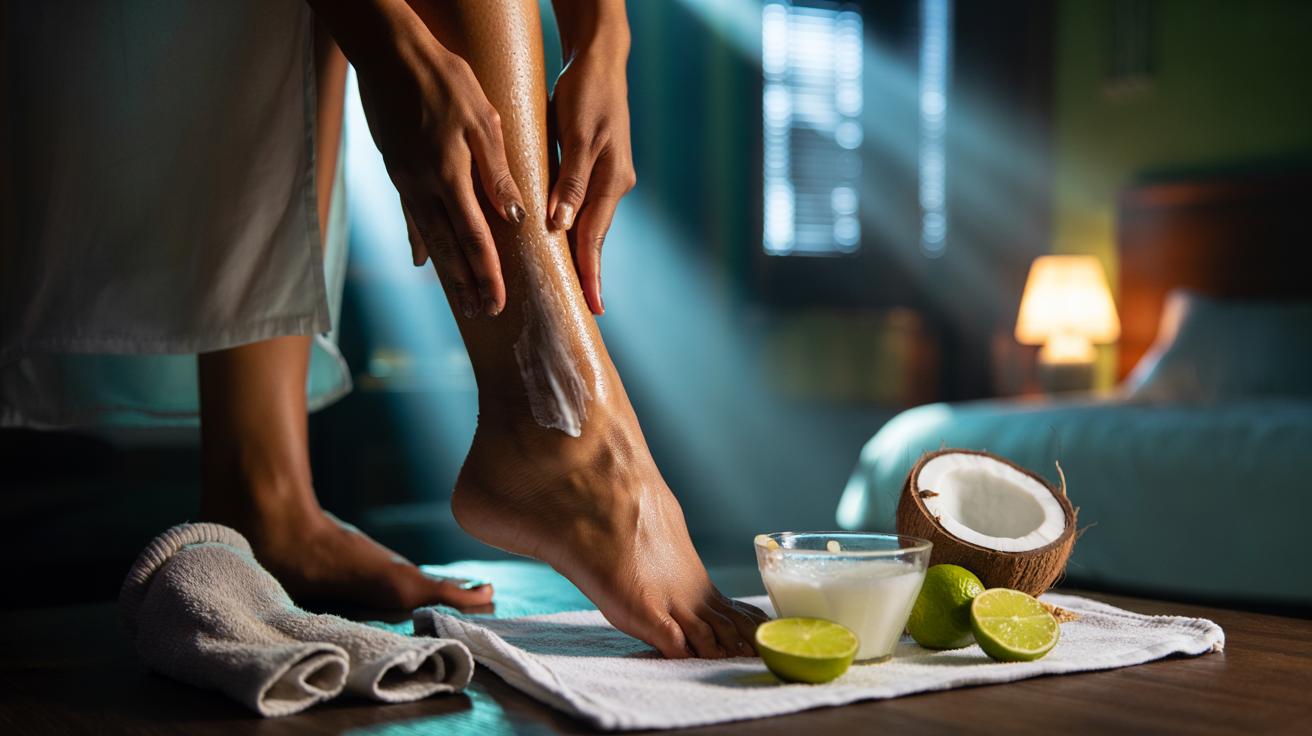
Start with clean, damp skin. Mix 1 teaspoon of virgin coconut oil with 8–10 drops of freshly squeezed lime juice in your palm. Massage over ankles for 60–90 seconds, focusing on rough rims above the heel. Leave on for 3–5 minutes if comfortable. Rinse thoroughly with lukewarm water and a mild cleanser, then apply a fragrance-free moisturiser. Use 2–3 nights per week for four weeks, then reassess. Stop at the first sign of persistent sting, welts, or peeling. Do not use on broken skin. And crucially, wear socks or trousers and apply SPF if ankles will be exposed the next day.
| Component | Role | Benefits | Risks | How Often |
|---|---|---|---|---|
| Virgin coconut oil | Occlusive, softening | Reduces dryness; improves slip | May clog pores in acne-prone skin | Daily as moisturiser |
| Fresh lime juice | Mild AHA exfoliation | Brightens by shedding dull cells | Phytophotodermatitis, irritation | 2–3 times weekly |
| Mixture | Balanced exfoliation + cushioning | Smoother feel; gradual clarity | Sting if overused; sun sensitivity | Short contact, night-time only |
Always patch test behind the ankle or on the inner forearm for 24 hours before first use. If you prefer more control, swap lime for a 5% lactic acid toner, applying first, then sealing with oil after rinsing. That keeps the science—AHA plus occlusive—while lowering the unpredictability of fresh citrus.
Evidence, Expectations, and Safer Alternatives
Dermatology literature supports AHAs such as lactic and glycolic acid for texture and pigment irregularities, and supports occlusives for barrier repair. The exact combo of kitchen lime and coconut oil lacks clinical trials, so treat it as a cautious experiment, not a cure. Expect improvements in feel within a week and in tone over 3–6 weeks if the cause is build-up and mild hyperpigmentation. If ankle darkness relates to chronic inflammation or venous issues, topical brightening alone won’t fix it.
Prefer a belt-and-braces approach? Use a 10–12% urea lotion (softens keratin), pair with 5% lactic acid two evenings per week, then seal with a plain moisturiser or light oil. Add daily SPF on exposed days; UV deepens pigment—even in Britain’s cloud. Do not use acids on cracked heels or if you have neuropathy or diabetes without medical advice. Set a four-week trial, photograph progress, and adjust based on comfort and results.
Used thoughtfully, coconut oil plus lime can be a tidy, low-cost way to lift dull ankle build-up while keeping the barrier happier than acid alone. It is not a miracle, but it can be a bridge to better habits: regular exfoliation, diligent moisturising, and sun protection. If your skin prefers predictability, pharmacy AHAs and urea do the same job with cleaner dosing. Your skin’s tolerance should decide the method, not a trend. What routine will you try for the next month to test brighter, more comfortable ankles?
Did you like it?4.5/5 (28)