In a nutshell
- 🔬 The science: Steam lifts the cuticle so coconut oil rich in lauric acid can penetrate hair keratin, forming a flexible film that smooths frayed tips and reduces friction.
- 🧴 Method: Apply a tiny, ends-only layer, wrap with a warm towel for 10–15 minutes (~45–50°C), then cool to help the cuticle lie flat; repeat weekly for coarse hair or fortnightly for fine strands.
- ✂️ Limits: It provides a cosmetic “seal,” not structural repair—schedule trims every 8–12 weeks while enjoying less snagging, easier detangling, and shinier ends.
- 🧪 Hair types: High-porosity, bleached, or curly hair gains most; fine or low-porosity hair needs micro-dosing; protein-sensitive users can alternate with argan or jojoba; patch-test if acne-prone.
- 🔥 Safety and styling: Use gentle heat, keep oil minimal before hot tools, apply a heat protectant, avoid roots, and adjust frequency seasonally; swimmers can use it pre-pool to limit chlorine uptake.
Beauty forums rave about the “coconut oil hot towel” as a home remedy for ragged ends, but what actually happens when you add steam to coconut oil? In essence, warmth and moisture open the hair cuticle just enough for the oil’s small, fatty acids to nestle in, creating a smoother sheath around the most fragile bits. That sheath minimises friction, disguising frayed tips and improving light reflection for a healthier look. It does not glue hair back together forever, yet it can make a dramatic cosmetic difference between cuts. Below, we unpack the science, a safe routine, and smart tweaks for different hair types so you get glossy results without limp lengths.
Why Steam Helps Coconut Oil Seal Split Ends
Steam swells the hair shaft and lifts the cuticle layers slightly, allowing penetrating lipids to move closer to the cortex. Virgin coconut oil is rich in lauric acid, a low–molecular-weight fatty acid with an affinity for hair keratin. When applied thinly and warmed with a towel, it diffuses along the fibre, filling microscopic irregularities. As the strand cools and the cuticle flattens, the oil forms a pliable film that reduces snagging and static, so split ends lie flatter and look “sealed.” The visual improvement comes from smoothing and lubrication, not from true structural repair, which is why a trim remains essential in time.
The humidity complicates less than you’d think. Moisture softens the cuticle, but the oil’s hydrophobic nature helps lock in that water, slowing evaporation after the towel is removed. This “moisture sandwich” makes hair feel supple rather than crispy. Because coconut oil can penetrate, it also limits water uptake during your next wash, reducing swelling cycles that worsen splits. Used sparingly, it strengthens by lowering mechanical stress during detangling, yet too much can weigh down fine hair. The art lies in micro-dosing the ends and keeping heat gentle—warm, never scalding.
How To Do A Coconut Oil Hot Towel Treatment
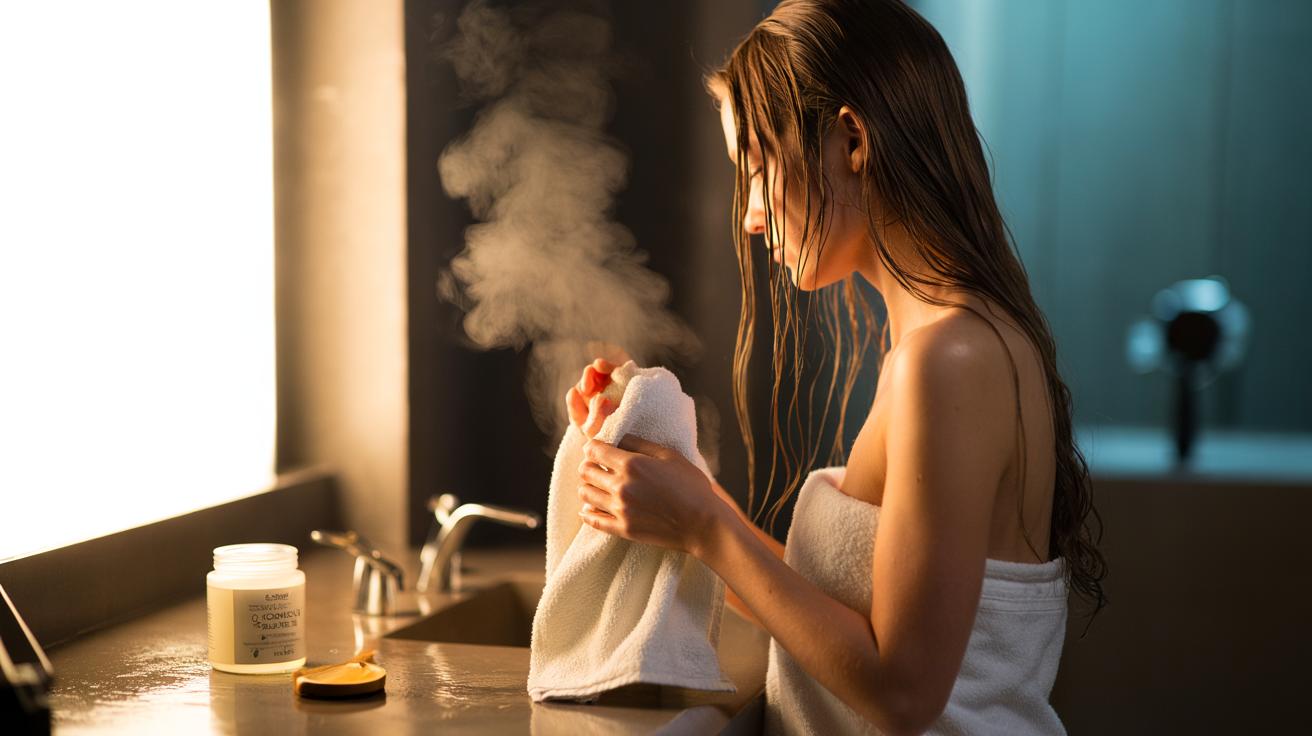
Start with clean, slightly damp hair. Emulsify 1–2 teaspoons of virgin, cold-pressed coconut oil between your palms, then glide it over the last 5–8 centimetres only. Fine or oily hair types should use less than a teaspoon; thick curls may need a touch more. Soak a towel in hot water, wring it thoroughly, and let it cool until comfortably warm to the touch (around 45–50°C if you have a thermometer). Wrap it around your lengths for 10–15 minutes; re-warm once if it cools quickly. Heat should feel relaxing, not sting. Finish by letting hair cool before handling to encourage cuticle lay-flat.
| Step | Action | Why It Matters |
|---|---|---|
| 1 | Apply a pea-to-teaspoon of coconut oil to ends | Thin layer avoids greasiness and targets splits |
| 2 | Wrap with a warm, damp towel for 10–15 minutes | Steam opens cuticles and improves oil distribution |
| 3 | Cool and air-dry or diffuse on low | Helps the cuticle reseal for a smoother finish |
| 4 | Lightly cleanse next day if needed | Prevents build-up while keeping ends conditioned |
Use this ritual weekly for coarse or high-porosity hair; switch to every two weeks if strands are soft or fine. If you plan to heat-style, keep the oil minimal to prevent scorching; always apply a heat protectant to mid-lengths and ends. If the scalp is breakout-prone, keep oil well away from roots. Only scissors can permanently remove split ends, but this method convincingly camouflages them between salon visits, buying you time and improving manageability during brushing.
Who Benefits, Who Should Avoid, And How To Adjust
High-porosity, bleached, or curly hair often sees the biggest gains because the cuticle is more open and prone to roughness; coconut oil’s film reduces friction and snap. Low-porosity hair can still benefit, but it needs extra warmth and a lighter hand to prevent residue. Fine, straight hair risks looking flat if overdone, so keep the dose tiny and focus strictly on the last few centimetres. If you’re protein-sensitive, note that coconut oil’s keratin affinity can sometimes leave hair feeling stiff; alternating with lightweight esters (e.g., argan) can balance feel. Watch the visual cue: sheen without stringiness means you’ve nailed the amount.
Colour-treated hair tolerates this well, but avoid very hot towels immediately after dyeing to keep the cuticle calm. If you have dermatitis or acne-prone skin, patch-test; coconut oil is comedogenic for some. Swimmers can use the treatment pre-pool to limit chlorine uptake, then shampoo gently afterwards. For a weightless twist, blend a drop of jojoba (a wax ester close to natural sebum) with coconut on the ends. Adjust frequency by season: wind-chapped winters call for weekly care, while humid summers suit a lighter, fortnightly routine.
The “coconut oil hot towel” works because steam aids penetration and the oil’s chemistry aligns with hair’s protein, creating a smooth, light-reflecting sheath that tames frayed tips. It is a cosmetic fix that protects and polishes, not a permanent repair, yet that polish can be transformative—less snagging, easier detangling, and fewer visible splits day to day. Trim every 8–12 weeks to keep ends fresh, then use the treatment as maintenance rather than a rescue mission. What tweaks—shorter towel time, a lighter oil blend, or stricter ends-only application—will you try first to tailor the ritual to your hair’s unique behaviour?
Did you like it?4.5/5 (24)