In a nutshell
- 🍵 The science: tannins (theaflavins, thearubigins) bind to hair’s cuticle, laying a translucent stain that turns greys a soft chocolate tone fast—no peroxide or ammonia, cumulative over 2–3 sessions.
- 🧪 Preparation: Brew robust black tea (Assam/Ceylon) strong—500 ml with 4–6 bags, steep 20–30 minutes—then add 1 tsp ACV for a pH ~5; strain well, refrigerate 48 hours, and always do a patch/strand test.
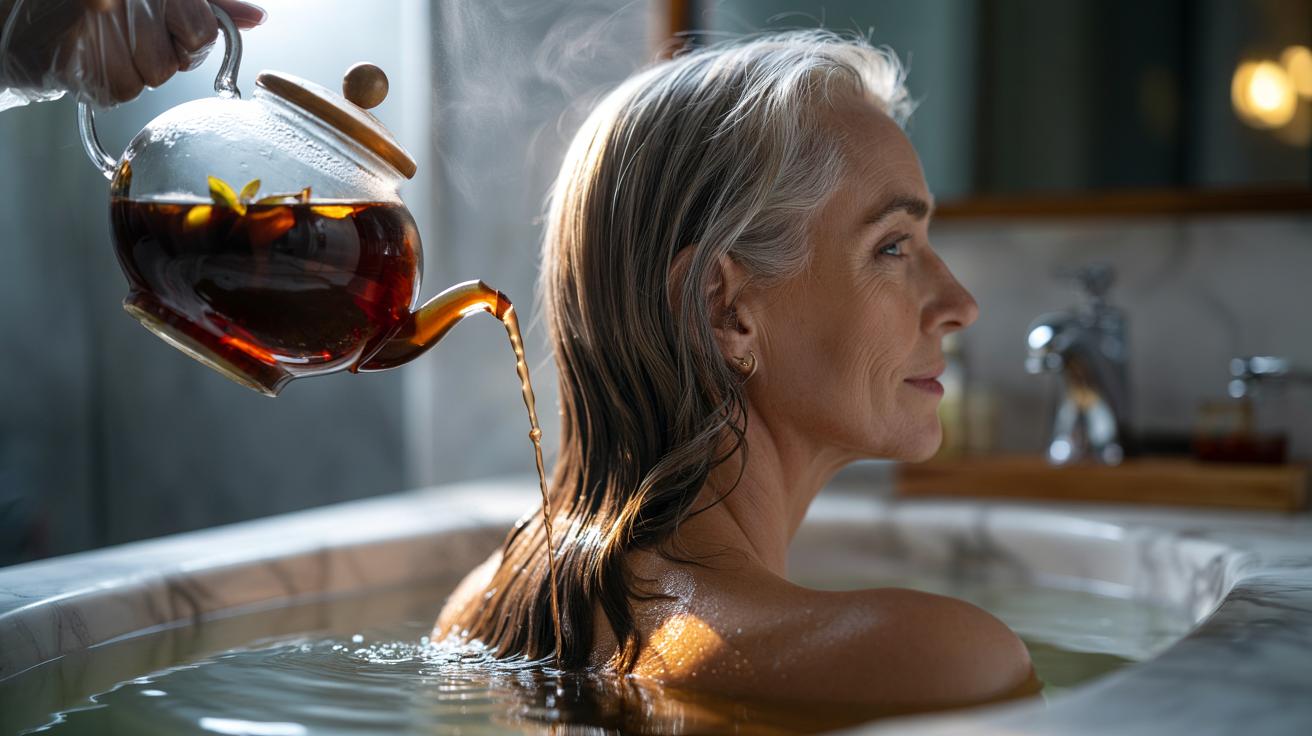
- 🔥 Application: Start on clean, damp hair, saturate thoroughly, comb through, cap, and add gentle heat for 10–15 minutes; layer once for richer depth, then cool-rinse and seal with a light leave-in.
- ⏳ Longevity and expectations: Colour fades in 2–6 washes; sulphate-free shampoos and cool water help retention. It blends rather than fully covers resistant whites, and remains reversible versus box dyes or henna.
- 🎨 Customisation: Adjust brew strength (mild to strong) for beige-to-chocolate results; tweak tone with sage (cooler) or rooibos (redder), and add glycerin if needed to offset any dryness on porous greys.
In a nation rediscovering kitchen-cupboard remedies, a black tea rinse is emerging as a quick, low-cost way to nudge grey strands towards a soft chocolate tone. The secret lies in tea’s tannins, plant polyphenols that cling to hair and build sheer colour in minutes. Unlike permanent dyes, there’s no peroxide or ammonia, so the effect is subtle yet immediately flattering on silver temples and scattered greys. This method won’t turn white hair espresso-dark in one go, but it can blur the high-contrast “salt-and-pepper” look after a single rinse. With the right brew strength, heat, and repetition, the finish is glossy, dimensional, and convincingly natural.
How Tannins Bond to Hair
Black tea is rich in theaflavins and thearubigins—tannins formed during fermentation that deliver amber-to-brown pigments. These molecules are slightly astringent and mildly acidic, encouraging them to anchor to the hair’s outer layer, the cuticle. They bind via hydrogen bonding and hydrophobic interactions with keratin, laying down a translucent stain that reads as warm brunette on grey. Because it is a surface deposit rather than a chemical oxidation inside the cortex, the shade looks soft and reflective, not flat. Grey hair is often coarser and more porous, so it absorbs tannins readily, especially with gentle heat. The rinse’s low pH helps smooth the cuticle after deposition, improving shine and slowing fade. Expect a “tea-wash” effect: quick uptake, cumulative depth over 2–3 sessions, and a fade profile over several shampoos rather than permanent lock-in.
Set expectations: tea cannot lighten or permanently alter your base colour; it adds a tint that harmonises greys with your natural shade. That is precisely why the result can pass as your hair—only better.
Preparing a Potent Black Tea Rinse
Choose a robust Assam, Ceylon, or English Breakfast; strength matters. For shoulder-length hair, use 500 ml boiling water with 4–6 tea bags (or 10–12 g loose leaf). Steep covered for 20–30 minutes, then cool to lukewarm. Stir in 1 tsp apple cider vinegar to land near pH 4.5–5, helping the cuticle lie flatter after colouring. A pinch of salt can enhance ionic interactions; optional cloves add aroma but may deepen warmth. Brew it stronger than you’d drink—weak tea won’t move greys past beige. Strain thoroughly to avoid specks. Refrigerate leftovers for up to 48 hours. Decaf works, though caffeination isn’t the active agent; the tannin concentration is. Always do a patch test on skin and a strand test on a hidden section if your hair is chemically treated.
| Brew Strength | Steep Time | Likely Tone on Grey | Notes |
|---|---|---|---|
| Mild (3 bags/500 ml) | 10–15 min | Beige to light honey | Good for a first pass or very pale blondes |
| Standard (5 bags/500 ml) | 20–30 min | Soft caramel to milk chocolate | Balanced depth and shine |
| Strong (7–8 bags/500 ml) | 30–40 min | Chocolate with warm undertone | Patch test advised for sensitive scalps |
Application Method for Fast, Even Colour
Start with clean, product-free hair; a gentle clarify ensures nothing blocks tannin uptake. Towel-dry to damp. Wearing gloves, pour or spray the tea over the hair, saturating grey bands first. Comb through with a wide-tooth comb to distribute evenly. Cover with a shower cap and apply low, indirect heat (hairdryer on warm or a heat cap) for 10–15 minutes. Heat improves mobility of molecules and lift of the cuticle for better deposit. Layering is the insider trick: rinse, reapply, and heat once more for richer chocolate depth without harsh lines. Finish with a cool water rinse and a pea-sized amount of leave-in conditioner to seal. Repeat every 3–5 washes to maintain tone; at the start, two applications in your first week can build the base shade efficiently.
Protect towels and pillowcases; tea can stain fabrics. If you prefer maximum depth, let the final layer dry in the hair before rinsing lightly. This air-dry set deepens the stain, but be mindful of drips.
Safety, Longevity, and Realistic Expectations
Tea is gentle, but care still counts. Perform a skin patch test if you’re sensitive to botanical extracts, and a strand test if you’ve bleached or permanently dyed hair—porous ends may grab colour faster. Fade typically occurs over 2–6 washes depending on hair porosity, shampoo choice, and water hardness. Sulphate-free cleansers and cool rinses preserve the stain; clarifying shampoos lift it quickly. Tea will not cover 100% of resistant whites; it softens and blends, creating a natural gradient rather than a block colour. Compared with henna, tea is faster, cooler in undertone, and fully reversible; compared with box dyes, it’s kinder to the cuticle but less dramatic. If hair feels dry, add a teaspoon of glycerin to the brew or follow with a light conditioner. Avoid direct contact with freshly bleached hairlines to prevent unexpected warmth on very light bases.
Some find that a pinch of ground sage or a bag of rooibos in the mix nudges tone cooler or redder, respectively. Adjust the recipe slowly; small tweaks shift the shade noticeably on bright silver strands.
Used well, a black tea rinse is a nimble fix: it lends instant softness to stark greys, adds believable chocolate warmth, and respects the hair’s structure. You control intensity with brew strength, heat, and repetition, and you can step back at any time without damage. For many, the ritual itself—steeping, saturating, sealing—becomes a calm, sustainable part of weekly care. If you could dial your blend to match your ideal brunette, what brew strength and routine would you choose to make your greys glow rather than shout?
Did you like it?4.6/5 (23)