In a nutshell
- 🍌 Banana peel’s starch and pectin can wick oil and fluid from superficial whiteheads, helping them look flatter by morning—useful as a mild, temporary “blotter,” not a cure.
- 🧪 Evidence is limited: no large trials, but the drying logic is plausible and comparable in spirit to a weaker hydrocolloid effect; it won’t fix root causes like excess keratinisation or hormonal oil.
- ⚠️ Safety first: wash the fruit, use the inner peel only, patch test, and avoid broken skin; those with latex-fruit syndrome should skip this, and pesticide residue is a potential risk.
- 📝 How-to: cleanse, apply a small peel piece for 10–20 minutes (limit occlusion), discard after use, then follow with proven actives like salicylic acid or benzoyl peroxide and daytime SPF.
- 🧰 Alternatives: choose hydrocolloid patches, clay masks for oil, and long-term staples—retinoids, salicylic acid, benzoyl peroxide, or niacinamide; seek medical advice for frequent, painful, or scarring acne.
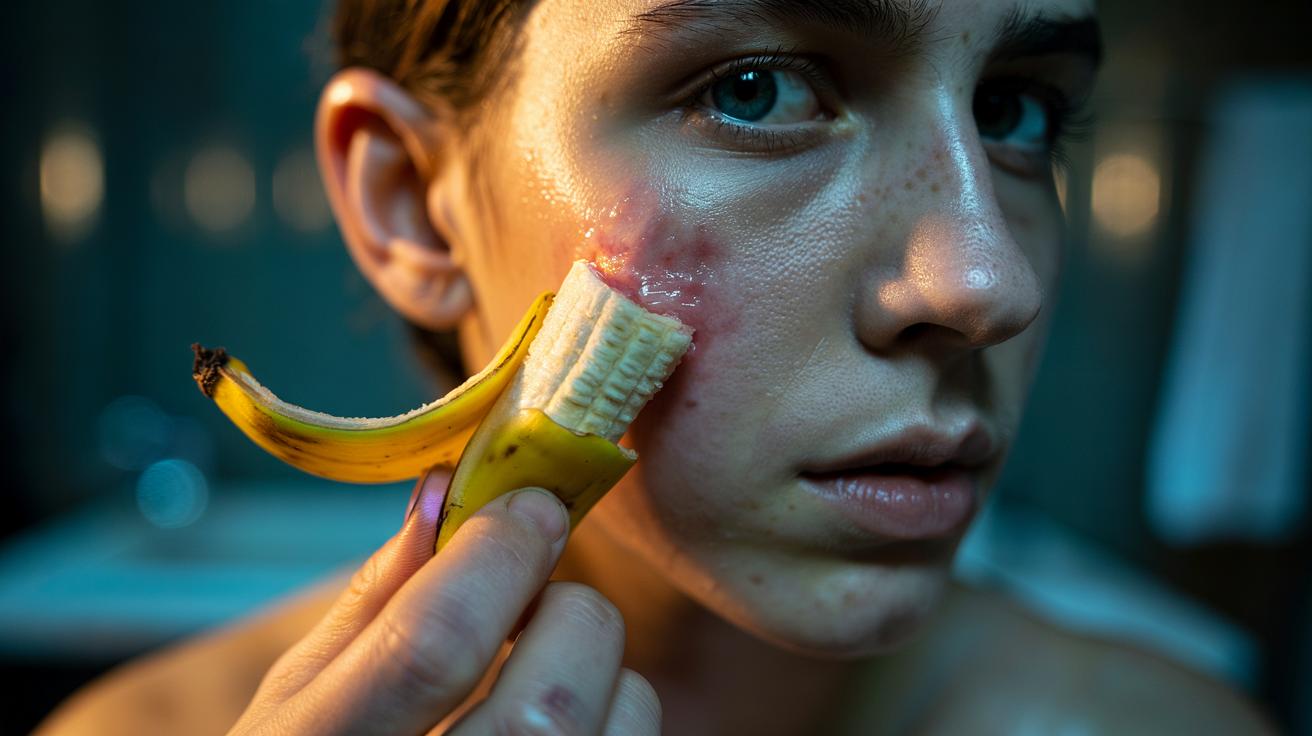
Banana peel as an overnight pimple-drier is an idea that hops between old family advice and viral beauty hacks. The promise is simple: place the inside of a banana peel on a spot and wake to a flatter, less angry blemish. The theory centres on starch drawing out fluid and oil—the “gunk”—that feeds a whitehead. As a UK journalist who has interviewed dermatologists and lab chemists, I’ve pulled apart the claim to see what holds up. The bottom line: banana peel can assist superficial spots under the right conditions, but it is not a miracle cure, and method matters more than hype.
Why Banana Peel Starch Might Dry Pimples
Starch is a hydrophilic carbohydrate that behaves like a tiny sponge. On the moist surface of a whitehead, it can wick excess fluid through capillary action. Banana peel contains starch and pectin, both able to bind water. When applied to a small, superficial pustule, the inner peel can help dehydrate the top layer, making the blemish look flatter by morning. Think of it as a mild, food-grade blotting paper rather than a deep extractor. This is why users report best results on shallow whiteheads, not nodules or cysts buried under the skin.
The peel also carries polyphenols and tannins with gentle astringent behaviour, potentially tightening the surface and calming redness. Trace minerals and antioxidants aren’t a substitute for clinically proven actives, but they may reduce the look of irritation. Still, there are trade-offs: occlusion from a moist peel can trap heat and sweat, which some skins dislike. If your spot is open, bleeding, or very inflamed, do not apply produce directly; you risk irritation or contamination that worsens the breakout.
What the Evidence Says and What It Doesn’t
There are no large, gold-standard trials testing banana peel on acne. Evidence exists in fragments: lab studies suggest banana peel extracts can show antibacterial activity against some microbes, including Cutibacterium acnes, but that’s in controlled conditions with concentrated extracts—not a slice of fruit on your face. Dermatologists I’ve spoken to describe the peel’s starch effect as plausible for surface drying, comparable in spirit (not strength) to hydrocolloid patches that absorb exudate. In other words, the peel might flatten a whitehead temporarily, but it won’t treat the root causes of acne such as excess keratinisation or hormonal oil production.
There are safety notes. People with latex-fruit syndrome can react to banana. Residues from pesticides on skins are another concern; wash thoroughly and use the inner peel only. Compare all this with salicylic acid or benzoyl peroxide: these have robust clinical backing for unclogging pores or reducing acne bacteria. The peel hack may complement a routine, not replace it. Set expectations: it’s a low-cost experiment for a single spot, not a cure-all for persistent acne.
| Component | Proposed Action on Pimples | Evidence Level | Notes |
|---|---|---|---|
| Starch | Absorbs surface fluid and oil; helps dry whiteheads | Anecdotal/physical plausibility | Works best on superficial pustules |
| Pectin | Binds moisture; mild film-forming effect | Mechanistic; limited clinical data | Can aid temporary flattening |
| Polyphenols/tannins | Gentle astringency; may calm redness | In vitro and traditional use | Not equivalent to prescription actives |
| Minerals (zinc, potassium) | Supportive skin function | Trace amounts; uncertain impact | Unreliable dosing via peel |
How to Try It Safely: A Journalist’s Field Guide
Start with hygiene and patch testing. Wash a ripe banana, dry it, then cut a clean square of the inner peel. Cleanse your face gently and pat dry. Always patch test on the inner arm for 15 minutes first if you have sensitive skin or a history of fruit allergies. For a whitehead that has come to a point, place the inner side of the peel on the blemish for 5–10 minutes to gauge tolerance. If comfortable, some users secure a tiny piece with breathable paper tape for up to an hour. Overnight application is possible but not ideal for very sensitive skin due to moisture build-up.
Keep the application targeted and short; you’re aiming for surface fluid absorption, not prolonged occlusion. Discard the peel after single use. Do not rub, as friction can inflame the spot. In the morning, cleanse and apply a non-comedogenic moisturiser. Continue your core routine—typically salicylic acid for clogged pores or benzoyl peroxide for bacteria—and use SPF during the day. Stop immediately if you notice stinging, redness, or swelling.
- Choose ripe, clean fruit; use only the inner peel.
- Limit contact time initially to 10–20 minutes.
- Avoid broken skin and cystic lesions.
- Combine with proven actives; don’t rely on peel alone.
- Track outcomes for a week before deciding if it helps you.
Alternatives With Similar ‘Drying’ Logic
If the appeal is “pulling gunk”, hydrocolloid patches are purpose-built. They absorb fluid from superficial spots, shield from picking, and show clear, repeatable results. Clay masks with kaolin or bentonite also draw surface oil, though they’re better used across greasy zones than on a single blemish. For prevention and treatment, salicylic acid (0.5–2%) exfoliates inside the pore, while benzoyl peroxide (2.5–5%) targets bacteria and inflammation. Retinoids address the upstream behaviour of skin cells, reducing future clogs, though they take weeks to work.
For those who prefer plant-led options, tea tree oil has antimicrobial properties, but dilution is crucial to avoid irritation. Niacinamide can help with redness and oil balance. Choose one “drying” tactic at a time to avoid over-stripping the barrier; barrier damage invites rebound oiliness and prolonged redness. If your breakouts are frequent, painful, or scarring, speak to a GP or dermatologist about prescription topicals or oral treatments. Cost, convenience, and tolerance should guide your choice more than internet theatrics.
Banana peel is a curious, low-stakes experiment that makes sense for the occasional whitehead. The starch-and-pectin duo can wick moisture and flatten a spot’s surface, but it won’t replace the science-backed staples that keep pores clear and inflammation in check. Use it cleanly, briefly, and only on the right kind of blemish, and consider it one tool in a broader kit. From hydrocolloids to retinoids, your options are wider than one slice of fruit. What would you like me to test next: another kitchen-table remedy, or a lab-born ingredient that claims overnight results?
Did you like it?4.3/5 (21)